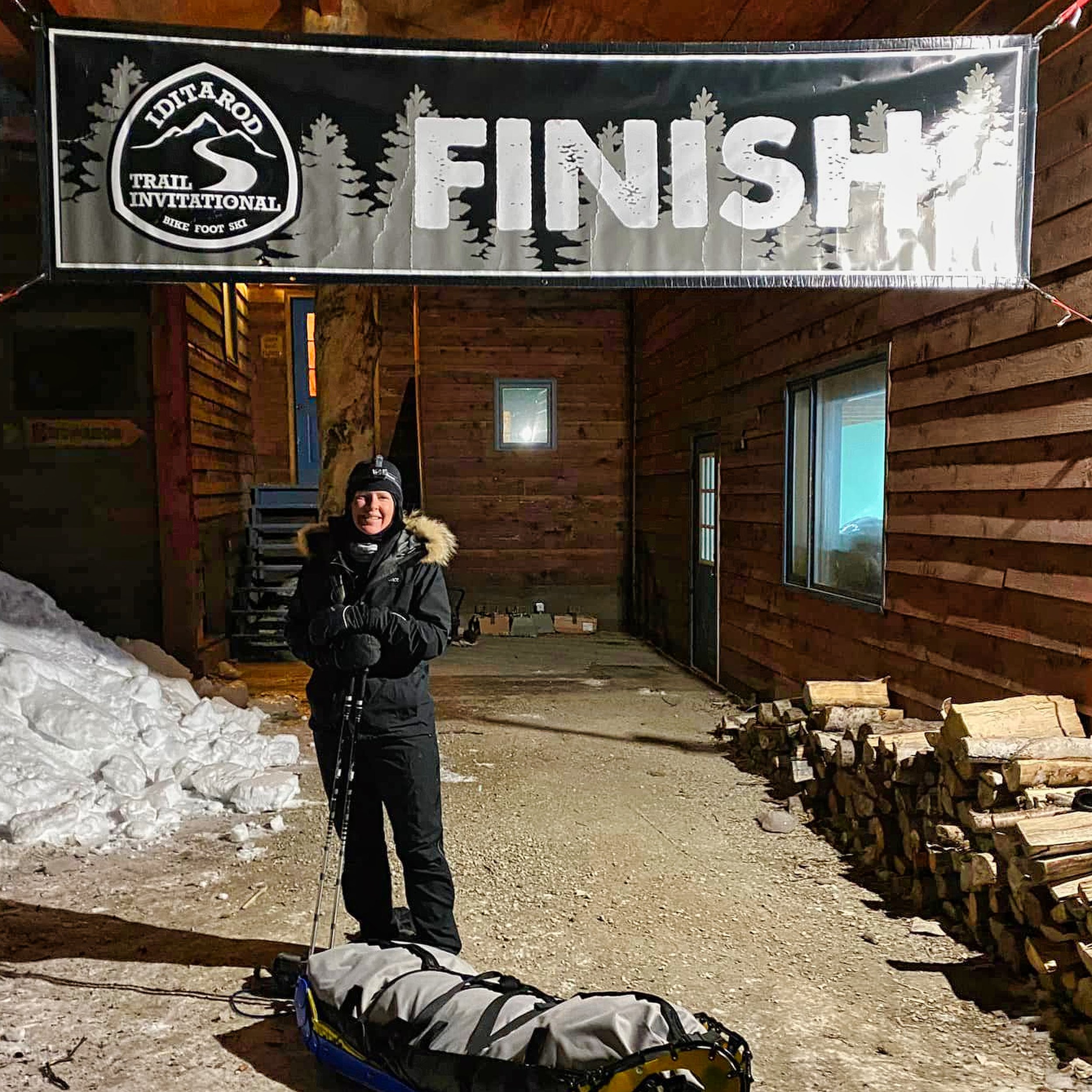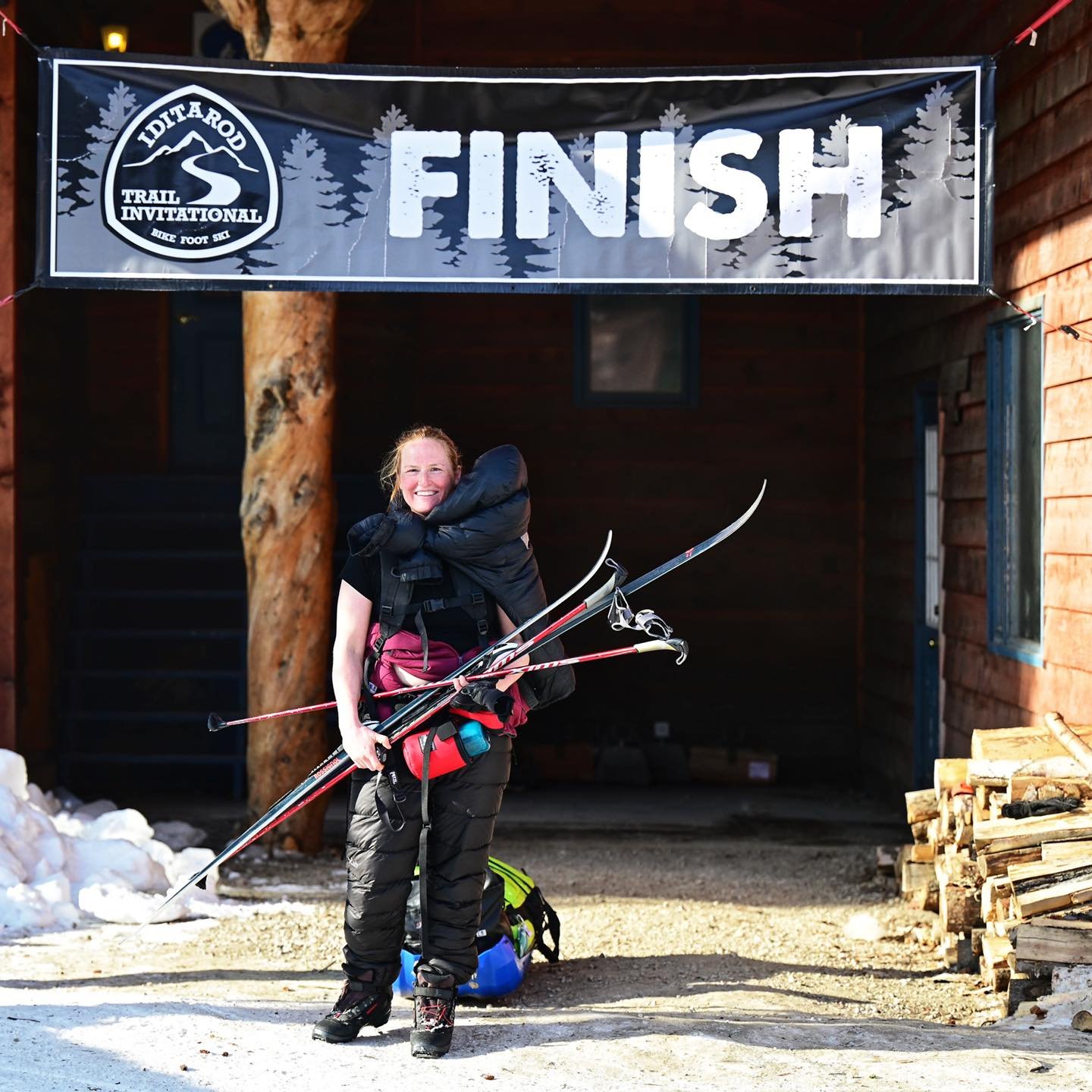
Welcome to day two of the Iditarod Trail Invitational! For many racers, it was a cloudy, mild day with temperatures in the teens. While overnight temperatures on the Yentna River reportedly dipped to 15 below with a stiff breeze, racers were prepared and there have only been three scratches so far. Tonight’s forecast calls for 1-2 inches of snow and lows around 5.
In the women’s bike race, Lael Wilcox is charging hard and is in second position overall after leaving Finger Lake, mile 126. Lael’s tracker seemed to be having problems, and there was some confusion about her position. She checked into Instagram on Monday morning and reported she had ridden 114 miles in 18 hours and was dealing with a stripped bolt in her seat post that caused her saddle to slip down. The smallest issues with a bike can cause big problems, and in this case, the broken clamp is forcing her to “ride low” — which is hard on the knees — or stand while riding. Hopefully, Lael can find a solution, but it doesn’t appear to be slowing her down.
Tazlina Mannix and Anchorage and Nikki Potter of Fairbanks aren’t far behind, as Tazlina just left Finger Lake and Nikki is resting there with Lael about 10 miles ahead. The trail beyond Finger Lake appears to be much slower going than the first 125 miles of the course. This is often the case — this section features a seemingly endless ripple of direct climbs and descents in and out of steep drainages as racers approach the Alaska Range. But with even the strongest riders moving at walking speeds, trail conditions must be worse than before.
Leading the women’s bike race to Nome is Missy Schwartz of Fairbanks, Alaska. Missy has been riding a conservative, well-paced race with an eight-hour rest at Yentna Station, breakfast in the cozy confines of Bentalit Lodge, and lunch at Skwentna. Leah Gruhn of Minnesota is a few hours back, followed closely by Kinsey Loan of Eagle River, Alaska. Both women have been taking similarly civil breaks. As of this report, Amber was about to arrive at Bentalit Lodge. From Yentna Station, Amber reported “great trail conditions, -10 on the river with a decent breeze. Moving slow but feeling decent!”
Leading the women’s foot race is Faye Norby of Minnesota, who currently has a solid lead on her fellow 1,000-mile racer Magdalena Paschke of Germany. Magdalena appears to be traveling with 350-mile racers Carole Holley and Stacy Fisk. Faye Norby is a strong runner, having come into McGrath just an hour shy of the women’s foot record in 2022. The 6-day, 12-hour record belongs to Anne Ver Hoef and has stood since 2013.
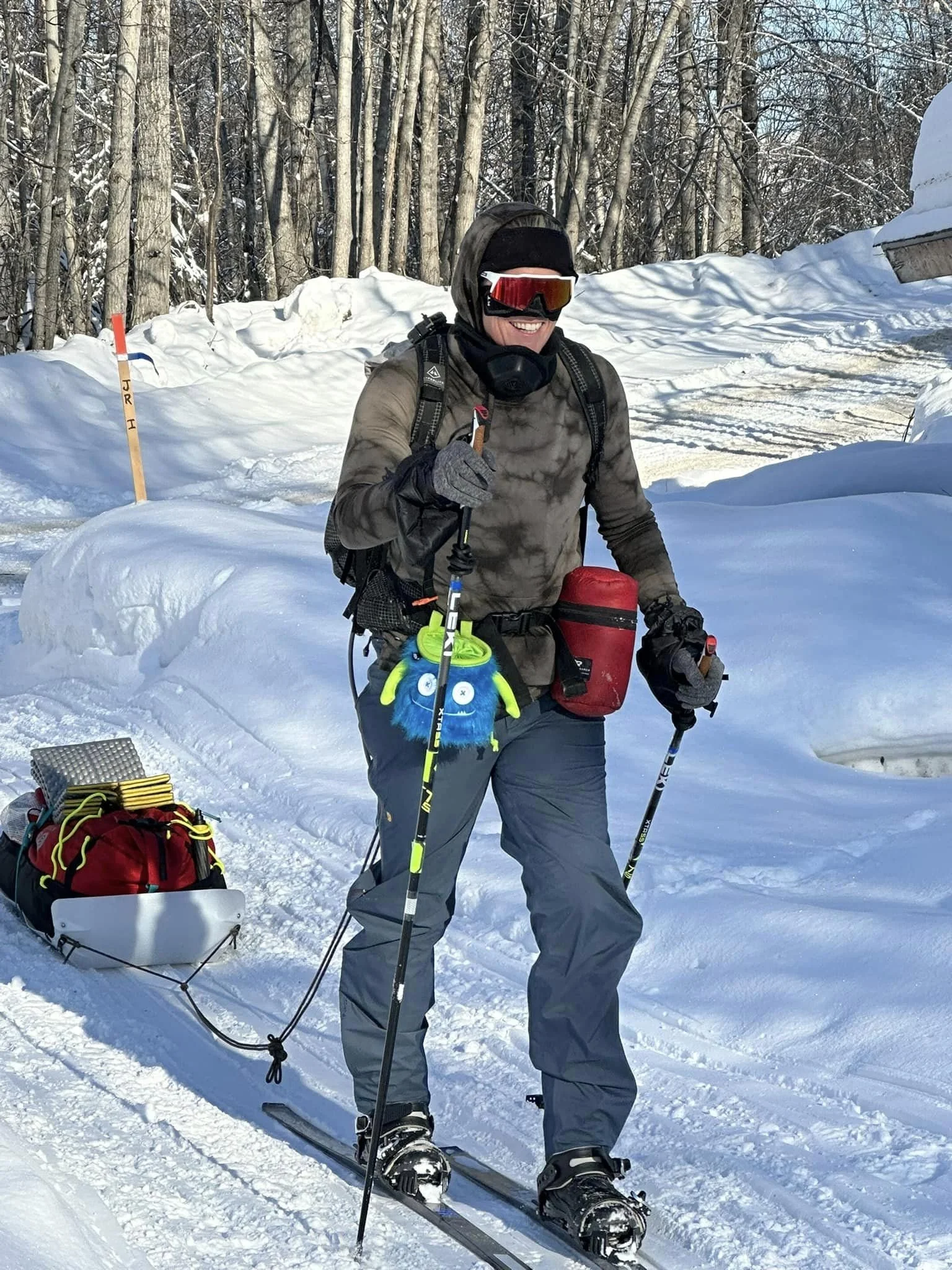
Our women skiers — Sunny Stroeer of Utah and Laura Rushfeldt of Massachusett — are close together on their way to Yentna Station. Sunny is aiming to not only be the first woman skier to Nome in the Iditarod Trail Invitational, but the first skier period. Why has this not been done before? In a recent Instagram video, Sunny admitted that the skis aren’t the most practical mode of transport on the Iditarod Trail. It’s rough, narrow, often riddled with bumps, and sometimes scoured down to ice or dirt. Unless a skier is exceptionally skilled, it’s difficult to make the kick-and-glide work in their favor. Instead, Sunny compared the endeavor to walking a thousand miles in less comfortable footwear. So why choose skis? I hope Sunny will have her answer under the burled arch.
Thank you to Linda Bulawa Klim for the photo of Sunny skiing out of Knik on Sunday afternoon. - Jill Homer
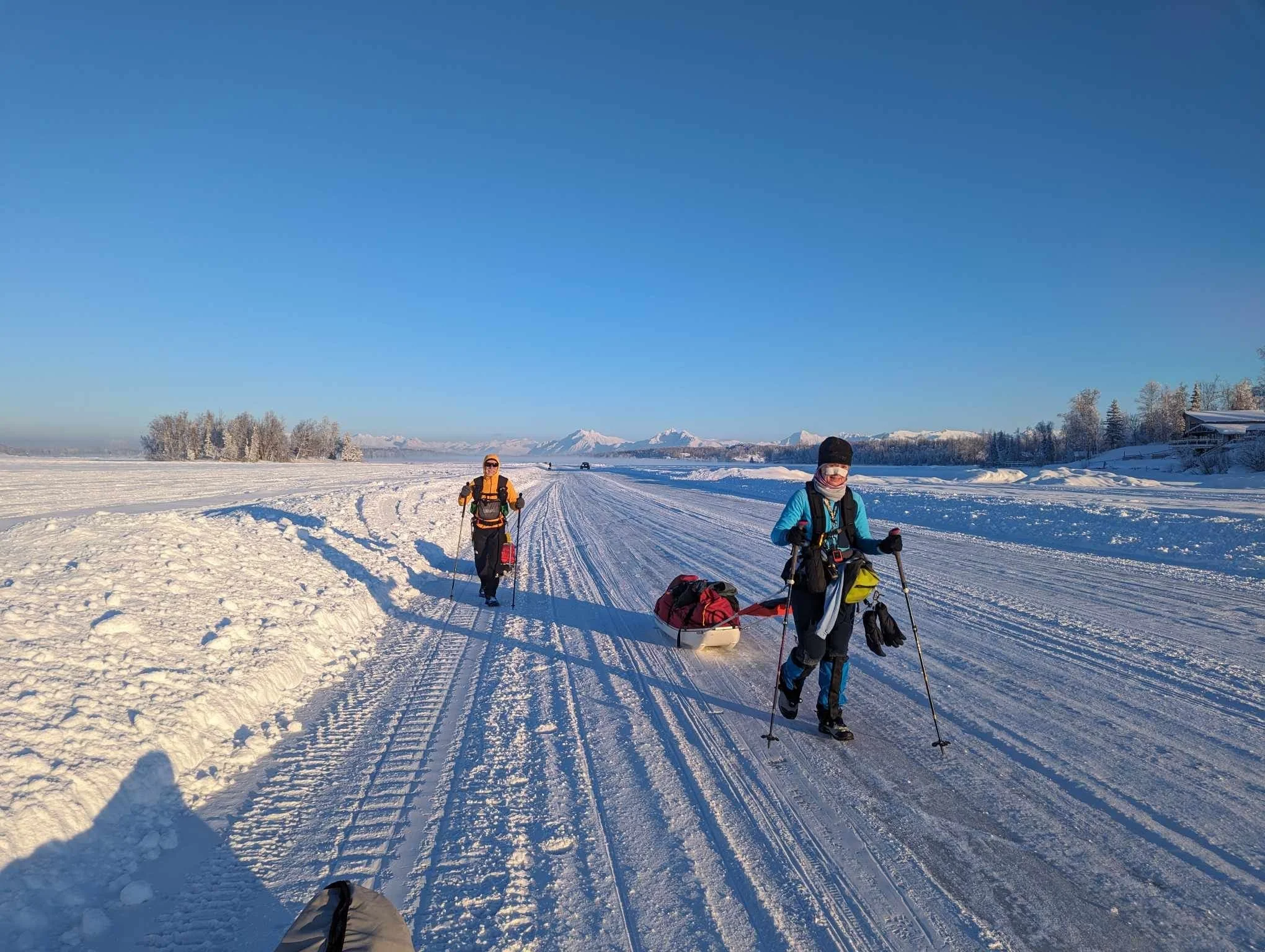
Starting at 2 p.m. Sunday, the 2024 Iditarod Trail Invitational was off like a rocket as racers enjoyed sunny skies, temperatures in the 20s, and fast trails.
The women’s field is the largest yet. The total number of ladies on the course is 23 — 15 cyclists, six runners, and two skiers. Seven — four cyclists, two runners, and one skier — are aiming to reach Nome.
The ITI has no set course — the rules only require that racers hit each checkpoint, the first being at mile 27 on Butterfly Lake. The Susitna River Valley is a veritable maze of designated snowmachine trails, gas line trails, railroad lines, and social trails. Picking the “best” route to the Yentna River is one of the first puzzles everyone must solve. Past years have shown all kinds of creative deviations. Since the Iron Dog Snowmachine Race finished in Big Lake on Sunday, the most logical choice was the freshly tracked trail across Big Lake, which most racers chose. The few deviations seemed similarly fast; everyone was making good time to checkpoint one.
In 2023, the first racer to Butterfly Lake arrived with 2 hours 51 minutes on the clock. This year, according to the tracker, Clinton Hodges III arrived at Butterfly Lake with 2 hours 21 minutes on the clock — a half hour faster than last year. Tazlina Mannix of Anchorage was the first woman to arrive at the checkpoint, pedaling to mile 27 on the course in 2 hours and 28 minutes. Smokin’! Rookies Lael Wilcox and Nikki Potter weren’t far behind.
Sunny Stoeer, the skier aiming for Nome this year, was one of three people who chose to take the standard Iditarod Trail. Sunny is keeping close company with Nome veteran walkers Donald Kane and Klaus Schweinberger.
As of this writing, all six women on foot were keeping close company across Big Lake, trying not to choke on the smog left behind by Iron Dog traffic (thanks to 1,000-mile racer Faye Norby for the photo, which shows Magdalena Paschke and Carole Holley.)
As racers head into the night, they are likely to encounter a stunning drop in temperatures and possibly some overflow and deeper snow as they head upriver. With clear skies, the temperature can easily plummet to 20 below on the Yentna River overnight. Since it was so warm at the start, these big (and common) swings often catch rookie racers off guard. Most of the race’s injuries happen during the first night.
According to a Facebook post from Deschka Landing, a heavy, wet storm that hit the area three days ago also may have a large impact. They wrote: “Only a half inch of snow fell from Deshka Landing to Yentna Station, but from 20 mile slough to Imm’s Inn there is about 10 inches of snow, Lake Creek to Skwentna received anywhere from 2 to 3 feet of snow, and Skwentna to Finger Lake received anywhere from 2 to 4 feet of snow.”
Wishing everyone a great night out there, and hoping for no frostbite in the morning.
-Jill Homer
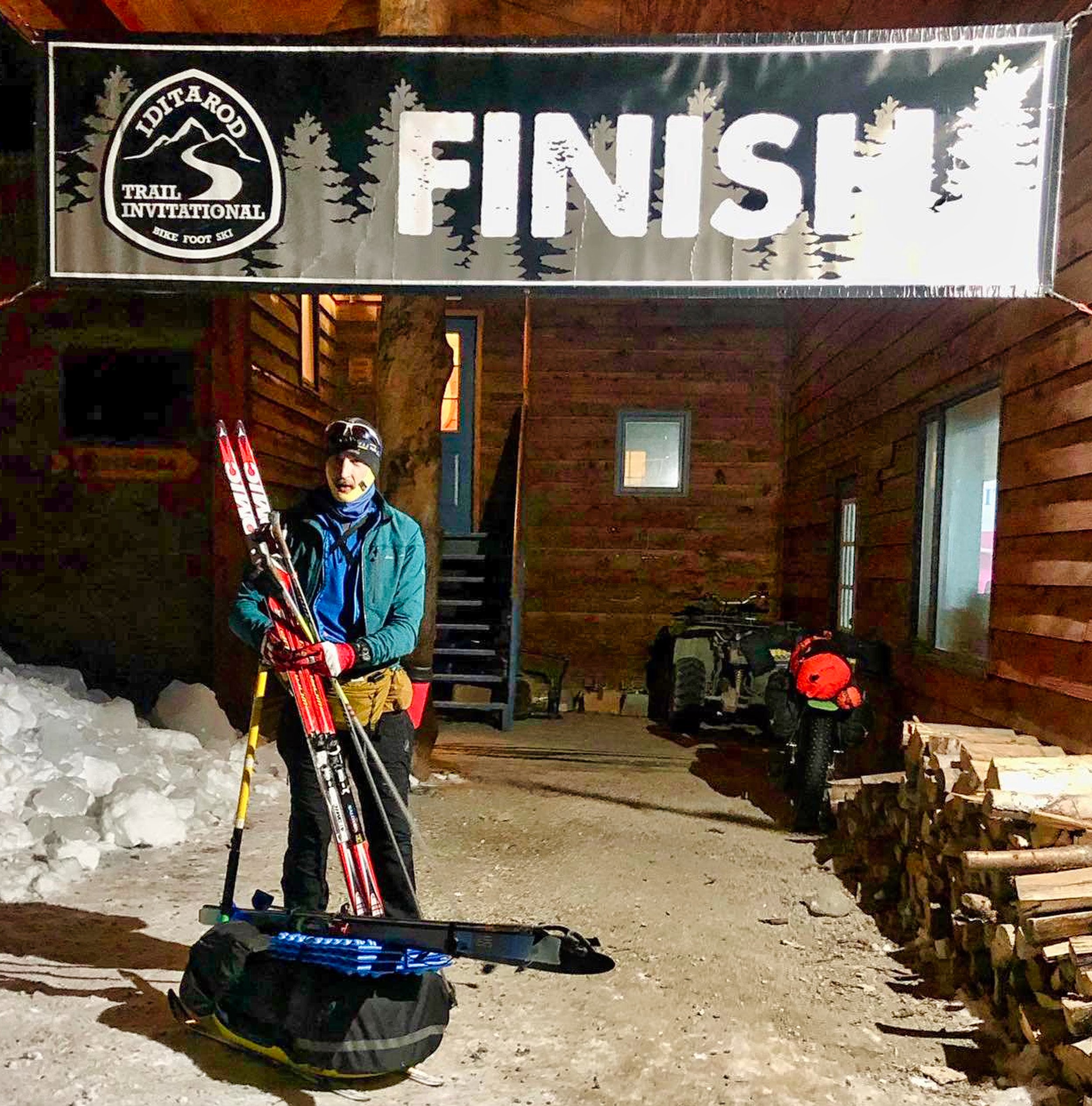
Congratulations to Beat Jegerlehner, the ITI 1000 foot champion! Beat finished in 22 days, 22 hours and 42 minutes for his second win in the foot race to Nome.
Congratulations to Gaizka Aseguinolaza, Jussi Karjalainen, Roberto Gazzoli, Graham Muir, Tiziano Mulonia and Willy Mulonia for finishing the ITI 1000 in 18 days and 5 hours!
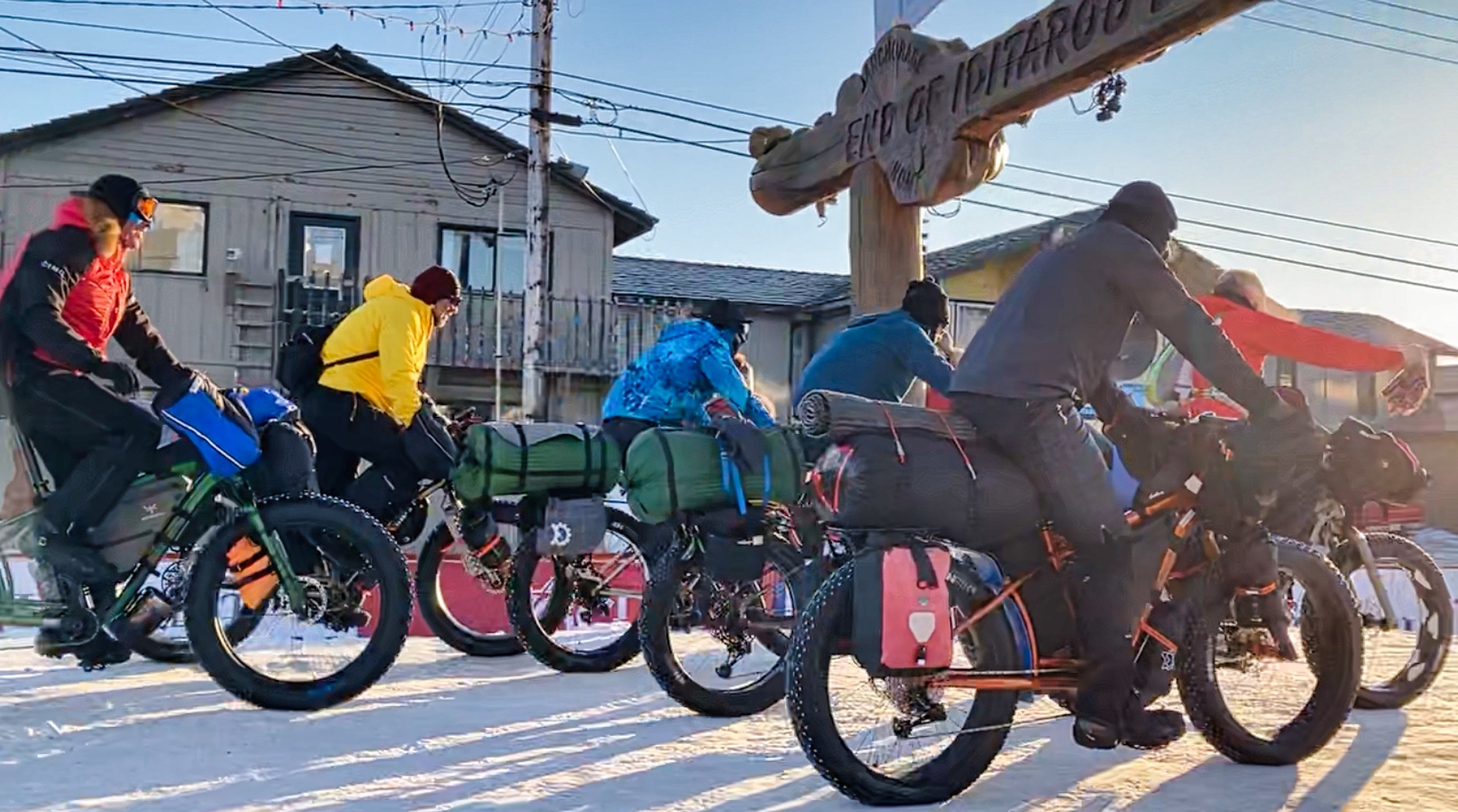
The six international athletes from Spain, Finland, Italy and New Zealand rode much of the trail from McGrath to Nome together and crossed under the burled arch as a group.
Jussi, Roberto, Graham and Willy were members of the Unalakleet Eight in 2020, a group of racers who were stopped short of the sea ice by a storm surge and the coronavirus pandemic. Congratulations to them and to Gaizka and Tiziano for conquering the countless challenges they faced on the Iditarod Trail and for finishing the ITI 1000.
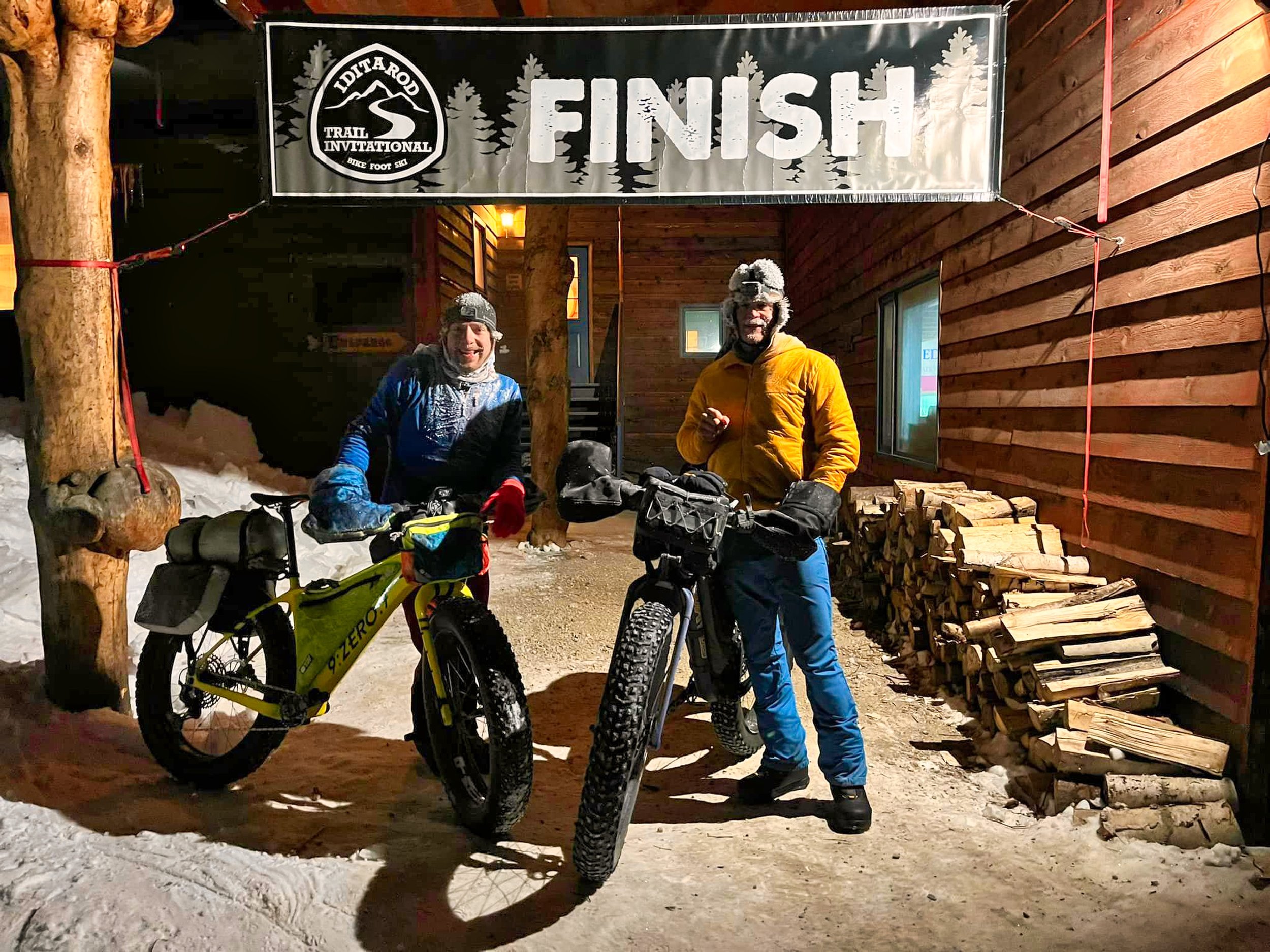
Congratulations to Petr Ineman, the ITI 1000 bike champion! Petr rode the entire distance from McGrath by himself and finished in 16 days, 4 hours and 42 minutes.
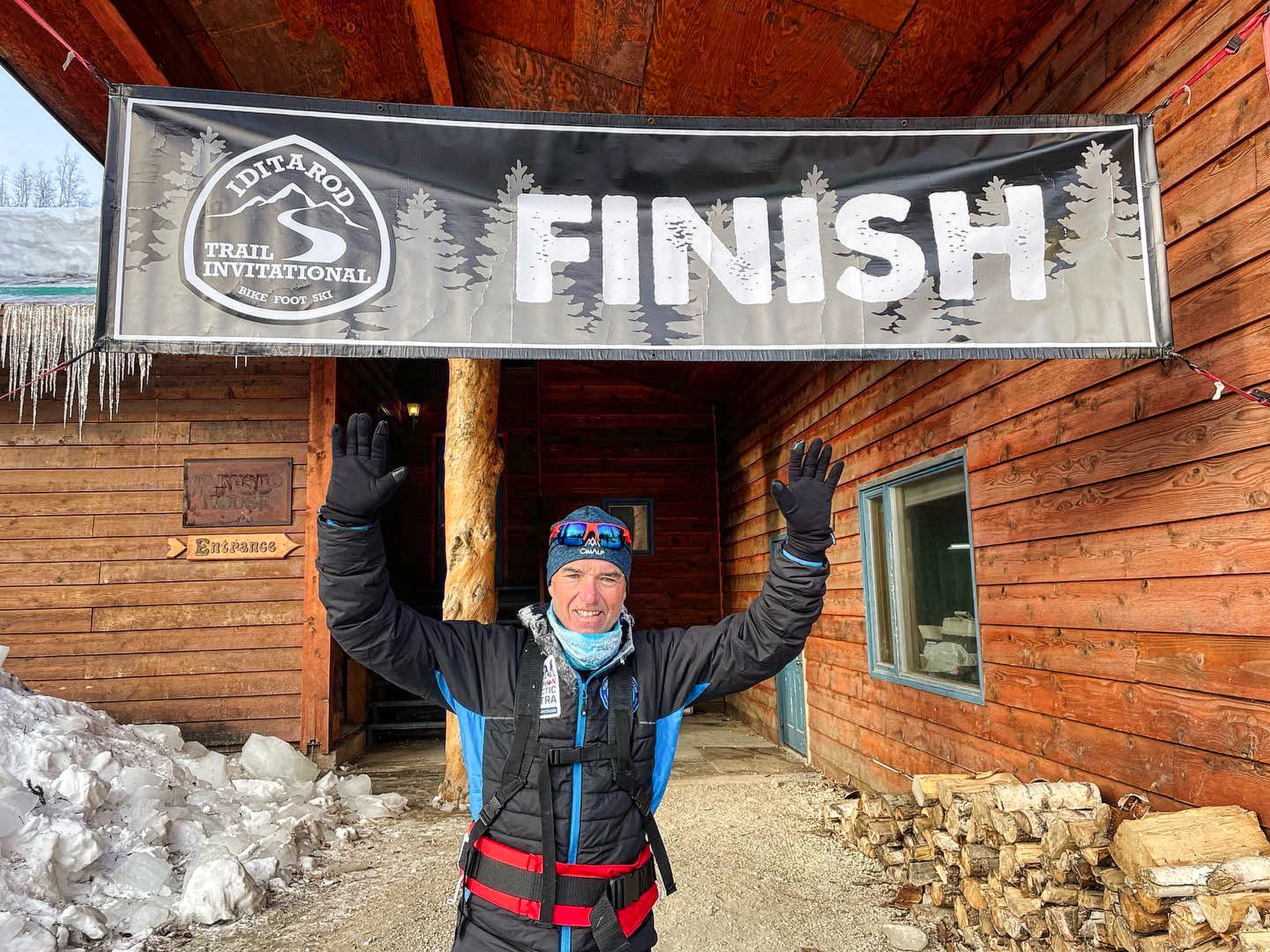
Congratulations to this year’s Iditarod Trail Invitational champions!
If one was looking for adventure, challenge and an emotional rollercoaster, the 2021 Iditarod Trail Invitational did not disappoint. It all started when the world began to shut down during the 2020 ITI and ended when the final athletes crossed the finish line a few days ago on March 10th.
For more than a year, the ITI family collectively faced more adversity and uncertainty than ever before, and the athletes who left the starting line endured innumerable struggles even before they arrived at Knik Lake on February 28th. But, true to the nature of the hearty people who return to the Iditarod Trail each year, those who crossed the finish line in 2021 dug deeply within themselves and found a way to overcome all of the setbacks, disappointments, mechanical failures, weather conditions, errors and other problems they confronted both before and during the ITI.
Thank you to all of the resilient people - athletes, supporters, volunteers, staff and business partners - who made the 20th anniversary Iditarod Trail Invitational possible. The stories from the trail each year are a testament to the power of the human spirit but never more so than they were in 2021.
At 10:17pm on March 5, Rebecca Rusch, of Idaho, rolled across the Iditarod Trail Invitational finish line in Big Lake, taking the crown in the women’s bike race. Together with her husband, Greg Martin, Rusch also was the top finisher in the race’s inaugural “self-supported” class. The two traveled 350 miles without receiving any of the meals, indoor recovery, or other outside support athletes in the general class typically receive. They slept outdoors alongside the trail, clocking about 14.5 total hours of rest during the race.
Martin and Rusch had not made a pact to race as a team this year—“It just happened organically,” she said. They moved point to point together, but did not know until the very end, she says, that they would finish as a team.
Rusch was also the top women’s finisher in 2019, her rookie year.
Fletcher is our 2nd place finisher!! Way to go!!
Winner, winner, chili mac dinner!! Aaron’s our 2021 ITI 350 men’s bike winner!
Anxiously awaiting our top finishers, Aaron Thrasher from Anchorage and Fletcher Yancy from Fairbanks, to arrive at the finish for the 20th Anniversary Iditarod Trail Invitational. Aaron appears to be following his original track out, whereas Fletcher is following a more northern snowmachine trail. This could be an exciting finish!!
Veteran athlete Jay Petervary and 16 year old Jacob Hora headed out of the Finger Lake check point this morning.
Athletes battling deep snow and white out conditions on day 2 of the race.
A beautiful show from Mother Nature on the first night of the race.
Aaron Thrasher is the first to arrive at Checkpoint #1, Butterfly Lake, just minutes ahead of Jay Petervary and Jacob Hora.
Those who have never been tested should be pitied, because they don’t know what they’re capable of.
- Seneca
The Iditarod Trail Invitational always serves up a healthy dose of adventure, and this year’s revised course will present athletes with a variety of new challenges. But those who want to take their ITI experience to the next level will be able to choose from two new adventure categories in the 20th Anniversary Iditarod Trail Invitational.
Self-Supported Category
To qualify for the self-supported category, athletes must not enter any building or tent (other than a tent carried by the athlete) and must not accept food, lodging, or other assistance from a checkpoint, a commercial establishment or a private citizen during the race.
Athletes may send drop bags and resupply from their own supplies at Finger Lake and Rohn.
Bivy Category
To qualify for the bivy category, athletes must not sleep in any building or tent (other than a tent carried by the athlete).
Athletes may use checkpoints and commercial establishments for all other purposes.
Every athlete who completes the 2021 ITI in either of these categories will be recognized in the final standings. Additional details can be found in the 2021 Athlete Guide.
Rainy Pass awaits
Since the 2020 race ended, the ITI organizers have remained committed to holding the 20th anniversary Iditarod Trail Invitational in a manner that would not compromise the health of our athletes, the communities of Alaska, the volunteers or our staff members. We have continually adjusted our operational plans over the past eight months as the COVID-19 situation has evolved and in accordance with guidance from medical professionals. In short, we have focused on the things we can control.
Alaska, like many places in the world, has recently experienced a surge of COVID-19 cases. The spike in cases has prompted government institutions at all levels to implement more stringent COVID-19 mitigation measures. Particularly impactful for the ITI, the remote communities of Alaska have justifiably asked that travel to their areas be curtailed. Historically, pandemics have created disastrous consequences for those remote settlements, so those communities are rightfully wary of outside visitors - even if those visitors have been subjected to the rigorous testing and quarantine requirements the ITI will be implementing in 2021.
Without question, the ITI would not be possible without an informed, engaged and supportive public. The long-term viability of the ITI depends on local partnerships that are based on trust and respect. And, even though the 2021 ITI operational plan was designed to avoid dependence on remote communities, we cannot avoid the potentially destructive message that would be conveyed by sending athletes into territories adjacent to those communities without their approval. On the other hand, the private lodges along the ITI 350 route are looking forward to welcoming ITI athletes and volunteers and have been working closely with our staff to establish processes that will ensure everyone stays healthy.
So, to meet the goals of holding the ITI in a COVID-safe manner while reducing its footprint and strengthening critical relationships along the Iditarod Trail, the plan for the 20th anniversary Iditarod Trail Invitational is as follows:
The ITI 1000 is suspended for 2021. All athletes who are signed up for the 1000 will be contacted directly and given the opportunity to withdraw from the ITI, defer to 2022 or switch to the 350.
The ITI 350 will be run as an out-and-back to Rohn in order to avoid travel near the remote villages of Nikolai and McGrath. Specifics will be released shortly, but athletes can plan on traveling from the start at Knik Lake to Rohn and back to this year’s finish on Big Lake.
We are excited about the challenges this revised route will offer and continuing the ITI’s 20-year tradition of showcasing the power of the human spirit.
- Kyle Durand, Race Director
The past eight months have certainly provided its share of challenges. But, aren't we are a group that prides itself on maintaining perspective in the face of adversity, perseverance in the face of failure and purpose through action? We are outliers who don't follow the well-worn path, who think for themselves and who work together to support each other and our communities.
Sure, the easy route would have been to cancel the ITI months ago. Instead, the ITI team has spent countless hours working to develop solutions to the problems COVID-19 introduces with the help of professional advisors, has invested heavily in people, equipment and assets that will increase the event's self-sufficiency and has been constantly adapting to the ambiguous future that February 28, 2021 presents.
Why?
Because this community means everything to us. We believe in you and in the power of the human spirit. We believe that tough, empathetic and responsible people are those who will carry us forward through this challenging time and the challenging times we will face in the future.
Although the COVID-19 pandemic is a new trial, the ITI has adapted to many challenges over the last 20 years with a sense of responsibility towards everyone involved, including the communities of Alaska, who not only depend on the financial support that you and the ITI sponsors provide, but also the inspiration that you impart by overcoming seemingly insurmountable odds.
So where does that leave us? It leaves us to focus on the things we can control. We can't control the weather or the conditions on the Iditarod Trail. We only control how we respond. We don’t control what government will do over the next 3 months. What we control is what we do in response. We can't control how the coronavirus will impact the ITI, but we can control how we adapt to those impacts.
Specifically:
Everyone who travels to Alaska must arrive with a negative COVID-19 test or must test negative upon arrival in the state.
All athletes, staff and volunteers will be tested for COVID-19 the morning of their departure on the Iditarod Trail, and those tests must be negative before they are allowed to proceed.
Checkpoints to McGrath will adhere to strict mask mandates and maximum occupancy limits.
ITI trail teams (again, who have been certified to be COVID-19 negative) will establish remote checkpoints beyond McGrath as required.
To put it in more succinct terms, please join us if you are prepared to spend a lot of quality time outside in the glorious Alaskan wilderness and are ready to be adaptable to those things we can control.
- Kyle Durand, ITI Director
The world is a very different place than it was when we kicked off the 2020 ITI on March 1st. What hasn’t changed, though, is the character of the people that make up the ITI family. The athletes, volunteers, residents on the Iditarod Trail, family members and countless people behind the scenes are still the caring, adaptable, and resilient people they were on March 1st.
Society today is full of volatility, complexity and ambiguity these days. But, highly adaptable and resilient people, like the members of the ITI family, do not freeze in their tracks when confronted with uncertain situations. Instead, we take a deep breath, thoughtfully analyze the circumstance and harness the creative energy it takes to overcome the challenges that face us. Now, more than ever, we need people with unbreakable character and a strong predisposition for action to step up to the challenges in the world, to encourage those around them to act and to do the hard work needed to get our communities back on their feet.
To support these extraordinary people, the ITI staff has toiled non-stop for months preparing for the 2021 event with the goal of creating a COVID-19-safe environment for everyone involved. More information will be forthcoming, but those preparations include:
coordination with the CDC;
hiring a medical consultant;
collaborating with local government agencies;
re-designing checkpoints; and
formulating processes and procedures to detect and limit disease transmission, including COVID-19 testing prior to the start.
Thank you for your trust and confidence during these tumultuous times. It is an honor to work with all of you and the communities of Alaska in a combined effort designed to demonstrate the power of the human spirit.
- Kyle Durand, Race Director