Day 20 - Milestone Reached and In Their Own Words

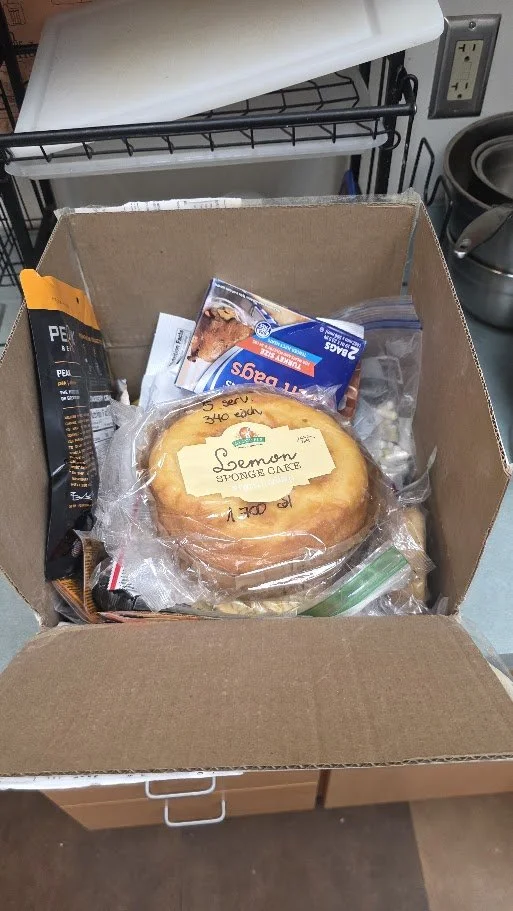
Kendall and Maya organize food and hand warmers in the Cripple checkpoint (photo: Ryan Wanless)

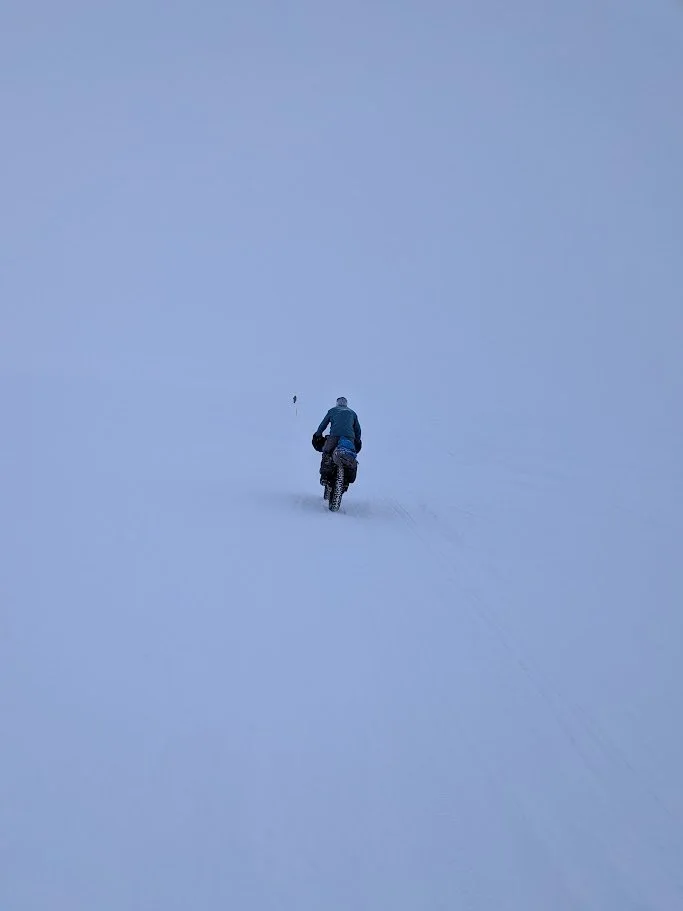
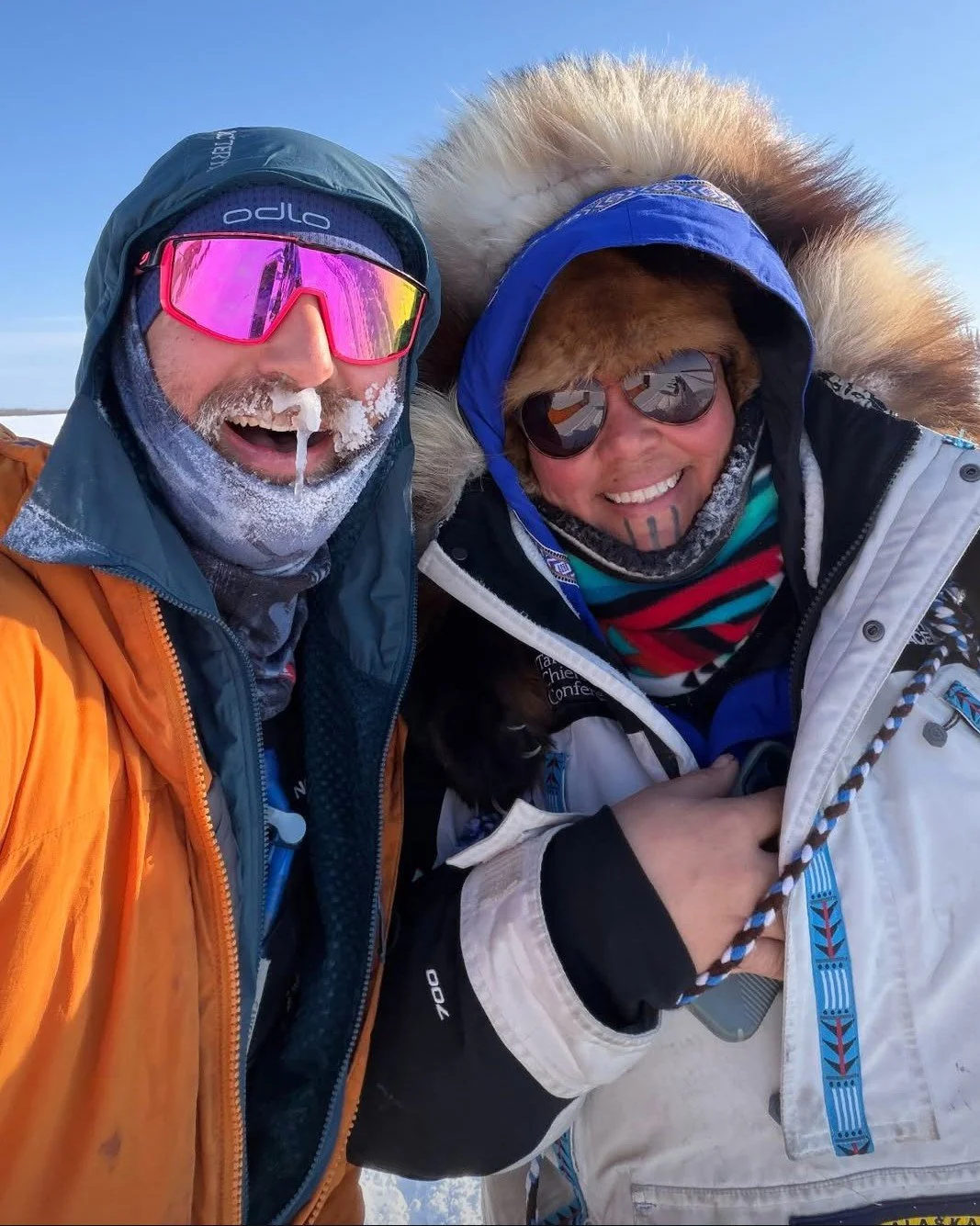
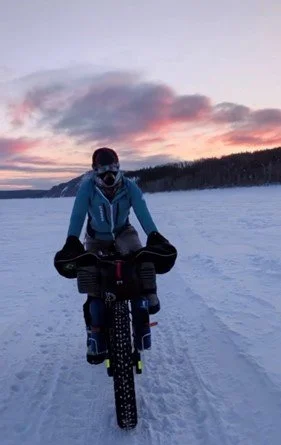
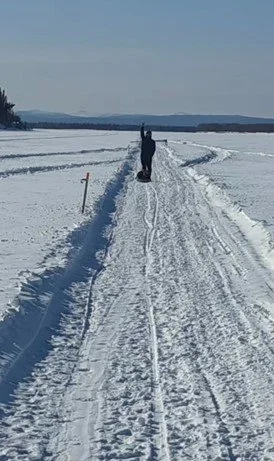
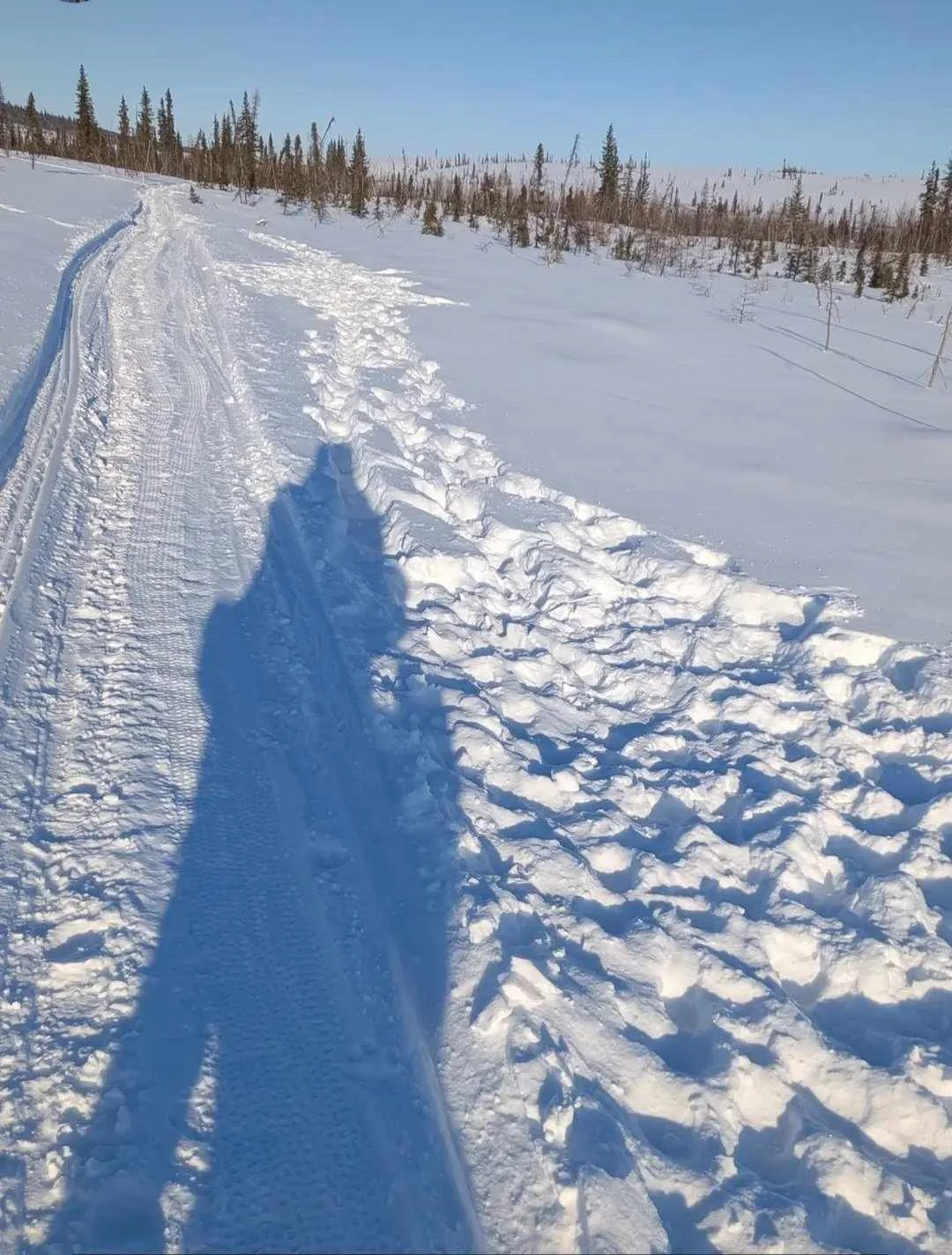
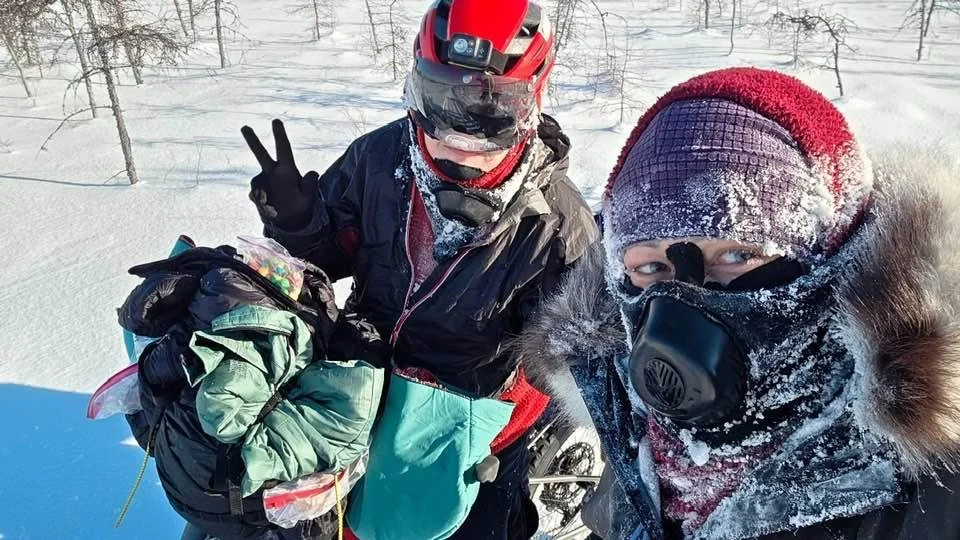
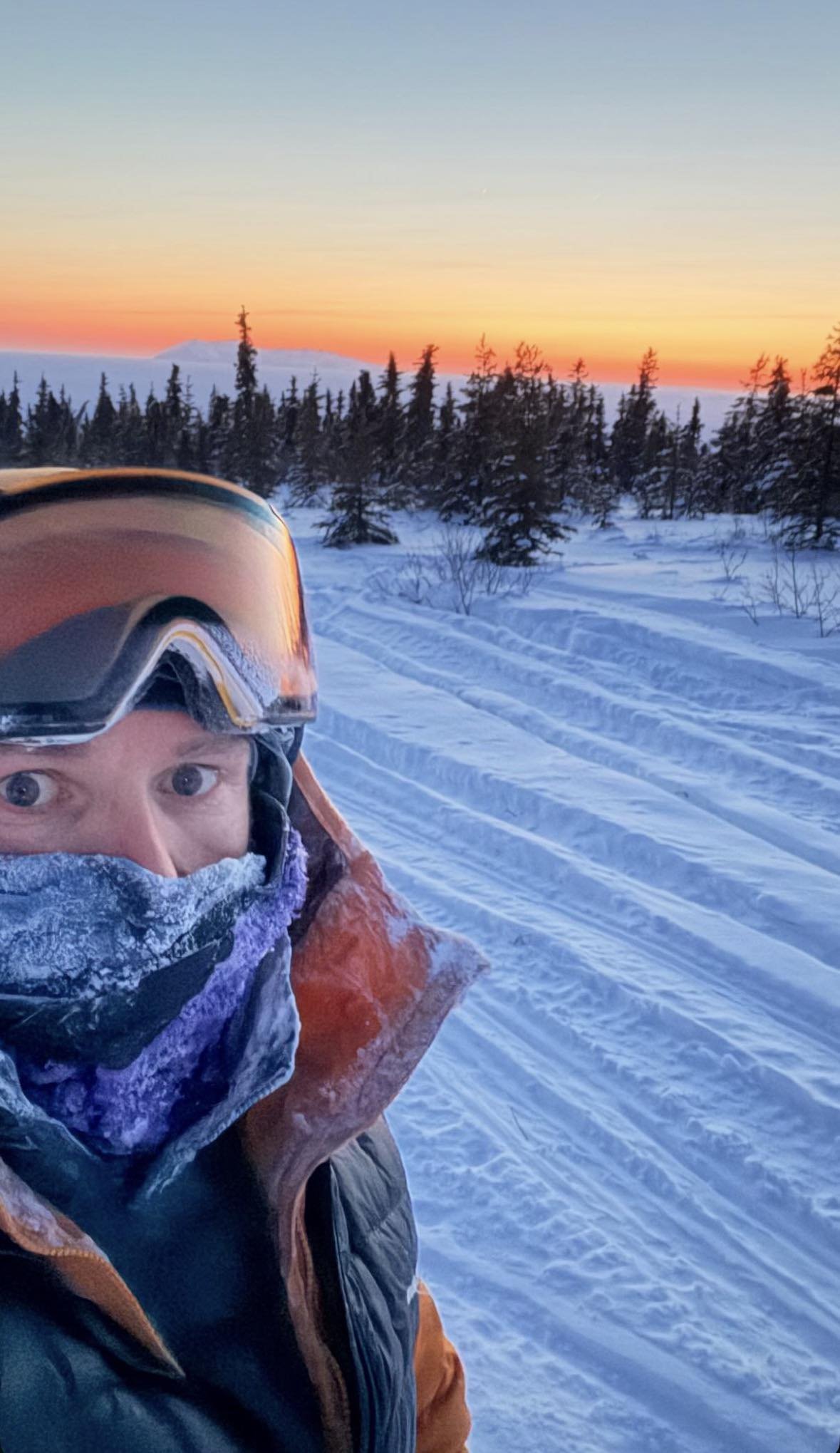
Today, our six racers in the ITI 1,000-mile race arrived in the community of Ruby, on the bank of the Yukon River!! This is a tremendous milestone: reaching the Yukon after a particularly arduous trip through the challenging, isolated 200 miles they have been traveling. This section is often considered one of the hardest sections in the race, and this year was even more challenging. The most snowfall in recent memory, combined with essentially no traffic on the trail, led most people (racers and dot-watchers alike) to believe the trail was impassable due to thigh-deep, soft snow. Additionally, they were out in temperatures as low as -50 deg F. These six racers were not only exceptionally driven and hard-working, but also patient to wait for the appropriate window to make the trip. They kept the faith that it was possible, and they made it happen. Tonight, we commend and congratulate them!

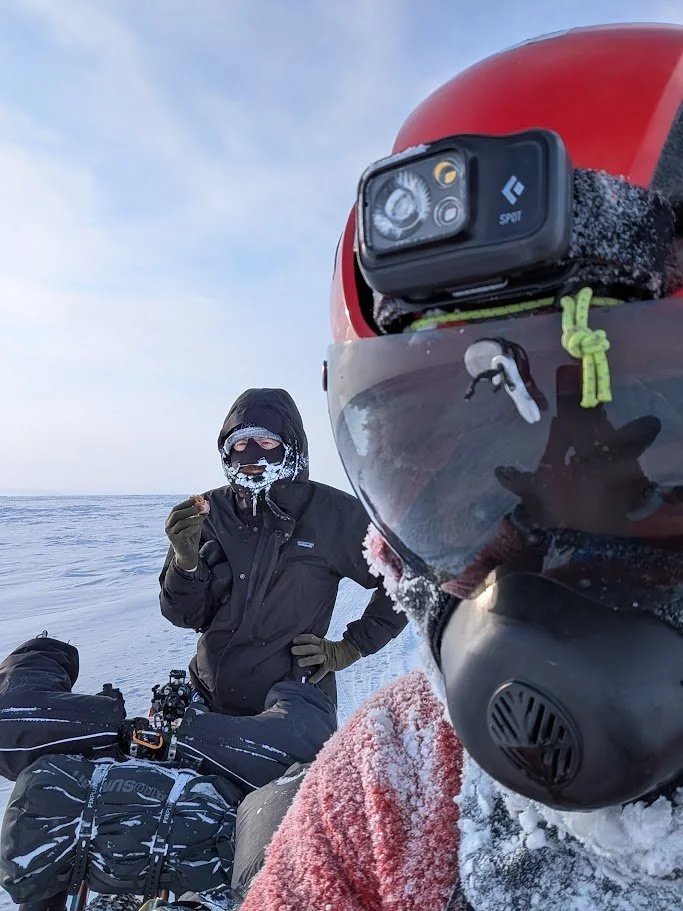
How cold has it been? The National Weather Service in Fairbanks is reporting that this year, the period Feb 25 - Mar 11 is the coldest EVER recorded in Fairbanks (230 miles to the east of Ruby), with an average temperature of -20 deg F. Those dates roughly coincide with the dates when our ITI racers have been in the interior. So when we say it’s cold, understand that it’s the coldest stretch on record for the area.

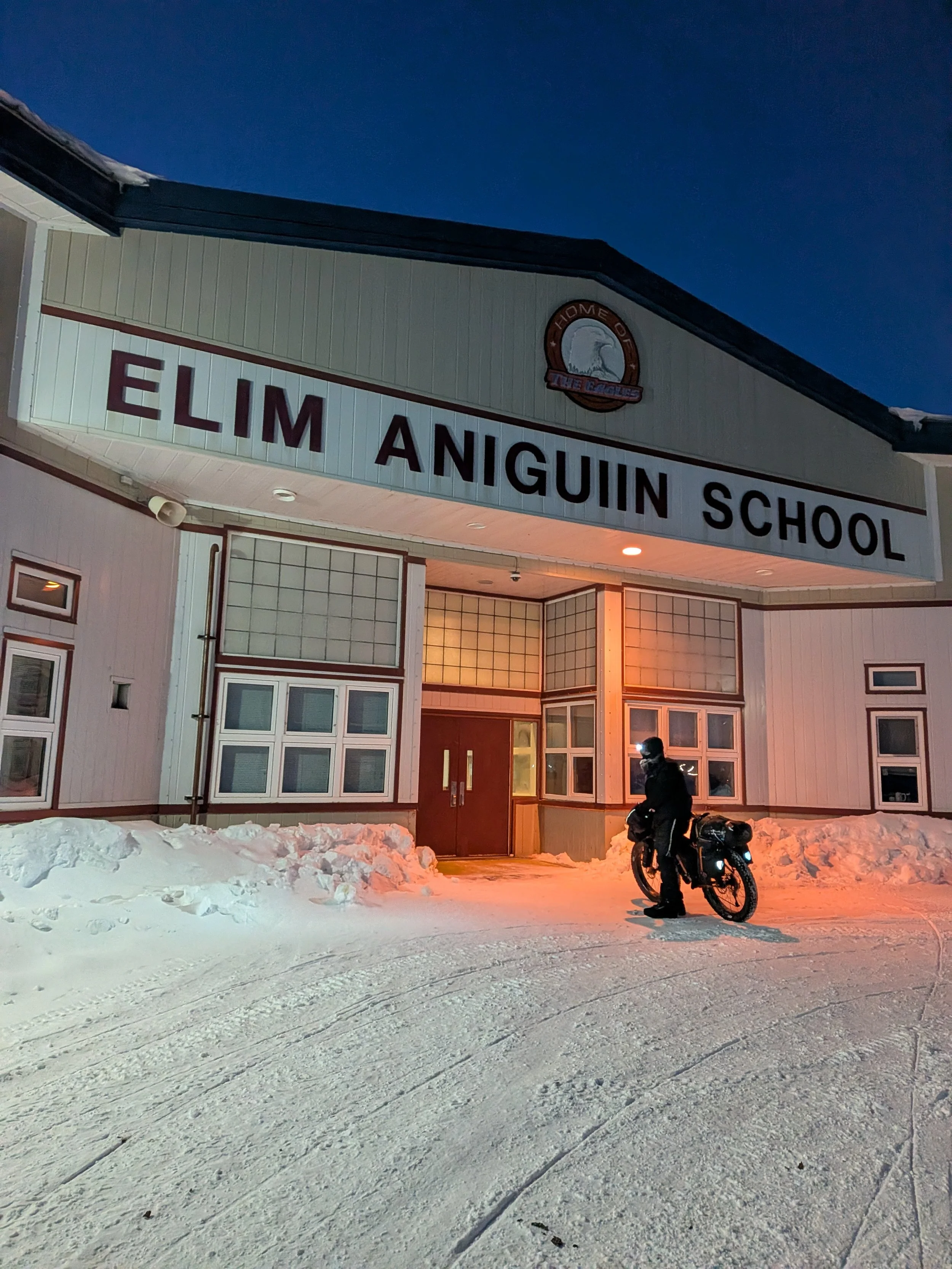
Once racers arrive in Ruby, there are two lodging options: the Wild Iris B&B or the public school. The school has a kitchen and a kettle, white gas to fill the depleted stores, showers, and a classroom floor to spread out wet clothes and get some shut-eye. After talking with Ryan Wanless today, Emily Wanless reported that the school was bustling - The lead dog teams were arriving as well, which means lots of people and noise and not much rest. It will only get busier as the day goes on. Hopefully, the shop classroom they set up for the racers offers a little peace and quiet.

Today, mushers in the Iditarod Trail Sled Dog Race were streaming past the racers all day. They will likely continue to do so for another day or two. 

Tonight, we hear from racers in their own words, in order of their arrival in Ruby - 

Ryan Wanless (Sioux Falls, South Dakota, bike) - Tonight, Ryan’s wife posted the following after his 27-hr push through the night to get to Ruby: 

“Just working our way through the checklist…

Extreme weather - check!  (Ryan: “I feel like it’s been -30 for like 10 days straight!”)

Bike mechanical - check!  (Ryan: “Troy was great. I had all the tools I needed. It was the second set of hands that made it work.”)

Dog sled encounters - check!   (Ryan: “I think Millie the Mushroom just passed me!” Also, Mushroom is not a nickname, but rather a failed talk-to-text.)”

Gavan Hennigan (Galway, Ireland, foot) - Sometimes, when the going gets tough, it can be helpful to remind yourself why you thought this was a good idea and what motivated you to be here. Prior to the race, Gav wrote that he came to be captivated by the historic trail and the historic ITI race, and that he was most looking forward to being alone.

Troy Szczurkowski (Daisy Hill, Australia, bike) - When asked what he would rather deal with, Troy indicated he’d rather have deep snow instead of rain, blizzards, or high winds. I wonder if he still feels that way. On the trail, he was most looking forward to the silence; dancing alone at 2 am on the Yukon; swearing at snow. Finally, he said he loaded the family up with two months' worth of dad jokes before he left home for Alaska. Hopefully, we can get our hands on some of those jokes.

Kendall Park (St. Louis, Missouri, bike) - Kendall has been making super steady progress since the Iditarod trailbreakers passed through. Like other racers, she has been challenged by mechanical issues, particularly with her bike rack, but last we heard, she had it secured. A lifelong learner, she is working on her French language skills with Erick and hopes to be fluent by the time they reach Nome. Bon courage, Kendall!

Erick Basset (Caen, France, bike) - We are not sure exactly sure when our in-house French instructor arrived in Ruby, since he lost his tracker a couple of days ago. We were informed that he is expected to pick up a new tracker at the next checkpoint in Galena. When asked what he would rather deal with, Erick indicated he’d rather have rain instead of deep snow, blizzards, or high winds. Unfortunately, he’s had all of the most challenging conditions possible except for rain. On the trail, he looked forward most to the northern lights and the wolves' song. His preparation and planning for ITI were challenging because there is no snow where he lives in France. He trains by bike on the beach, and he rode a bike for the first time (!) on snow just a week before the race started.

Mayella Krause (Sao Bento do Sul, Brazil, bike) - Maya’s explanation of her motivations to race the ITI is as follows:

“The winter ultra world is small yet full of people who understand the hunger to move through a world where a single mistake can kill. We don’t just endure the wilderness; we seek it out, craving the silence where we meet the hardest parts of ourselves. There’s a strength that comes from standing shoulder to shoulder with people who understand this madness.”

“We know what Alaska and ITI means to us…. the way it carves you down to your core and leaves something purer behind.

“I love being surrounded by “my people”... those who crave not comfort but the raw, unfiltered edge of existence. ITI is a reckoning with the self, a pilgrimage where mind and muscle are pushed beyond what most would call sane. To move through this desolate beauty, where snowdrifts rise like ghosts and the night stretches endless, is to strip away the excess until only resolve remains. It’s not strength alone that carries you across unforgiving miles—it’s the grit that gnaws at doubt and spits it out, the quiet voice that says “trust your struggle” when the body screams for warmth and rest. And yet, there’s a strange solace out there, in the company of others who understand this pull, this need to confront the wilderness and be remade by it. We are forged in frost and fatigue, bound not by words but by the shared knowledge that survival out here is a conversation between will and wilderness, and only those who listen make it through.

“Out there, cold is not just a temperature—it is a measure of will. It strips away the unnecessary, whispering “quit, quit” with every breath that crystallizes in the air. The fatigue burrows deep, settling into the marrow, an old companion you learn to carry like the weight of the miles behind you. Pain is not a fleeting thing—it is constant, layered, evolving. These are not obstacles but conditions of existence in a place like this. And yet, you move. Because stopping is not an option.

“The loneliness is vast, an expanse as endless as the snowfields, and in that solitude, there is no escaping yourself. The silence stretches wider than the sky, and you find yourself speaking to the wind, to the wolves, to your hallucinations. Stripped raw by the conditions and the distance, you are forced to reckon with yourself. No distractions. Just you and the thing you swore you would do. And you do it—not for glory, not for praise, but because some part of you refuses to live a life that is small. Because you do not wish to stand at the edge of existence and wonder what lies beyond. You do it because you can.”

Stay tuned for more updates and stories from the trail, the next of which is coming tomorrow night.

Written by Leah Gruhn

Thanks to Wild Winter Women - Allison Carolan, Amanda Harvey, Faye Norby, Jan Redmond Walker, Jessica Roschlan, Kari Anne Gibbons, Laura Wiesmann Hrubes, Lynn K Hall, Madeline Harms, Rashelle Hintz, Rebecca McVay-Brodersen, and Sarah Bergstrom.

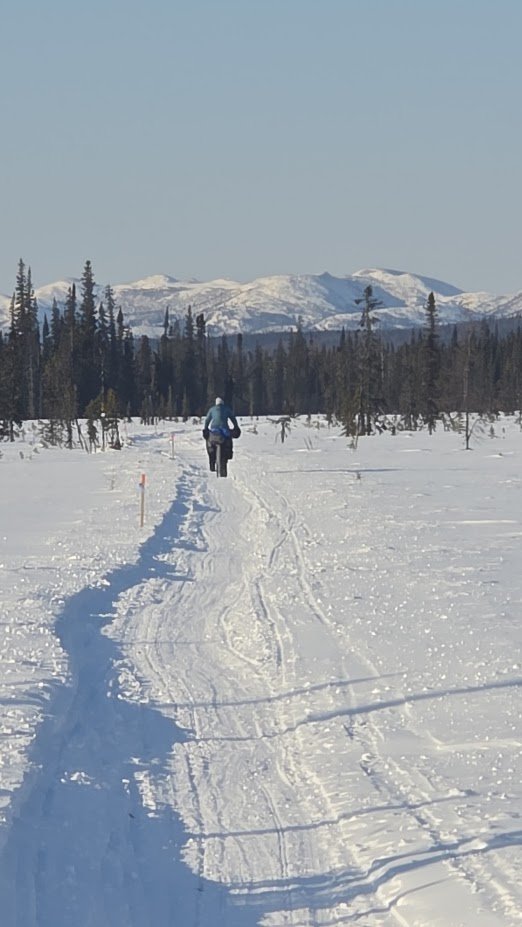
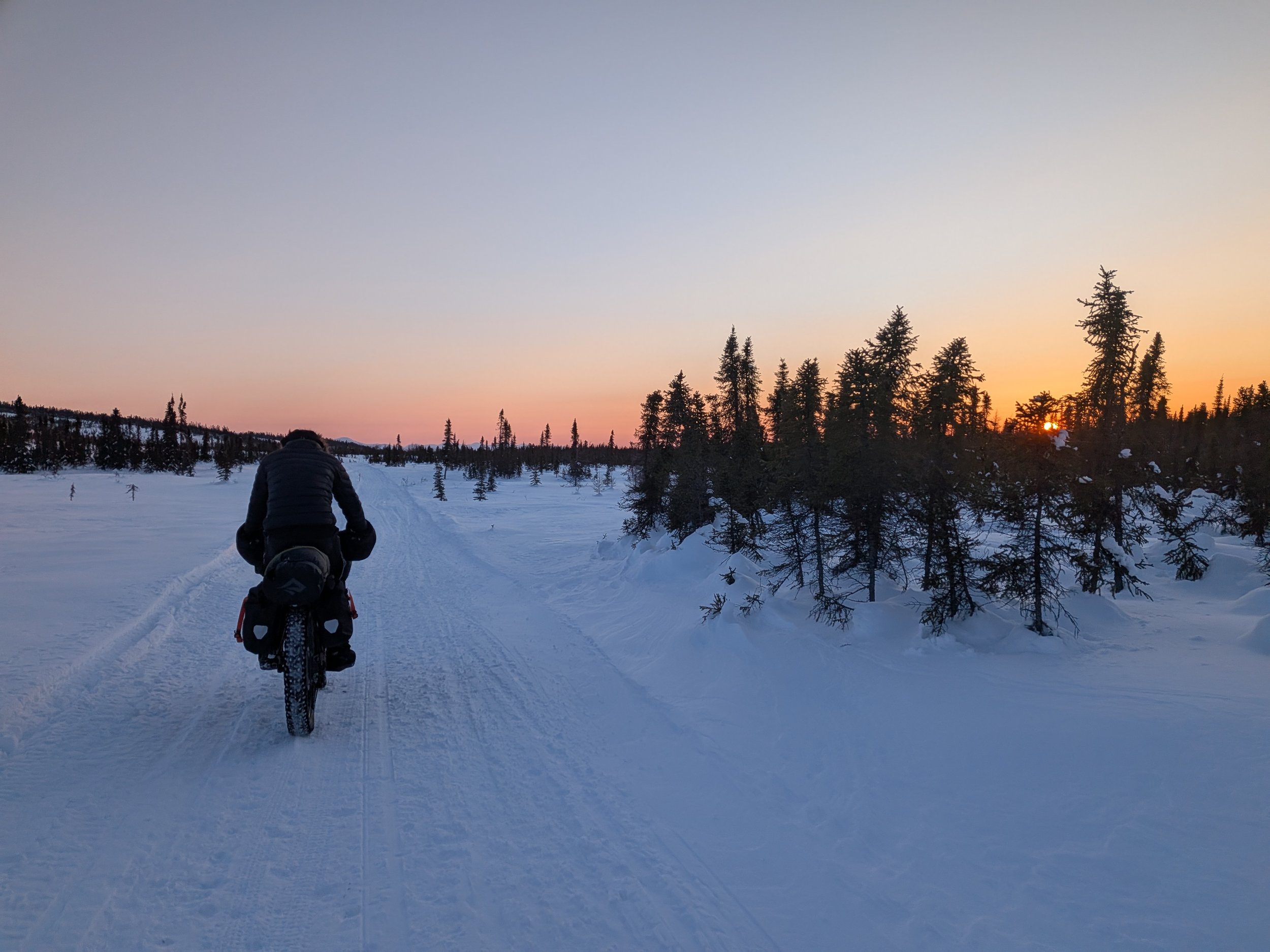
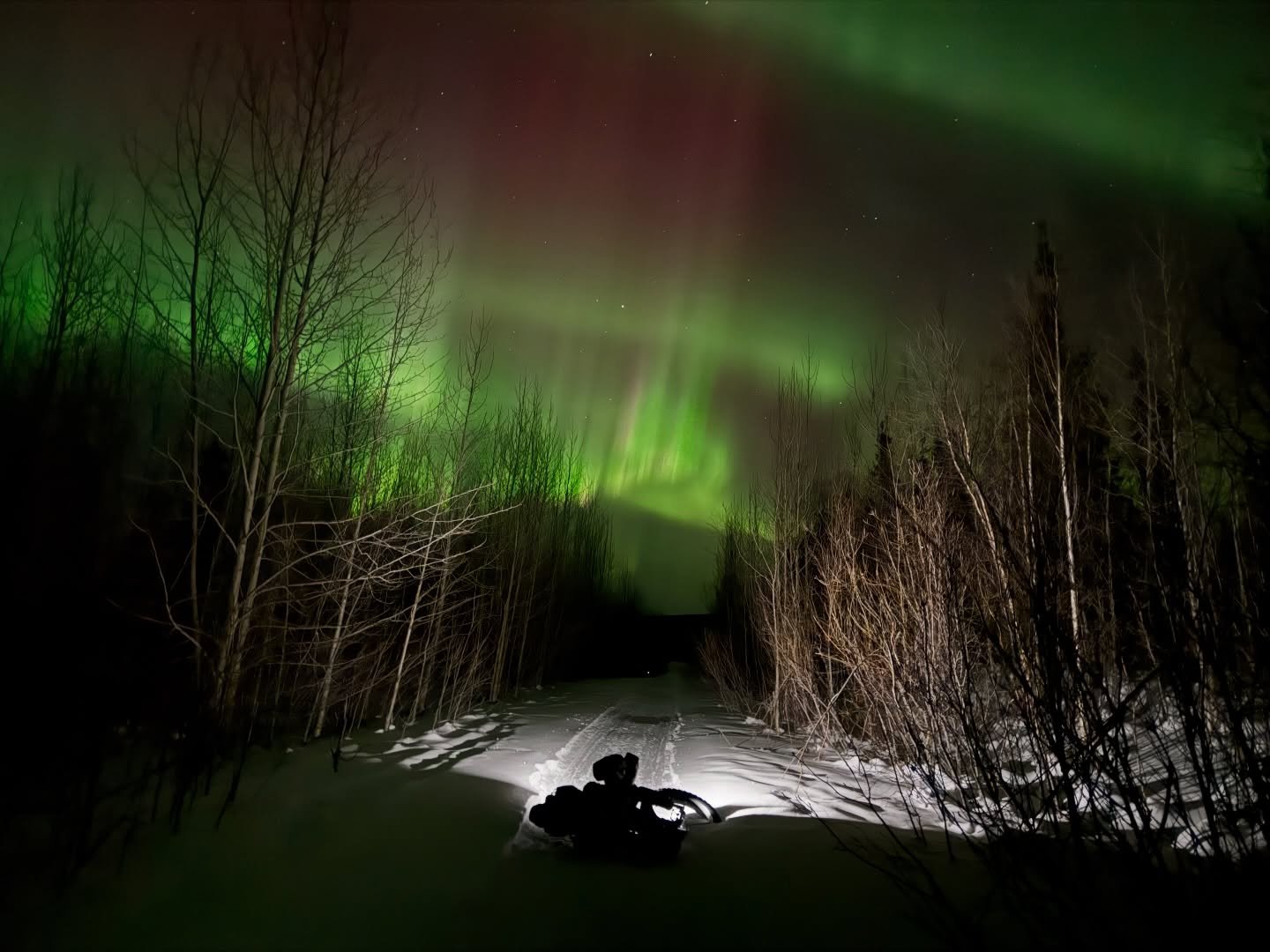
When riding through the night under clear skies, racers can be rewarded with a spectacular light show. (photo: Ryan Wanless)

Wild Winter WomenComment
Day 19: The Muddle in the Middle

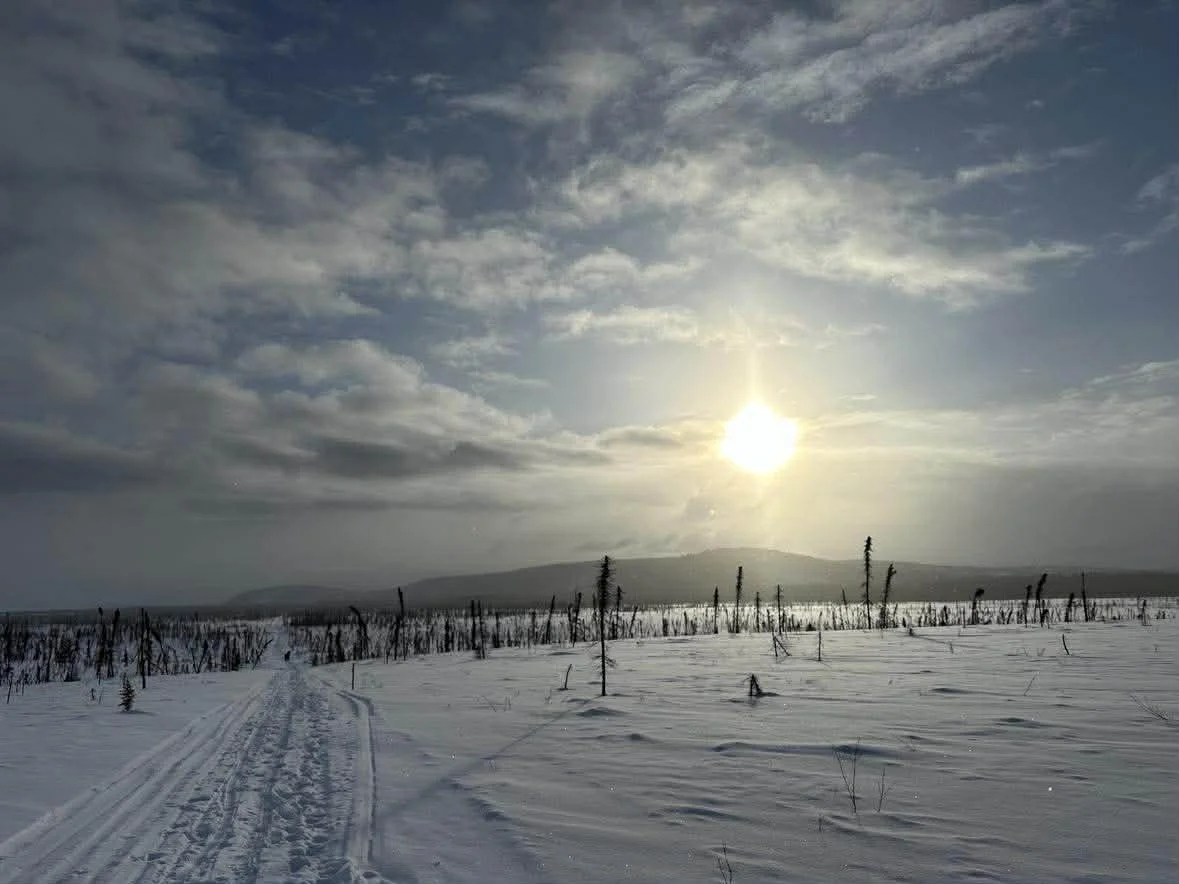
Iditarod Trail landscape of gently rolling hills through the interior rear Cripple checkpoint (photo: Leah Gruhn)

When it comes to winter ultras, or any long endurance event really, it’s often not the last few miles or hours that are most difficult; rather, it’s the middle, slightly before or around the halfway point. When you’ve been out for a long time, you’re bone-tired, and not even halfway there, it takes a great deal of mental strength to convince yourself to continue on. This year, ITI 1,000-mile racers have the added complexity of having had to wait for trail breakers for several days in variable conditions, which killed any momentum that they had previously. Now that the trail is passable, they need to put in big miles to reach Nome by the 30-day cutoff. The six individuals left on course are currently racing to the next checkpoint at Ruby (mile 495) on the Yukon River and are over halfway along the ITI 1,000-mile course.

As of 2:30 pm AKT, Gavan Hennigan (foot) leads at 457 miles. Gavan has been pressing on at a relentless pace since the trail breakers came through a few days ago, having covered 30 miles already today.

Troy Szczurkowski leads the bikers at 441 miles. Troy has finished the ITI 1,000-mile race six times before and is rumored to be making a move for the win this year. Both Gavan and Troy stopped only briefly at the Cripple checkpoint (422 miles). Mayella Kruse, Kendall Park, and Ryan Wanless rested for a couple of hours at Cripple and are now back on the trail around the 430-mile mark. Erick Bassett lost his tracker but is said to have left Cripple about 45 minutes before Ryan. He is hoping to get a new tracker at Ruby.

The Cripple checkpoint, where some athletes choose to pick up their drop bags (literally dropped from an airplane!) was laid out differently this year, with some food and fuel on the trail and some at the checkpoint, giving racers the choice for where to resupply and leaving it to them to decide if they wanted to take the longer route which would allow them to visit the dog sled checkpoint of Cripple. Because this stretch of trail is so rugged and isolated, the race director wanted to ensure athletes had plenty of food and fuel, as well as multiple options to get them. 

It might seem puzzling that a foot racer is leading the ITI, but the unusual weather and trail conditions can explain this. Challenging trail conditions are much more disruptive to bike than to foot athletes, so most bike athletes chose to stay (or even backtrack to) McGrath (mile 310) until trail breakers came through, knowing they could pick up the pace once the trail was established. Meanwhile, Gavan (foot) chose to push through the poor conditions to mile 370ish before trail breakers reached him, knowing that on foot, he can’t put in huge miles like the bikers can when conditions are good. It will be interesting to see whether he remains in the lead to Nome or if the bikers pass him at some point. 

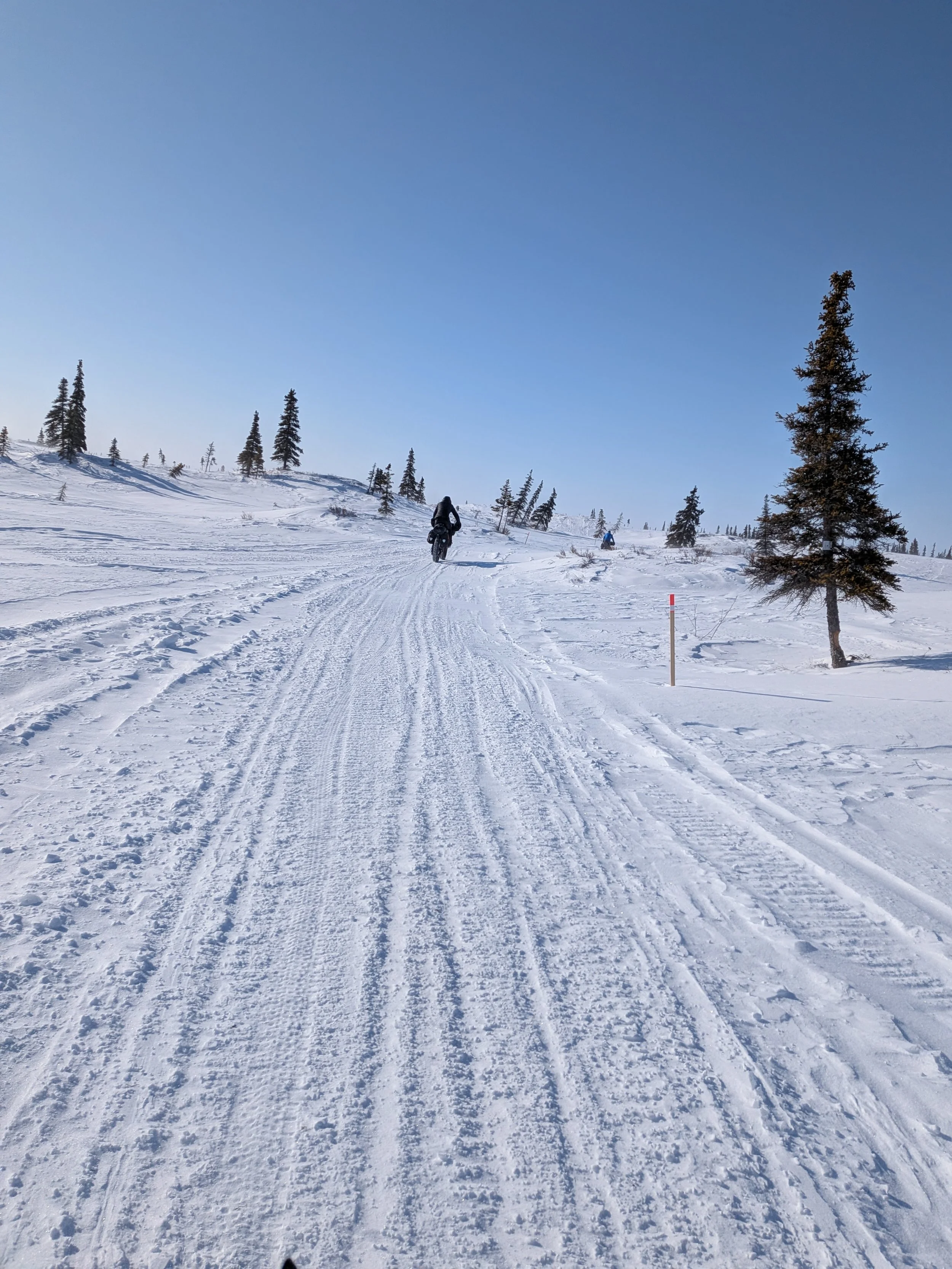
The 200-mile section racers are currently traversing (McGrath to Ruby) is called “the interior,” and many former racers consider it to be the most rugged and challenging section of the 1,000-mile ITI trail. It is mentally challenging because it’s far enough in the race that the racers are getting tired, and far enough from Nome that it’s possible to question whether they will ever get there. It is so remote; after Takotna, there are no inhabited villages along this portion of the trail. There are only a few ghost towns, abandoned cabins, and occasional reminders of the region’s gold mining history. From Ruby, racers will follow the Yukon River for two to three days. Hopefully, the river is well packed, and the snow is not drifted. If the surface of the river is packed snow or ice, conditions will be fast for the bikers. Stay tuned for what is turning out to be quite the race against dog teams, cutoffs, and Nature herself!

Written by Madeline Harms

Thanks to Wild Winter Women - Allison Carolan, Amanda Harvey, Faye Norby, Jan Redmond Walker, Jessica Roschlan, Kari Anne Gibbons, Laura Wiesmann Hrubes, Lynn K Hall, Madeline Harms, Rebecca McVay-Brodersen, and Sarah Bergstrom.

Wild Winter WomenComment
Day 18: Mush!

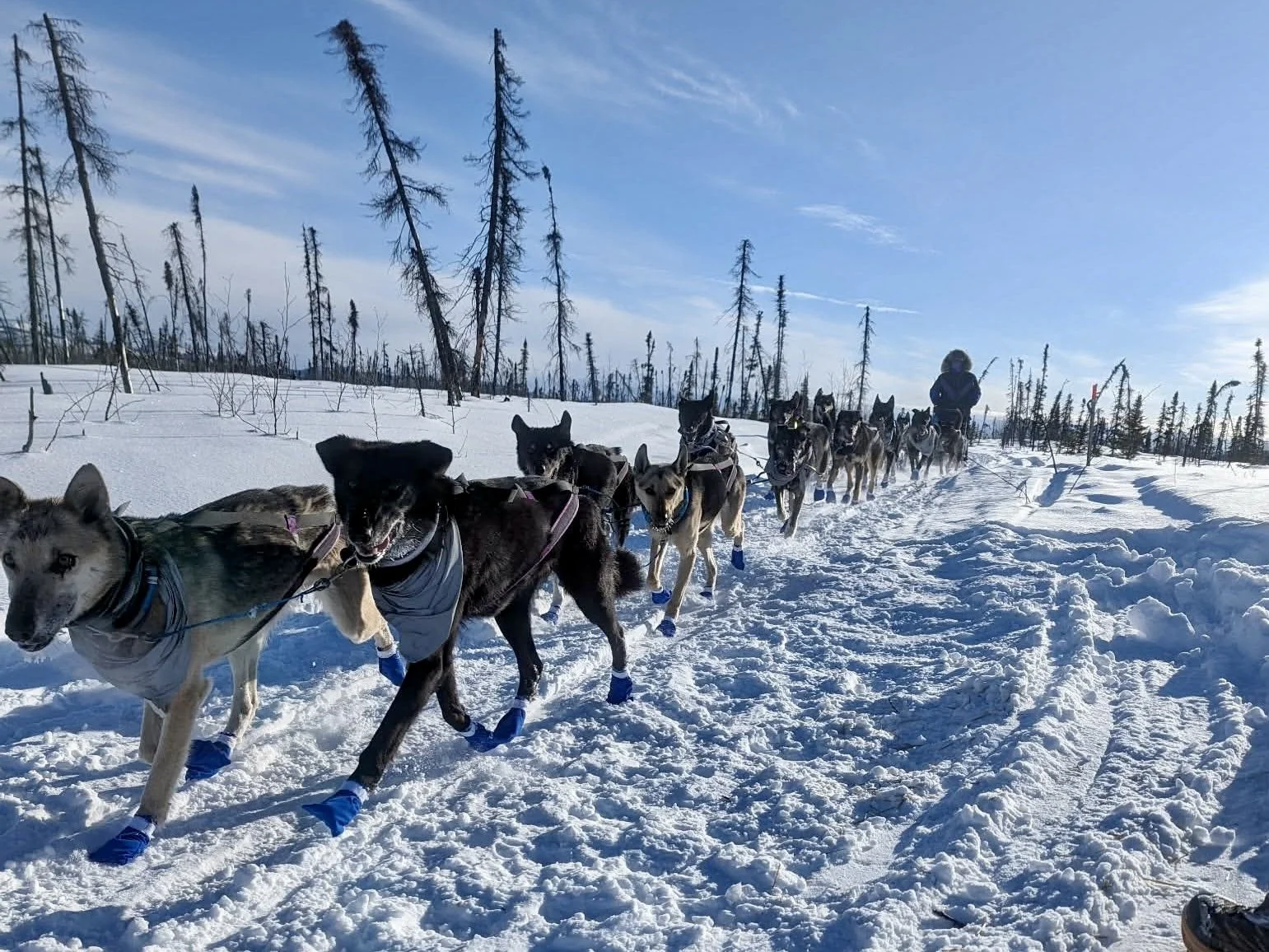
ITI encountering Iditarod (Photo Credit: Faye Norby, 2024)

Alaskan Huskies are bred to love pulling and thrive in the snow. They are happiest working hard in the cold. Does this sound like anyone we know? I can think of six ITI 1,000-mile athletes, and they have the privilege of literally sharing the trail with these dog teams and mushers for the next few days. This is a special experience for the 1,000-mile ITI racers on the trail between McGrath and Nome. I hope they find the sloppy-tongue, toothy dog smiles an inspiration to find JOY in the mundane work as they enjoy the Alaskan playground.  Because the truth is, we can learn much from the dogs: eat lots, sleep hard, and play harder (and huskies do it best!).

Today is finally the day when the Iditarod sled dog racers might start catching our ITI human-powered racers. There is something unique about sharing the trail with these four-legged, furry athletes. The bond between a human and their working dogs is such a special experience, and seeing it in action is deeply touching. Listening to mushers speak to their dogs, watching the dogs work in tandem under their humans' leadership, and witnessing the power of teamwork and trust. Maybe a team passes our racers, and they see them in action. Maybe our racers come upon a checkpoint where the dogs are bedded down for rest or getting their meal and vet care before the musher goes inside to care for their own needs. Witnessing the Iditarod up close and personal like this is a rare opportunity and a highlight for the ITI 1,000-mile racers.

 Gavan Hennigan, our only human sled dog left, pulled his sled through the night and made it to the North Fork Innoko shelter cabin (mile 416) at 5:47 am Alaska time. Ryan Wanless was not far behind him, biking through the night also, arriving at the cabin around 9:45 am Alaska time. Gavan left the cabin at 2:30 pm after a 9-hour break. He made a quick stop at the Cripple checkpoint (mile 422) to locate the drop bags. These drop bags are literal drop bags: dropped from a plane, and racers are given the coordinates. We hope they are visible from the trail and easy to locate!  

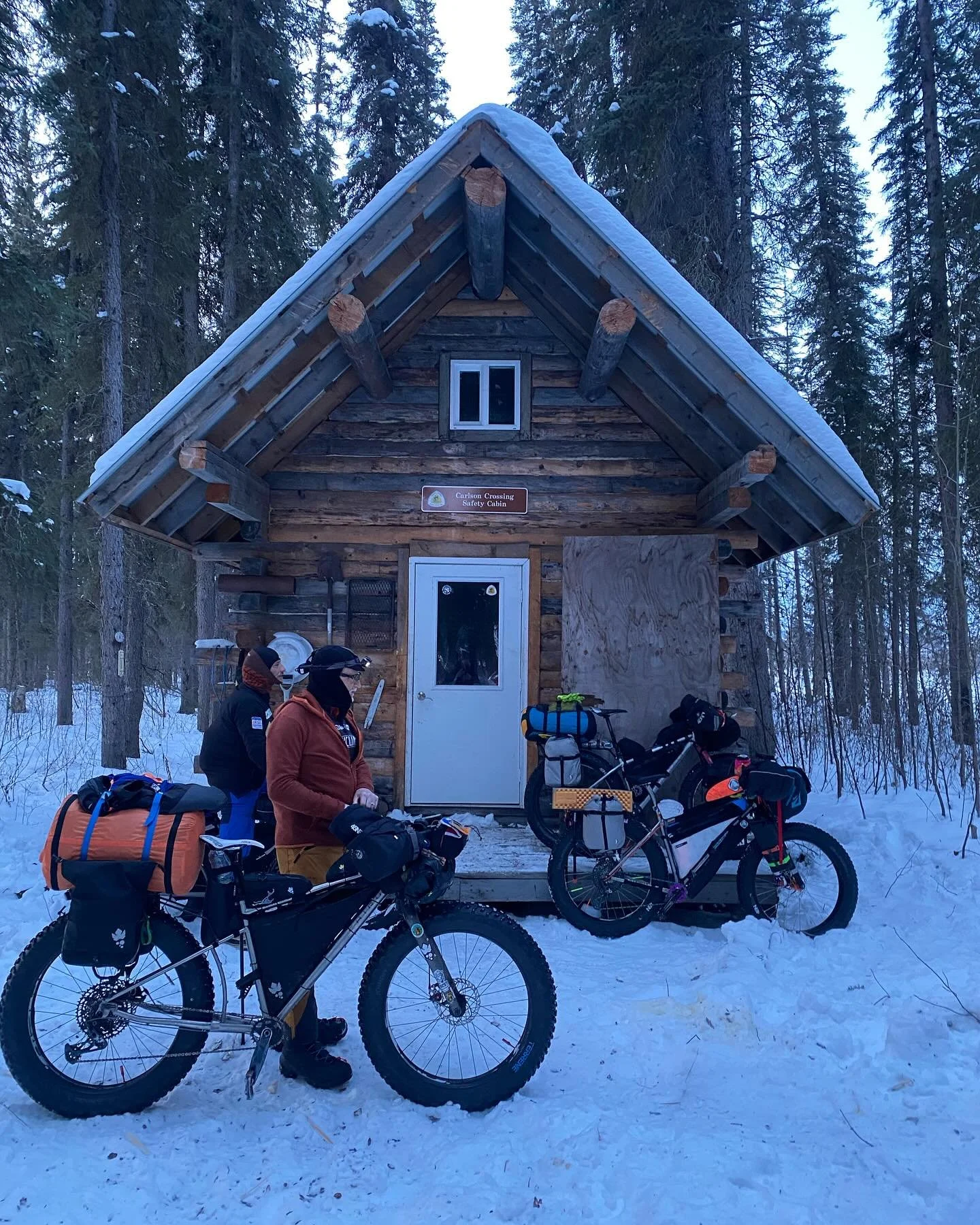
After staying the night at the Carlson Crossings safety cabin (mile 374), Troy Szczurkowski, Erick Basset, Mayella Krause, and Kendall Park all got on the trail between 9:00 and 10:00 am Alaska time. Erick lost his tracker yesterday and will be picking up a new one in Cripple. He has been with Maya, Kendall, and Troy and is feeling good.  Kendall had to stop to fix her rack, but she was rolling again by 1:00 pm Alaska time. The bikers seem to be moving a little faster than yesterday’s pace and making good time. We are hoping that means the trail is improving!

As temps hover between cold and colder, there will continue to be moments of pacing to keep warm and regretting life’s choices. It’s now that our racers practice using their skills to pull them out of that spiral. They tap into the part of the brain that speaks truth and helps us remember that every journey has highs and lows, and that we have a choice about where to spend the most time. This aspect of thought control is crucial to success.  Continuing defies all logic. Putting yourself through pain and misery does not make sense.  The “I no longer care” monkeys are hard to shake once they land on your back. Don’t let them get close! Don’t let them sink in their talons! It is in these moments that we see a level of grit, determination, and perseverance that transcends all physical feats.   

If there is speculation on the ability to make a Nome-in-30-days cutoff, just know that every racer is doing trail math constantly. They’re setting their goals and accepting their limitations. Everything falls under the reality that the trail will decide. Alaska will decide. I think we can all agree that we hold the determination, constant forward motion, and deliberate progress in deep respect as these athletes embrace an experience and an adventure that will not be defined by days on a calendar. These athletes have embarked on this journey with the knowledge that they are at the mercy of Alaska and the desire to take advantage of every minute spent in this great wilderness. So much to be grateful for on the journey; wherever it leads and however long it takes.

Stay tuned for more updates and stories from the trail. Progress may be slow and hard-earned, but we are tracking every detail and enjoy sharing what we can with you.

Written by Rashelle Hintz

Thanks to Wild Winter Women - Allison Carolan, Amanda Harvey, Faye Norby, Jan Redmond Walker, Jessica Roschlan, Kari Anne Gibbons, Laura Wiesmann Hrubes, Leah Gruhn, Lynn K Hall, Madeline Harms, Rebecca McVay-Brodersen, and Sarah Bergstrom

Wild Winter WomenComment
Day 17: Sounds of Silence

All of our racers yesterday heard a sound that they have been waiting on for many days, the drone of a snowmachine (snowmobile for the non-Alaskans). The Iditarod trailbreakers have passed the six remaining ITI 1,000-mile racers, creating and marking a trail that will guide them the remaining 600ish miles to Nome. Gavan enjoyed a long rest at Carlson Crossing (CC) shelter cabin and was joined by the Iditarod Sled Dog Race trail breakers around 5:30 pm. Biker Ryan joined the crew at CC cabin after 9:30 pm, making for a cozy night in the small cabin. Both Gavan and Ryan departed the cabin in the afternoon and are currently making their way northward to the North Fork Innoko shelter cabin and their drop bag at the Cripple checkpoint.

The remaining 4 racers spent the night together at Ophir. Mayella and Kendall got a comparatively early start today, leaving just after 5 am. Erick and Troy left a few hours later, keeping a steady pace. Tonight, Maya, Kendall, and Troy are resting in the CC cabin. Erick is assumed to be with them as well, but his tracker appears as though he might be taking a bivy rest along the trail. With the trailbreakers taking their Starlink internet connection with them, we likely won't get substantial updates from the racers until they reach Ruby, which is days away. All we can do now is imagine what their days are like on the trail.

On calm days our runner and riders will mainly be listening to the sound of their footsteps and tire treads. Those familiar with the cold will know that the sound of snow changes with the temperature. Squeaky snow indicates cold temperatures, a softer sound underfoot means that temps are milder. The winds tonight are 5-10 mph, which shouldn’t be stiff enough to whistle through their gear, although lows of -2° F will provide plenty of squeak to the snow.

There isn’t a lot of ambient sound on the trail, so what you do hear becomes very interesting. The aforementioned drone of a snowmachine could signal incoming Fireball from an ITI volunteer, or an indicator that you need to move as far to the side of a narrow trail as possible for a passing machine. Sometimes the snowmachine will stop and a racer will get to chat with the driver, and they might turn out to be a friend with a hug and a spare slice of frozen Moose’s Tooth Pizza. Sometimes the snowmachiner will want to know what the heck you’re doing out there. Other times a passing thumbs up to signal all is OK is all that is communicated. 

The other droning sound is the bush planes that are the lifeblood of the interior villages during the winter. On clear days watching the planes make their way across the sky is about as exciting an entertainment as possible. Though on rare, special occasions, the plane is flying near and low, to drop extra trail snacks for the racers.

Video credit: Sunny Stoeer

When the wind isn’t roaring through the Ptarmigan Valley before Rainy Pass, the ptarmigans make a delightful wah-wah sound that’s worth a stop to listen. The trail can sometimes be so quiet that the only noise is the soft chomping sound of a moose munching on willow branches.

As the racers work their way down the trail, they spend their time thinking of family and friends, and about everyone who made it possible for them to take on this feat. In that spirit, below are notes of appreciation from the 1,000-mile racers who started the race but are no longer on the trail.

  • Chester Fehrmann: My partner, Meg, for all her support over the last 20 years. My friends I ride with, many ITI veterans, who I get to ski along with on winter trips and who provided me advice on bad gear choices 😜 and Speedway Cycles for keeping me on the trails when skiing isn’t an option!

  • Herman Watson: Big Marc “the Marc” Klimek, my wife, who is watching our 15mo and dog while I’m out and who famously said “don’t be a pussy” when I considered deferring my entry to ITI 2023 after suffering significant knee pain during Fat Pursuit a few weeks prior. And, I guess, my office for having my back while I’m gone.

  • Jason Davis: My awesome wife 

  • Jay Petervary: Tracey's patience with my drive and intensity 😎 but also so much encouragement.

Written by Amanda Harvey

Thanks to Wild Winter Women - Allison Carolan, Jan Redmond Walker, Faye Norby, Kari Gibbons, Leah Gruhn, Laura Wiesmann Hrubes, Lynn Hall, Madeline Harms, Rashelle Hintz, Rebecca McVay-Brodersen, Jessica Roschlan, and Sarah Bergstrom.

Wild Winter WomenComment
Day 16: Celebrating the Legacy of the Iditarod Trail

As of 2 pm Alaska time, our racers are now over the halfway point in the 30-day cutoff for an official finish time to Nome.

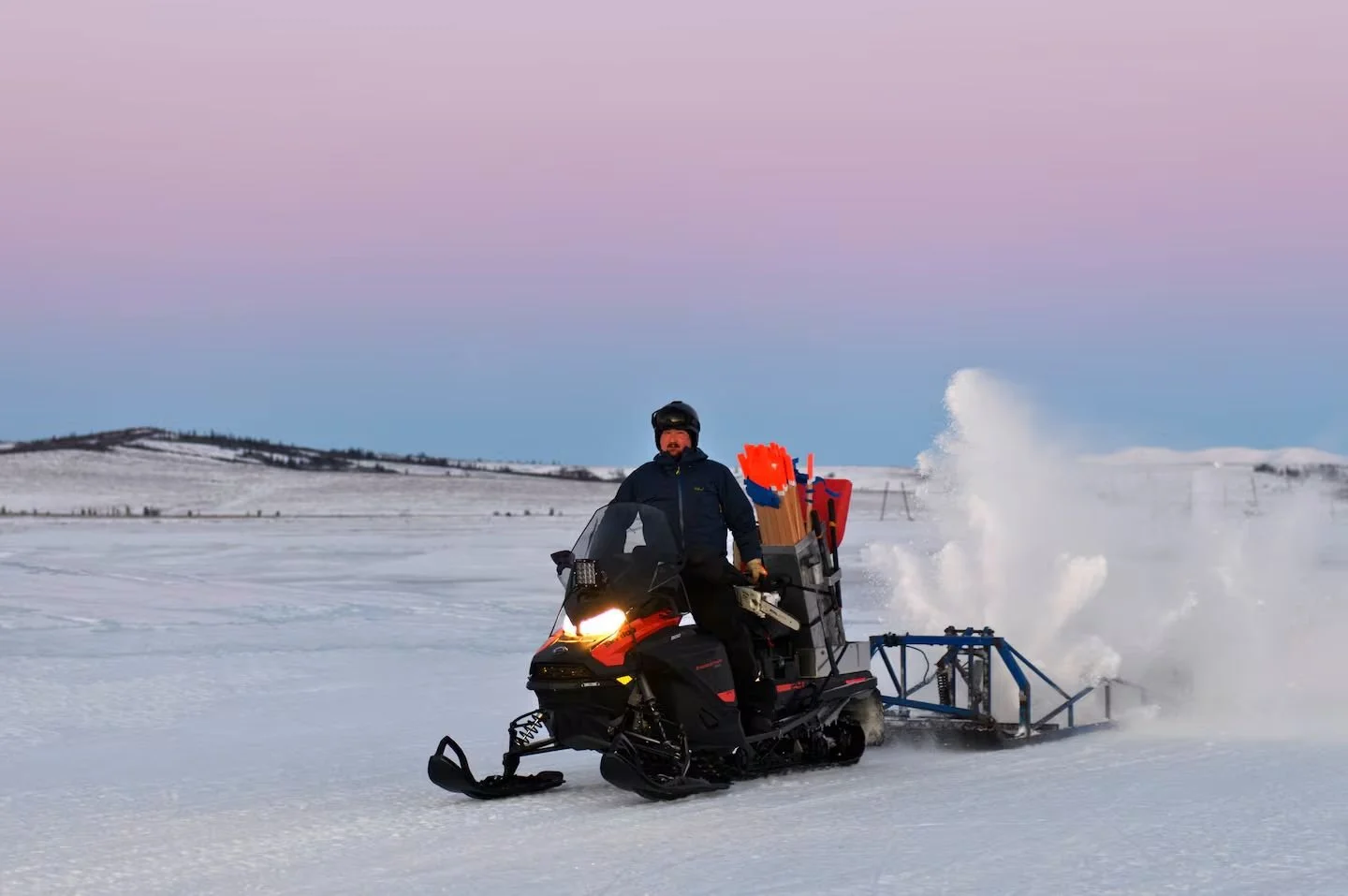
A big discussion the last few days has been when the Iditarod dog sled race trail breakers will create a trail past McGrath? These trail breakers are a group of snowmobilers who drag heavy sledges behind them, stopping to saw and remove impeding brush or logs on the path as needed. We got word that the trailbreakers reached McGrath yesterday, and Ryan told us they passed him just before 4 pm on the trail! With all this excitement over the arrival of the trailbreakers, there has been a flurry of activity in our previously lifeless dots. Of note, sunrise in Ruby is 8:55 am, and sunset is 8:05 pm; previous racers have shared that it stays light far past sunset. Because of this, our racers may choose to have a later-than-conventional start to their day and keep moving on the trail well into the late hours of the night.

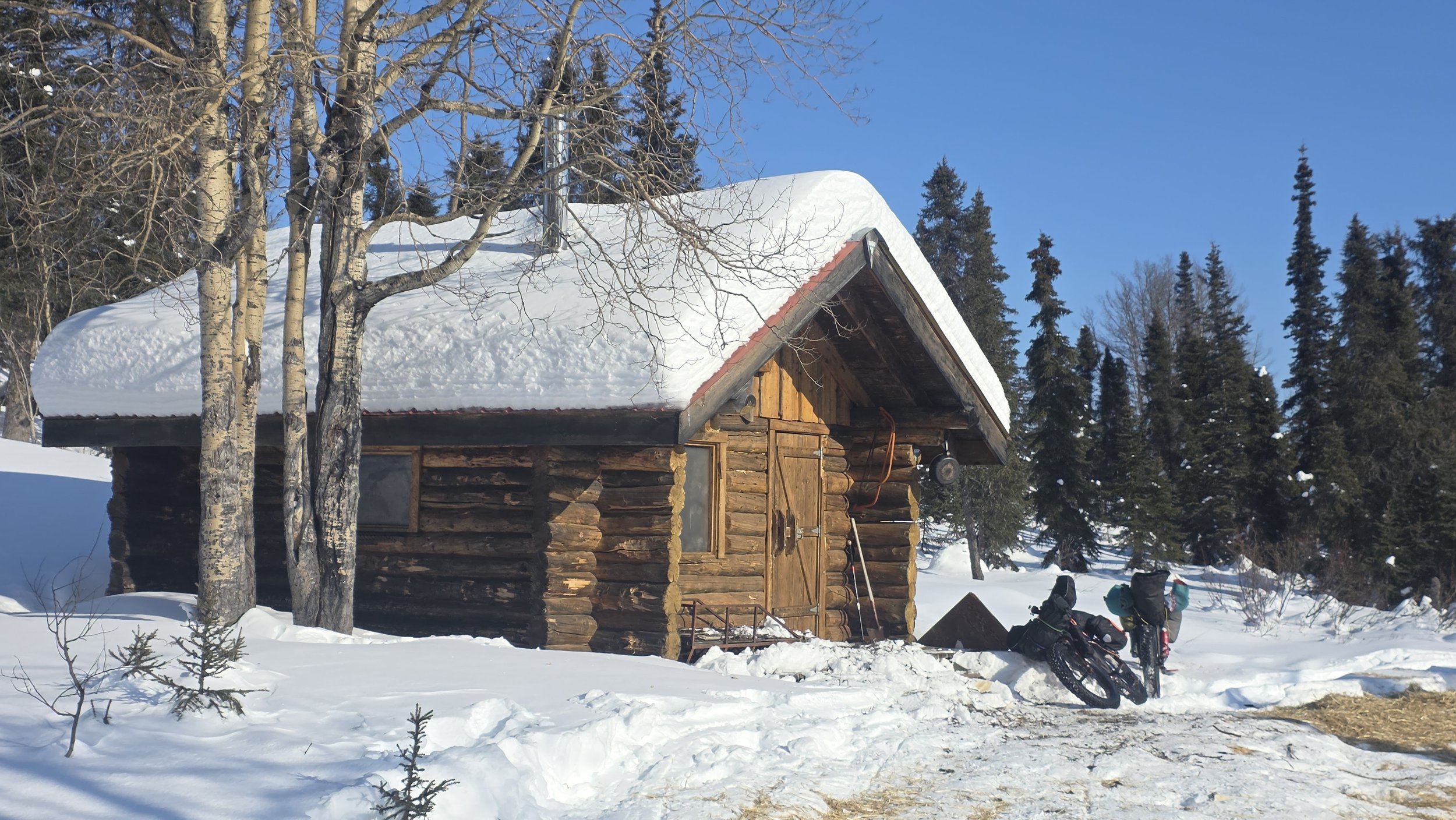
After a relatively mild day yesterday, with temperatures in the single digits Fahrenheit, our racers had another chilly night of temperatures below -20F. Gavan chose to snowshoe all night, reaching the Carlson Crossing (CC) cabin (mislabeled Collins on trackleaders.com) just after 4 am, clocking in at a speedy 1.2 to 2 mph throughout the night. Last year, Gavan was in Ruby by day 13 of the ITI, which is 122 miles from his current location. CC cabin, about 68 miles past McGrath, is one of ten safety cabins on the historic Iditarod trail maintained by the Bureau of Land Management. These cabins are simple structures with a bunk, a wood stove, and an outhouse. Many are only accessible in winter and are first-come, first-served. Racers will need to do chores such as chopping wood and building a fire when they arrive. Gavan might also consider chopping extra wood as a courtesy to those who come after him.  

Ryan spent the night sleeping between Ophir and the CC cabin. This morning, he started post-holing in thigh-deep snow and made it about 2 miles in 3 hours before stopping again. Troy stopped for the night between Takotna and Ophir and started making progress down the trail around 9:30 am. He travelled a little over 9 miles in about 5 hours to reach Ophir, where he is taking a break. Erick, Maya, and Kendall spent last night in Takotna. Their dots started moving towards Ophir in the early afternoon. A little after 2 pm, their speed picked up, suggesting they had a set trail to follow. Dot watchers around the world have been waiting excitedly in anticipation for this. This afternoon, they passed the Takotna River, where they enjoyed their final views of the Alaska Mountain range.

On his race survey, Erick shared that he does not have snow where he lives in France and has been practicing by biking on the beach. With little winter biking experience, his perseverance in this year’s deep snow and extreme weather shows his ability to adapt to new challenges and changing conditions. Maya shared that she was not able to train as hard for this race as she would have liked to due to life events. She prides herself on being the first Brazilian to finish the ITI 350, which is fueling her desire to reach Nome. Rumor has it these athletes are planning to put in some big mileage days now that the trailbreakers have passed them.  

As our racers have experienced, one of the unique aspects of the Iditarod trail is that it only exists for a few weeks a year, needing trail groomers and frozen water for passage. So how did this incredible 1,000-mile winter trail across Alaska come to be? It is perhaps best known for the 1925 life-saving serum run, when 20 mushers and about 150 sled dogs carried the diphtheria antitoxin from Nenana to Nome in five and a half days. This incredible feat, accomplished during an intense Alaskan blizzard with hurricane force winds that grounded all flights, and saved the Village of Nome from a deadly diphtheria outbreak.

It took until 1978 for Congress to establish the Iditarod as a National Historic Trail, 5 years after the first Iditarod Dog Sled race. A Senate report noted that the trails comprising the Iditarod National Historic Trail “…offer a rich diversity of climate, terrain, scenery, wildlife, recreation, and resources in an environment largely unchanged since the days of the stampeders. It is the isolated, primitive quality of this historical environment that makes the National Historic Iditarod Trail proposal unique. Nowhere in the National Trail System is there such an extensive landscape, so demanding of durability and skill during its winter travel season. On the Iditarod, today’s adventurer can duplicate the experience and challenge of yesteryear.” (US Department of the Interior, Bureau of Land Management). In this remote area of the world, where Mother Nature dictates much of life, the Iditarod Trail gives us a glimpse back in time to a world less gripped by technology and materialistic gain, to a way of life rooted in survival, creative adaptation, and looking out for one another. 

In Honor of International Women’s Day, we would like to honor some of the women of the Iditarod Dog Sled Race. The first Iditarod Dog Sled Race was held in 1973 as a way to commemorate the history of the Iditarod Trail. No women mushers finished that first year. However, in 1974, Mary Shields became the first woman finisher, and Lolly Medley finished shortly after her, showing the world that women can indeed do hard things. The bravery of these two pioneers came only two years after women were officially allowed to run the Boston Marathon (1972). Mary Shields died last summer at the age of 80 years old.  Originally from Wisconsin, she moved to Alaska after college and worked as a waitress to feed her dogs. During the 1974 Iditarod dog sled race, men at checkpoints made bets on when she would drop out, and women made bets on when she would finish, which she says only fueled her will to make it to Nome. Shields was a true inspiration to many women who wanted to take on winter adventures and dog-sled racing. History was made again in 1985 when Libby Riddles, who spent her youth in Wisconsin and Minnesota, became the first woman to win the Iditarod dog sled race. Since then, Susan Butcher became the second woman to win the race, and she won it a total of 4 times, the last in 1990.

This year’s Iditarod Dog Sled race started at 2 pm Sunday, March 8th, in Willow, Alaska. Twelve women are taking part in this year's race, and we would like to take a moment to list their names. Those with a previous top-ten finish are Paige Dorbny, Jessie Royer, and Millie Porsild. The women veteran mushers are Gabe Dunham, Hanna Lyrek, Josie Shelley, and Michelle Phillips. Women rookies this year are: Sydnie Bahl, Jaye Fouche, Sadie Lindquist, Jody Potts-Joseph, and Brenda Mackey. 

With both the ITI and the Iditarod Dog Sled Race currently underway, Alaska has become the largest playing field in a game of human grit, determination, and survival. Whether on foot, by bike, or on a dog sled, these racers have watchers around the world on the edges of their seats, eagerly awaiting updates. In a world with predictable routines and man-made comforts, perhaps we all yearn a little for the chaos, hardships, and unpredictability that an adventure through Alaska is sure to bring.  

Written by Jessica Roschlan

Thanks to Wild Winter Women - Allison Carolan, Amanda Harvey, Faye Norby, Jan Redmond Walker, Kari Gibbons, Leah Gruhn, Laura Wiesmann Hrubes, Lynn Hall, Madeline Harms, Rashelle Hintz, Rebecca McVay-Brodersen, and Sarah Bergstrom.

Photo Credit: Kendall Park

Carlson Crossing Cabin on a previous year’s ITI. Photo Credit: Roberto Gazzoli

An Iditarod Dog Sled Race trailbreaker in 2022. Photo Credit: Anchorage Daily News

Day 15: Highway to Heaven or Hell

It appears to be a relatively (relatively being the operative word) balmy day for our trail people (and the dog people behind) with a high of 5 degrees and little wind or precipitation. Gavan and Ryan moved out of Ophir, while Kendall, Mayella and Erick likewise staggered out of McGrath late in the day, while they anticipate the Iditarod trail breakers to arrive sometime tonight in McGrath.  

The trailbreakers are expected to take on the forty miles to Ophir tomorrow. Gavan and Ryan are likely hoping they will carve the quarter inch crust of ice topping 3-4 feet of snow along the 76-mile trail trajectory to Cripple that follows a meandering Innoko River, breaking north at the confluence of the Innoko and Hunch Creek to cross Tango Creek in a last stretch to Cripple. Following Cripple is a push north through various capillary waterways to join its mighty aorta, the Yukon River, that extends through much of AK. 

Troy got an early start out of McGrath, crossing the Kuskokwim and mouth of the Tatalina Rivers before traversing west over a swath of wilderness that include creeks that stem from hills to the south, bleeding into the Tatalina behind and the Takotna ahead. From Takotna he will forage north along Independence Creek and join the Innoko River and its numerous water crossings to Ophir. If he makes it to Nome, he will be the first cyclist to complete the course seven times. His plan, which seems to be working: “My strategy before the race started was to turtle my way up the trail, get to McGrath as late as I could, knowing there was no trail, and be waiting.”

Thus, the waiting place … “The Waiting Place… for people just waiting … waiting around for a Friday night or waiting, perhaps, for their Uncle Jake or a pot to boil, or a Better Break” – (Dr. Seuss “Oh the places they’ll go”) as racers are yet missing a major integer in their race math equations needed to strategize the if and how to reach Nome sweet Nome. So far, Gavan is getting his one ITI wish to beat Herman, who has said sayonara to the trail. It seems that everything from extreme wind, cold and a calendar are working against our little flags, as they hold onto wise judgement in addressing each potential issue that arises. 

The Iditarod is certainly living up to its Ice Highway identity, but whether it’s a highway to heaven or a highway to hell might be up for debate depending on who (and more particularly, when) you ask. As racers seek to chase our fearless sky hunter, Orion, up towards the tundra and beyond, we watch, wait and wonder over our own, precious satellites as they problem solve their way a millimeter at a time over the Iditarod constellation, having survived windchills half the way to absolute zero just days before. Some even manage the journey in high fashion. What I wouldn’t give to hear Kendall and Mayella discuss their customized innovations, self-created and field tested: a one stop shop product research and development team. Kendall modeled what appears to be a silicone snorkel-like contraption for breathing cold air at our WWW retreat early last December. Her knowledge base and creative problem-solving skills as a medical student are likely being tapped on such an expedition as this.

Expedition, because the title, “race”, does not fully encompass the gains and losses of this endeavor. What is lost in not finishing may be gained back in spades as survival and the gift of wisdom that only an extreme trek such as this can provide, as trail people learn to rely on cool heads amid the fires of frostbite and hypothermia. 

This writer, being a devoted fan of Wild Winter Women, and now the ITI, might just prefer to forgo such wisdom - especially after this year of anxious dot watching, turning on a dime from backseat driver (shouting no! in public places as people look askance), to knuckle biting concern. Why do they do what they do? Why do they flirt with suffering and even death – that ever pregnant reality in winter ultras? 

Mayella writes as part of a social media post: “There’s a common misconception about winter ultras. Most people assume we do this because we like suffering. Suffering is simply part of the admission price. What we’re really after are the moments that are bigger than ourselves, the kind you can’t manufacture in ordinary life. A frozen river under the northern lights. The rhythm of tires on snow. The strange clarity that arrives somewhere around day 2, when the mind finally stops arguing, and the body takes over. We know it will be hard. We show up anyway.” 

Ryan’s wife, Emily, appears to concur, saying, “It’s about being in places where people don’t normally go.” (quote from an article posted on Ryan’s Facebook) 

The quest for family and friends - who may not identify with this - to understand, is all part of that quest to love and support, even in a place of doubt. Athletes, do you know just how much love is poured into your every step as you face the solitude of an untamed land, cocooned in your fragile nylon bivy, swallowed by conditions both beautiful and inhospitable; satellites in space following a constellation that looks an awful lot like a raised whip about to crack?

If there is one common characteristic between the athletes that endure (beside perhaps the explorer gene), it appears to be a determination to overcome, for embracing what is in lieu of pining for what is not. Few have captured this practice in words with more grace and consistency than Carol Seppilu, who writes on Instagram: 

“What I’ve learned is that life is beautifully fluid. If you’re in a state of unhappiness it doesn’t always have to be that way. The power of movement changed the course of my life as I took that first step towards running. To have come out of such immense darkness shows that no matter how little faith you think you have, it’s enough. Even the smallest particle of light outshines the dark. The mountains I’ve climbed are much bigger than those in this world and it has taught me to let go of the heavy stuff and overcome them. We aren’t meant to carry mountains; we are meant to climb them. Keep going.” 

Written by: Sarah Bergstrom

With a special thank you to Faye Norby.

Thanks to Wild Winter Women - Allison Carolan, Amanda Harvey, Jan Redmond Walker, Kari Gibbons, Leah Gruhn, Laura Wiesmann Hrubes, Jessica Roschlan, Lynn K Hall, Madeline Harms, Rashelle Hintz, Rebecca McVay-Brodersen,


Day 14: In The Spotlight

All eyes are trained on just two locations - Gavan Hennigan and Ryan Wanless stayed put today in Ophir, waiting another day for the snow to stop and the wind to go down. As of now, they plan on pushing forward tomorrow. Herman Watson returned to McGrath, where Kendall Park, Mayella Krause, Troy Szczurkowski, and Erick Bassett are located.

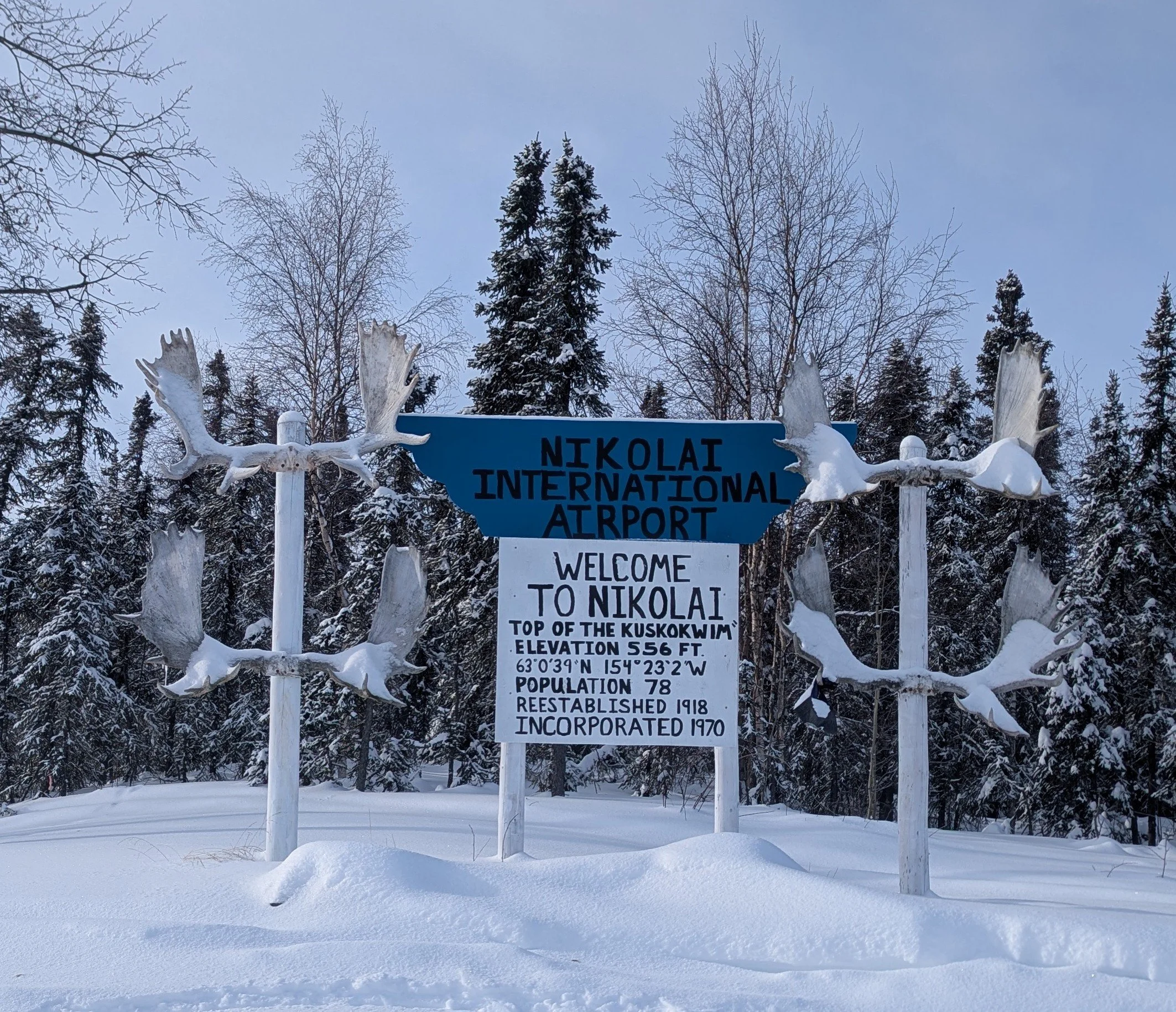
​While we await movement from the racers, we would like to take this opportunity to shine the spotlight on the village of Nikolai, AK, where I was fortunate enough to spend a week volunteering for the ITI race. Nikolai is located on the South Fork of the Kuskokwim River, and is roughly 260 miles into the race and 48 miles from McGrath. Nikolai is the only native village our 350-mile racers travel through, and it gives them a glimpse of what it is like to travel through villages during the 1000-mile race.

​First up, some background and facts. Nikolai is an Upper Kuskokwim Athabascan village, and although not as commonly used, it also has the Native name of Edzeno (Pronounced ed-ZEE-no). The village has been relocated at least twice since the 1880s, with the present site being established around 1918. It is commonly considered the furthest east the Russians settled in interior Alaska. Nikolai was the site of a trading post and roadhouse during the gold rush, being situated on the Rainy Pass Trail, which connected the Ophir gold mining district to Cook Inlet. It became a winter trail station along the Nenana-McGrath Trail, which was used until 1926. By 1927, the St. Nicholas Russian Orthodox Church had been constructed. In 1948, a school was established, and in 1949, a post office opened. Local residents cleared an airstrip in 1963, which heralded year-round accessibility to the community. The city was incorporated in 1970. The village of Nikolai has a current population of around 85, and its residents are active subsistence food gatherers who also rely on regular plane service to deliver groceries and supplies.

​What is it like for our athletes as they arrive at the Nikolai checkpoint? To get here, the racers have traveled about 72 miles from Rohn, usually stopping at Bear Creek Cabin or bivvying outside for a few hours' sleep along the way. They have also crossed Sullivan Creek, which is around 8-9 miles after the cabin turnoff. Here, they can fill up water reservoirs for the push to Nikolai, since Sullivan Creek is always flowing. Racers pass through an amazing stand of birch trees, which is noteworthy for its beauty. About 12 miles before Nikolai, athletes take an abrupt right-hand turn at Fish Camp. There is a small building and some fish-drying racks at this junction, and even though there is a sign that says "Nikolai 10 miles," everyone knows it is more than 10 miles. As they near Nikolai, racers often hear the diesel generator running, supplying the village with electricity. After traveling over small lakes and swampland, racers drop down onto the Kuskokwim River before coming around the bend and arriving at Nikolai. Did you know that on a clear day, you can see Denali and Mount Foraker from Nikolai? When you are coming up the riverbank, be sure to look over your right shoulder to see if they are making an appearance that day. 

Nikolai is often the coldest area of the entire race. This year, the lowest reading at the Nikolai airport was -47 degrees F, with most mornings being in the -40 to -45 degree range. It is usually even colder in the low swamps and on the river. This area can also have some amazing northern lights shows. 

Racers come up the riverbank and pass between a few houses. The school is a yellow building on the right, and racers head past that to a brown building off to the left, which is the community center. There, they can bring in their sleeping kit and other gear, hang up things to dry on the rope lines, and plug in their electronics. Food choices here this year included a few varieties of burgers, all the oatmeal you could ever want, and a few snack mixes. It is common for racers to arrive in Nikolai very tired, both physically and mentally. On the way out of town, some athletes stop and take a peek at the old Russian Orthodox Church, since the trail goes right past it. It is worth taking a few minutes to stop and look inside.

​Village life has its challenges, and this year was no exception. There were no working toilets at the community center, so athletes walked to the school to use its toilets. Those weren't working properly either, so athletes dumped water into them to flush, which sometimes meant hauling a bucket down the hallway from the water fill room. However, this did give athletes a glimpse inside the Top of the Kuskokwim School, which currently has 12 students enrolled across all grades. The community center also lacked running water this year. In Nikolai, residents usually have water piped into their homes, but it is not fit for drinking. Therefore, they either get their drinking water from the clinic, which has a water treatment and filtration system, or they pull water from the river through a hole in the ice. Locals seem to have developed immunity to the various parasites and bacteria in the river water and can drink it without issue. For our racers, the volunteers hauled water from the clinic. Local residents rely heavily on hunting, trapping, and fishing for much of their food source. Plane service usually brings freight, including groceries, a few times a week when the weather is good. The village was also dealing with the recent death of the First Chief of Nikolai, Nick Alexia Sr. Several years ago, Nick sat down with the Tanana Chiefs Conference to share his life story as part of the Legacy of Our Elders series. If you have time today, we encourage you to take a moment to watch his video and learn about his incredible legacy, and get a glimpse of what it was like growing up in this area. https://www.youtube.com/watch?v=b3An7NK7TBI Our thoughts are with the community during this difficult time.

Even amid these challenges, the ITI received a warm welcome from both the community and the school. We received an invitation to attend a community gathering/potluck one evening. Local man of many hats, Phil, fixed the heat in the building, brought us a few supplies and additional heaters, made the water runs to the clinic, and hauled supplies to and from the airstrip, among other deeds. On the last night of the checkpoint, he also brought in moose soup for the volunteers and racers. We all enjoyed this very much. On the same night, resident Stephanie also brought in some beadwork for us to look through, with several people buying her artwork. The race used to stop at Stephanie’s family home, so she knows many of the long-time racers very well. Several volunteers and racers had wonderful interactions with the school principal, Elise, and with two crisis management workers, Bernice and Marie, who were staying at the school for a few days. The ITI is very thankful that we have a warm place to stay and a place for racers to shelter. 

Written by: Faye Norby

Thanks to Wild Winter Women - Allison Carolan, Amanda Harvey, Jan Redmond Walker, Kari Gibbons, Leah Gruhn, Laura Wiesmann Hrubes, Lynn K Hall, Madeline Harms, Rashelle Hintz, Rebecca McVay-Brodersen, Sarah Bergstrom

Day 13: The Great Dot Standstill

Remaining racer dots on the map between McGrath and Ophir

Today brought peace and quiet on the trail, with seven athletes still bound for Nome…but not moving.

Currently, three racers remain out on the trail while four are still regrouping and recouping in McGrath.

Ryan and Gavan are currently hunkered down together in Ophir, well stocked with supplies and taking a patient approach. Rumor has it Gavan may have even stumbled upon a bit of trail treasure — an abandoned cooler of meat. Herman is some miles behind them, seemingly making his way back to McGrath.

Wild Winter Women, Kendall and Mayella, have been in McGrath since yesterday alongside racers Troy and Erick. The group spent the past 24 hours doing the quiet but essential work that happens between pushes down the trail: making food, repairing gear, and getting ready for the next leg of the journey.

In a race like this, sometimes progress isn’t measured in miles — it’s measured in preparation and patience.

The weather today was one of the mildest our racers have seen so far with a high that reached 10°F, light winds, with a dusting of snow falling. Snow is expected to continue overnight and into tomorrow, with an inch or two possible around McGrath.

With racers waiting, resting, and prepping for their next moves, today felt like a good time to highlight one of the people who helped make this race possible.

The Iditarod Trail Invitational relies heavily on volunteers who brave the same remote conditions as the racers themselves. From hauling supplies to gathering water and running checkpoints for days at a time, their work is essential to the event.

Today we’re featuring a volunteer Q&A with one of our own Wild Winter Women, Faye Norby.

Volunteer Spotlight: Faye Norby

Faye Norby holding a gifted marten pelt from a local

What’s the most impressive thing you’ve seen a racer push through?

There are so many stories of grit and determination. Anytime I see a biker pushing their bike through a big snowstorm or heaving it onto a large snowdrift, I have great admiration. It also makes me glad I am not a biker!

What’s something about the race that people would never guess unless they volunteered?

The logistics for this race are insane. Everything at the checkpoints — Butterfly Lake, Finger Lake, Rohn, Nikolai, and McGrath — has to be brought in by snowmachine or flown to an airstrip and then transported to the checkpoint.

That takes a lot of planning and forethought to make sure you have everything you need. Tents must be set up at Finger Lake and Rohn, and Nikolai presents its own unique challenges. Even water for racers has to be gathered from a source nearby, which can be difficult in winter.

Things break or don’t work properly, and volunteers constantly have to adapt and overcome to keep everything running.

What’s the weirdest or funniest thing you’ve seen happen at a checkpoint?

Most of the best stories involve ripped or worn-out clothing and body parts showing through. I also get a giggle when racers accidentally burn their clothing or water bottles by putting them too close to a stove. Classic mistakes.

This year Tucker burned a hole in his jacket at the Bear Creek cabin and left a trail of feathers wherever he went until we patched it with duct tape. I was also proud of him for filling the bathroom bucket at the school — I could easily follow his route around Nikolai.

What’s the most chaotic or intense moment you’ve seen during the event?

This usually happens outside the checkpoint, but sometimes racers don’t have great stove-operating skills. That can turn into a pretty harrowing experience for everyone nearby.

When racers arrive at a checkpoint, how can you tell who’s mentally strong enough to keep going another 500+ miles?

It’s fascinating to watch racers come in exhausted and see how one person can influence an entire group — either positively or negatively.

There’s the physical side of recovery, but there’s also recovery for your brain and mental state. The strongest racers make sure they rest both their bodies and their minds. They also stay aware enough to avoid getting pulled into drama.

There’s often talk about weather forecasts, other racers’ issues, people turning around or dropping, and unknowns farther up the trail. The most stable racers focus on what’s directly in front of them instead of worrying about things they can’t control.

Conditions can change quickly. What may be a terrible stretch of weather for one racer might be completely different for someone passing through just a few hours later.

What are the toughest conditions volunteers have to deal with?

Most volunteers staff their checkpoints from the first racer to the last. Because they fly or snowmachine in — just like the supplies — they remain there the entire time.

For places like Nikolai, that can mean staying for an entire week. Volunteers often run on very little sleep depending on when racers arrive and depart, and they’re dealing with the same weather and elements as the athletes.

What advice do you have for racers to make the most of the checkpoint and be a good companion to others there?

This is an important one, because ITI is one of the few races where racers sleep and rest inside checkpoints. People are arriving and leaving at all hours.

Even when you arrive exhausted, come in with a plan. The most skilled racers are usually the most efficient at checkpoints.

Bring in the gear you know you’ll need, hang wet items to dry immediately, and keep your gear organized so you’re not searching for things later or leaving items behind.

If electricity is available, plug in electronics to charge. After that, eat, rest, and sleep — but still try to be efficient. It can help to refill water before sleeping and lay out gear for when you wake up so you can get moving quickly.

Earplugs can be helpful. Most importantly, be respectful of others around you. Keep voices down when people are sleeping and try not to take up more space than you need.

————————————————————

Thank you for your support and insight, Faye!

Temperatures are expected to drop again after the snow moves through the region. As racers prepare for their next efforts down the trail, day 13 closes with a sense of patience across the course, with an unbroken trail beyond Ophir.

Sometimes progress in a race like this comes not from pushing through the conditions, but from waiting for the right moment to move.

We’re anxiously anticipating what lies ahead for our brave racers on their journey to Nome!

Soon the trail will be inhabited by a whole new crew as tomorrow marks the ceremonial start of the Iditarod Dog Sled race which begins in downtown Anchorage at 10:00AM Alaska time.

Written by: Rebecca McVay-Brodersen

Thanks to Wild Winter Women - Allison Carolan, Amanda Harvey, Jan Redmond Walker, Kari Gibbons, Leah Gruhn, Laura Wiesmann Hrubes, Lynn K Hall, Madeline Harms, Rashelle Hintz, Rebecca McVay-Brodersen, and Sarah Bergstrom.
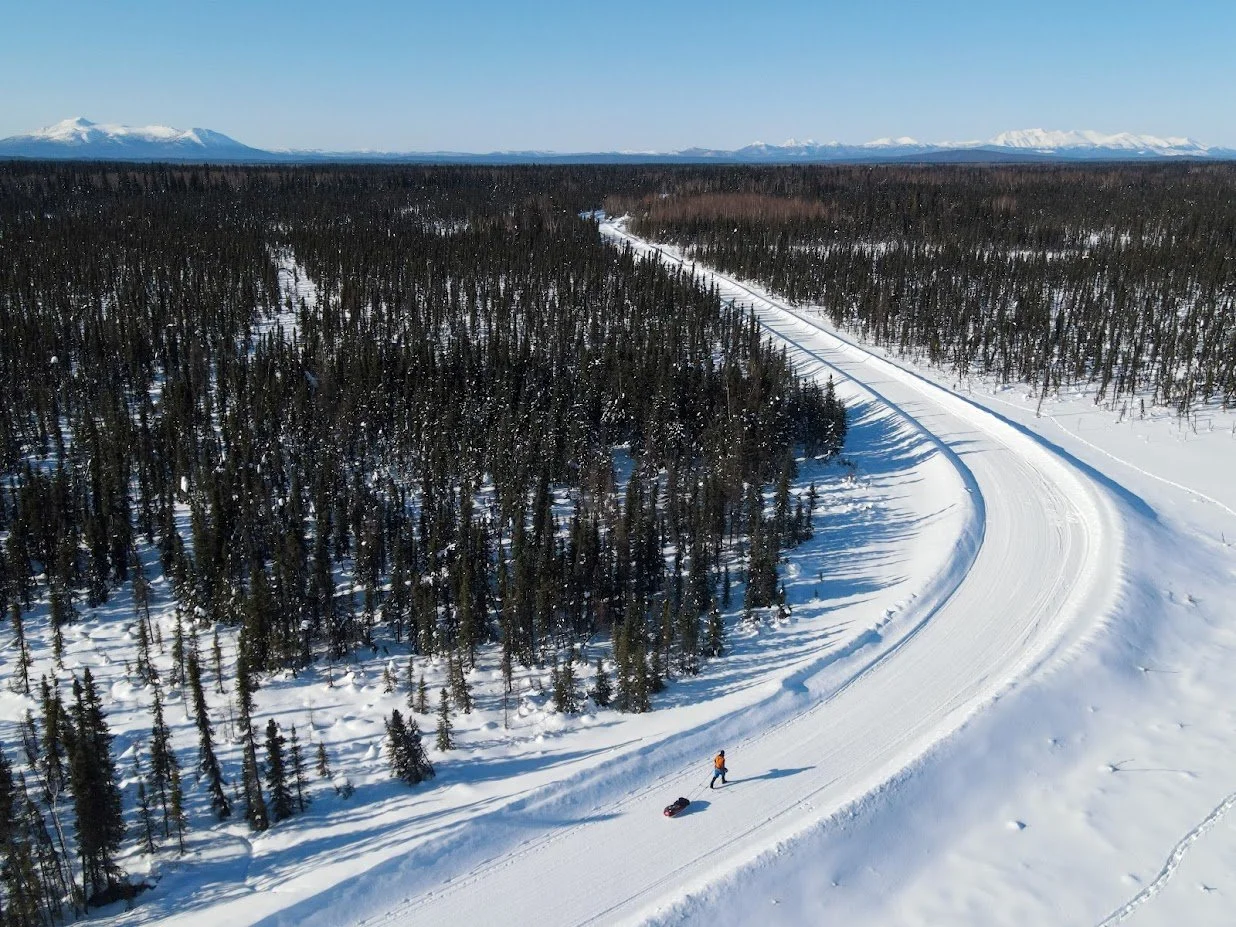
With an extra special thank you to Faye Norby.

Day 12: Reflect, Refuel, Regroup

With the completion of the 350-mile distance race yesterday, many of our finished athletes are likely taking today to regroup and reflect on their experience while refueling their beaten and battered bodies. Those athletes are traveling home where “real” life awaits them, and the longing for the solitude and simple routines of the trail might start calling to their soul once again. This year 92 athletes started the 350 and 150 distances, 52 finished, yielding a 56% finish rate. Of the 17 women who started the 350 and 150 events, 8 finished.

While reflecting on this year’s races, a dominant theme has been the cold, wind, and snow. So how cold was this year compared to previous ones? Looking at weather data from Nikolai from previous years during the first 10 days of the ITI, I would like to share some information I compiled. The 2020 event started on March 1st, the average low in Nikolai from the 2nd to the 11th was -18.4 F, with the average high being 11.4 F.  The course in 2021 was modified to an out and back due to Covid restrictions. In 2022 the race started on Feb 27th, the average low was 10.8 F with an average high of 32.9 F. I was unable to find data for 2023. The race started in 2024 on Feb 25th with an average low of -12.7 F and high of 14.8 F. Last year, 2025, the race started on Feb 23rd and had an average low in Nikolai of 12.4 F and high of 30.7 F. So how does 2026 compare?....  The average low in Nikolai for the ten days was -30 F with an average high of 2.8 F. I think it’s safe to say that our 115 athletes who started in Anchorage got the angry side of mother nature for this year’s race. While the 108 athletes who are no longer on the course are reflecting on the brutality of this year's ITI, I’m sure the question of “why do I do these races” is swirling in some minds, and certainly the minds of their loved ones. I want to leave them with a quote by fellow racer Mayella Krause “The winter ultra world is small yet full of people who understand the hunger to move through a world where a single mistake can kill. We don’t just endure the wilderness; we seek it out craving the silence where we meet the hardest parts of ourselves.”

Meanwhile, 7 athletes remain on the trail, hopeful to still be able to make a push to Nome.  Twenty-three “Nomers” started in Anchorage, but historically tough weather conditions and a currently impassable trail past Ophir has whittled that number down to just 7 intrepid souls. 

Gavan is a 2024 1,000 ITI finisher. When asked what he is looking forward to the most while being on the trail he responded “being alone.”  Gavan is certainly getting his alone time over the last few days, as he set out solo towards Ruby from McGrath on March 1st. Making it 16 miles past Ophir on snowshoes, he ultimately needed to back track to Ophir and wait out the conditions. Ophir itself will give Gavan plenty of solitude. Once an active gold mining town, it is now only a few abandoned buildings. It is one of the many ghost towns left from the mining boom and bust in the Alaskan interior.

Herman (USA), Ryan (USA) and Erick (France) spent the night in Takotna, a small town of about 50 people. This morning Herman and Ryan both started towards Ophir around 6 am. Ryan has 4 finishes in Nome and this is Herman’s second attempt at the 1,000, DNF’ing in 2024. Herman met up with Gavan around 4pm today, and Ryan joined them an hour later. Erick Basset is no stranger to the ITI, having finished the full distance on both ski and foot. This year he is attempting on bike. Around 10 am Erick’s dot headed back to McGrath from Takotna, and he arrived in McGrath by 3:00 pm.

Back in McGrath we have Troy (Australia), Kendall (USA) and Mayella “Maya” (Brazil).  Troy has 6 Nome finishes under his belt, while Kendall and Maya “MK” are both Nome bound for the first time. Although new to this race distance, MK have proven to be well prepared for the elements, and both have plenty of winter knowledge under their belts. Maya has finished multiple winter races, the 350-mile ITI twice, and has backpacked from Fairbanks to Anchorage. Kendall is also an experienced winter bikepacker and has two 350-mile ITI finishes. Despite the seemingly daunting task of traveling 700+ miles on fewer and fewer days, we know the hearts of these athletes are still yearning for Nome. Certainly all the sacrifices that they and their loved ones have made throughout the last year in preparation to spend 30 days in Alaska is looming in their minds. In her pre-race survey, Maya points out that this race takes months of dialing in gear and going over scenario after scenario in your head to feel prepared.

As mentioned yesterday, in McGrath racers are enjoying the famous “Mancakes” provided by local supporters of the ITI. These plate sized, thick and dense blueberry filled pancakes are surely a welcome sight after long days of trail food. Gear repair/swap and sleep are also priorities as athletes set their sites on 200 miles of untravelled deep snow until the next inhabited town of Ruby. It is yet to be seen if our Nome travelers will wait until the Iditarod Sled Dog Race trailbreakers come through (a still yet unclear timeline, but hopefully sometime early next week), or if another push is made past Ophir by some adventurous soul willing to see if they can conquer the untamed expanse of Alaskan wilderness.

Photo Credit Faye Norby

Photo Credit Mayella Krause

Written by Jessica Roschlan

Thanks to Wild Winter Women - Allison Carolan, Amanda Harvey, Faye Norby, Jan Redmond Walker, Kari Gibbons, Leah Gruhn, Laura Wiesmann Hrubes, Lynn K Hall, Madeline Harms, Rashelle Hintz, Rebecca McVay-Brodersen, and Sarah Bergstrom.
Day 11: Win, Lose, or Draw

Today was officially the last day of the 350 mile race, the trail has been quiet but the finish line was busy! 

We saw our last two women foot finishers, Sunny Stroeer and Gillian Smith who executed clean races and crossed the finish line all by early morning.  To finish on any year in any distance is an amazing feat, but if we haven’t mentioned it already, this was quite the year.  Congratulations to the rest of the 350 foot field coming in last night: Bryce Williams, Jacob Lankford, Luke Thomas,… and to the 1,000 athletes who made it to McGrath: the intrepid Klaus Schweinberger, Donald Kane, and Daniel Héon.

Around 10AM AK time our red lantern John Clarke crossed the finish line in McGrath. He not only completed the 350-mile race on his rookie year, but this is also his first ever winter ultra (after completing the ITI training camp)!  At 60 he says he is “retired, and living my life adventuring with travel and outdoor activities.”  Congratulations John, this should fall under the category of “outdoor activities.” 

While our 350-mile finishers were enjoying the traditional Man Cakes and no doubt reminiscing with fellow participants about the last 10 days, while sipping coffee under quilts, there is still a 1,000 mile race going on.  There had been no movement on the trail until the afternoon when Gavin continued his trek back down towards McGrath as did Takao Kitada.  When hearing rumors of the trail conditions the words “impassable” and “impossible” come up.  The other subject is the “trail math” conversation which is bad for any mode, but particularly crushing for the foot division.  With no trail set in, and a large amount of snowfall north up the trail, rumors of 45 and 50 miles average per day needed to complete the race in the allotted 30 days feels crushing.  

When will movement happen?  Any foot racers wanting to continue cannot wait for the trail breakers, who traditionally only come up two days before the lead dog team, as every minute they are stopped increases that daily mileage. Even though snow shoeing through thigh deep snow for hours and hours probably feels fruitless, some forward motion would need to happen.  Easier said than done, slower pace through deep snow means more calories exerted, which leads to more calories needed to keep said pace, which then leads to heavier sleds, compounding the situation, a 3 or 4 day crossing becomes 8 or 10.  

What about our bike division? If the trail breakers come through next week and it is passable, the bikes could potentially cross the Interior to the Yukon and gain some time back, the need for a good trail will be there all the way to Nome, as well as the necessity of being self sufficient and responsible, but it could be possible.

The difference between modes has never felt more acute, moving on the bike and walking, where a mere one and two miles per hour more can give you a fighting chance or end your race.  Right now we all wait, they wait on the dream of a snowmachine, we wait on them to choose.

Push through together with the cutoff looming?  Go alone, or go home? 

We can’t end a recap like that!  Last night was the first half of our beautiful thank you list from all of the participants, below is the rest.  If you are feeling gloomy, I encourage you to read through it.  Win, lose, or draw it is a really big deal to start this race and a LOT has to go right just to get here.  So cheers to friends and family, coworkers and pets, to those who had to listen for a year about counting calories, layering systems, and base weight.  This one's for you! 

Written by Kari Gibbons

Photo of Mayella Krause and Gillian Smith.  Photo credit: Mayella Krause 

A thank you from the participants: 

  • Meg Inokuma: I’d like to thank all my experienced friends for sharing their experience on the trail, either as a part of the ITI or their individual trips.

  • Michael Overbeck Cook: My wife, Giant-Norway, DerUte, Intersport, IK Hero, Backe, Deler AS, and My Mom

  • Mike Braniff: Coach Janice Tower for sure!

  • Mitch Dulleck: I would say Mammut, even though they are not a sponsor, they make Great Quality outdoor Gear! And thanks to Lynn and Amanda (tou guys know them both) showing me the way to McGrath! And my Family for their support!

  • Natalie Taylor: My training buddies for getting me out in the wet uk weather this winter

  • Nick Janssen: Beaver Sports, Fairbanks, AK!

  • Nick Legan: Thank you to Kristen Legan of Rambleur Coaching (also my wife), Jay Petervary, and Shimano (best in the biz).

  • Patrick McDermott: Taylor my wife

  • Petra Davis: Yes!! To my family for their unwavering support throughout my life and this event, and borrowed gear. To my coach Janice Tower who has made me feel the most physically and mentally prepared I could be, also using her handlebar bag. To Tony Allen for multiple pieces of borrowed gear. To my boyfriend/assigned nutritionist for fueling cookies on training rides and ITI drop essentials and everything else. To everyone that has offered me advice and insights I so appreciate it especially Casey and Taz. Generally, I am so fortunate to be in a community that has supported and joined in my efforts not just for the ITI but throughout my life, may be solo on the trail but definitely a collective effort to get me to McGrath, I will be thinking of all my people on the bike.

  • Scott Pariseau: My Family and friends who have all supported me along the way.

  • Suman Baddam: Giti, Alex, friends and family

  • Suzanne Stroeer: LOWA

  • Tomas Vajdiak: My wife Martina. Family and friends. My colleagues to back me up while I am in Alaska.

  • Tristan Carlson: My girlfriend, Harley. She's been incredibly supportive of me the whole time and it's clear she's proud of me for doing this.

  • Vinny Mullin: KLM Gear -- my wife makes me new gear every year, including a beautiful new XPac sled bag with a U-zip and water bottle pockets

  • Zach Anderson: My family is sacrificing a lot and banding together to allow me to be here. I can’t thank them enough. Now Bikes in Arden hills was also a huge player. Great people.

Thanks to Wild Winter Women - Allison Carolan, Amanda Harvey, Faye Norby, Jan Redmond Walker, Jessica Roschlan,Leah Gruhn, Laura Wiesmann Hrubes, Lynn K Hall, Madeline Harms, Rashelle Hintz, Rebecca McVay-Brodersen, and Sarah Bergstrom.
Day 10: Chasing Trail Magic

The days are stretching out now, seemingly calm from when our athletes were crossing the Alaska Range.  As those racers who made it through unscathed continue their way to McGrath, the calm is a mask for the ticking clock.  Now, as the remaining field make their way on the final stretch to McGrath, some will celebrate a finish, while the rest will need to make a decision on how to proceed.

In an unusual twist, the 1,000 mile race is being led by the foot division as most racers on bike have scratched.  We’ve been watching racers leave McGrath, turn around to come back. Why is this happening?  It is a perfect storm of trail conditions, mode, time, and what we are willing to endure. 

The last two years have been different than usual when it comes to this crossing of the Alaskan Interior.  From McGrath to Ruby lies roughly a 200 mile stretch of completely remote wilderness, and no aid or shelter beyond two safety cabins that dot the trail. 

In the past there had been a potential tent associated with the Iditarod Dog Sled Race that athletes could take advantage of (if invited), there are now no aid stations currently set up in Ophir and Cripple again (the same as 2025), and no trail set in.  This year anyone in the 1,000 who leaves McGrath will be tackling a two fold challenge.  The first and most immediate is that the trail leaving Tokotna has not been put in by the Iditarod Dog Sled Race, due to an unfortunate gap in the calendar. That race usually takes place one week after the ITI but this year it starts two weeks later. 

The reason for the gap between these two races is an unlucky calendar blip.  ITI is always scheduled to start on the last Sunday in February, and the ceremonial start for the Iditarod is always the first Saturday in March. Typically those two events are roughly a week apart, but this year due to the way that those dates fall on days of the week, they are roughly two weeks apart.

The leaders in the sled dog race are preceded by the Iditarod trail crew (ITC), who drive snowmachines down the Iditarod Trail; the snowmachine traffic has the effect of packing the snow and making the route more easily passable. In a typical year, the ITC crews would be on the trail around now, but this year they are not expected for days.  Even in deep snow, a semi-packed trail means the difference between waist or thigh deep snow and ankle deep snow with snowshoes on.  For bikes, it is the difference between pushing and riding.

The timing of the ITI sits in between two major events, the biggest events of the area actually, one being the sled dog race and the other is the Iron Dog, the world’s longest, toughest snowmobile race.  The Iron Dog will often pave the way, or more accurately, break trail on their out-and-back route starting in Anchorage, heading to Nome, and home to Anchorage.  This year they followed a different route to finish in Fairbanks, and the trail they previously set is now weeks old.  Lastly, the trail not being set in was one edge of the sword, the other edge is the large amount of snowfall in the area.  Any trail that had been laid by the Iron Dog, would have all but disappeared.  

What’s a girl to do!  Some have scratched, knowing the trail breakers are coming at some point, but unsure when, and after clearing the Interior, the racers still need to travel some 500 miles to finish in the allotted 30 days.  The cutoff to leave McGrath is at 2PM on Wednesday so simply remaining for the trail breakers is not an option.  Some are continuing on regardless, especially for foot division that simply takes more time to cross these expanses, forward motion is a must, even if it is at 1.5 mph.

Today we saw a lot of forward motion from the field as a whole and the leader of the 1,000-mile race, Gavan Hennigan.  He had left Tokotna and spent last night at the Ophir Airport (the airport consists of a small clearing in the woods, don’t get excited!).  After a short bivy he left early this morning and made his way onto the Innoko River similar to what he did in 2025 when the trail had also not been put in.  He did travel via snowshoes for sometime before getting turned around by yet more relentless deep snow.  

Further back our 1,000 mile bikers Ryan Wanless and Erick Basset had left McGrath and made for Tokotna, as well as two more foot division athletes, Herman Watson and Takao Kitada.  After Takotna is where the trail disintegrates, and we will have to wait with baited breath until tomorrow to see what they decide.

Kendall Park and Mayella Krause had a nice rest at Nikolai and have been making strong progress on the 50 mile stretch to McGrath, playing the smart game. They will have a chance to rest there before leaving tomorrow. 

On the final stretch from Nikolai to McGrath there is a strong line of 350 athletes making their way to the finish including Sunny Stroeer who has finished the 1,000 in the past and Gillian Smith who might just have that on her bingo card for next time.  On his way to the finish, here is a special shout out to the ever cheerful Luke Thomas, who has a good thought for anyone wanting to try this race, “The trail is magic” and I think that is true, and if you can get through the high winds and plunging mercury, the miles of solitude, the hours of unassuming company, then there is a quiet magic that exists for those who are looking. 


Congrats to race finishers since yesterday’s update: 350-mile racers Casey Bredeson (Cavalier County, North Dakota, bike) and Kristoffer Jonson (Seattle, Washington, foot), as well as 1,000 mile racers who have reached McGrath, which is only another checkpoint in the race of that distance - Troy Szczurkowski (Australia, bike), Beat Jegerlehner (Boulder, Colorado, foot), and Mark Hines (UK, foot).

As the 350-mile race begins to wind down, every person will look back at their experience, win, lose, or draw, and have stories to tell for years to come.  If there is one lesson we have learned this year, it is that none of us do this alone.  Whether on the trail or back home, there is much to be grateful for when it comes to our support group, sponsors, and cheerleaders.  We asked people to talk about who they are grateful for, tonight and tomorrow we will list them all.  We are all truly, Stronger Together.  

Written by Kari Gibbons

Photo credit Kendall Park

Thanks to Wild Winter Women - Allison Carolan, Amanda Harvey, Faye Norby, Jan Redmond Walker, Jessica Roschlan, Leah Gruhn, Laura Wiesmann Hrubes, Lynn K Hall, Madeline Harms, Rashelle Hintz, Rebecca McVay-Brodersen, and Sarah Bergstrom.
A thank you from the participants: 

  • Andy Weinzierl: Galleria Bicycle for keeping my bike in great shape, and my wife for putting up with me obsessively talking about the ITI over the last year.

  • BRIAN HAMILTON: In training my Northern Lites snow show broke, and thy immediately overnighted me upgraded replacements so I would not miss out. I loved this customer service so a shout out to this brand.

  • Bryce Williams: My Mother

  • Cayden Boll: Everyone who's experiences I've learned from in getting to this point.

  • Curtis Henry: Tyson with Goldstream Sports and Apocalypse Design has been incredibly helpful preparing for the race. The Fairbanks Community and a few veteran racers have done a lot to convince me to sign up for this race.

  • Derrick Seys: Inspiration and support from my wife Anne, family, and No Ride Around teammates. Tks to the entire ITI and supporting communities.

  • Elias Miner: My wife Meg for supporting me through all the training, planning, and preparation.

  • Frances DeBlare: My extremely supportive wife and my artist side gig DeBlare Designs that helps me pay for training, those “panic buy” gear purchases and race costs each year!

  • Ginny Robbins: My huge support network, and the whole extended cheering squad! Also my friend and bike mechanic Frank Trotter who removed almost all my bike-related worries.

  • Hilary Kunz: Jordan (hubby)

  • James Mowbray: Family

  • Jamie Hollingsworth: About five years ago, my family's life changed forever when my wife Teresa was diagnosed with colorectal cancer. She passed away this past May. Colorectal cancer is now the leading cause of cancer-related deaths for those under 50. The Colon Cancer Coalition is following me in this race to help me raise awareness of the disease. Awareness and prevention is key. Please consider donating at https://coloncancercoalition.org/

  • Jason Hutchins: Thank my wife Sarahi Ruiz, donations made to intrepid path on my behalf, and Old Elliott Provisions (my little gear company) because I relearned the whole sewing process to be able to make my own dyneema overboots for the race. They are custom fit and weigh about 9 ounces for the pair. I hope to sell them to other racers next fall

  • Jason Mancini: My wife, Rachel

  • Jason McDaniel: My wife Christine. She is a superstar.

  • Jerry Palmer: Melissa my wife, always.

  • John Clarke: My daughters, India and Natasha.

  • Kenneth Bruun Jørgensen: My girlfriend for buying the ticket.

  • Kristopher Kleine: My Family, Happy Tails Veterinary Care, The Hub Bicycles

  • Laura Rushfeldt: Friends, family, Wy&Wo

  • Luke Thomas: My wife Odara, the dogs Meesh and Hazel, and the cat Pearly.

  • Matt Webb: My wife Connie

Day 9: More Than a Race

(photo: Sunny Stroeer)

Alaska changes you. Something about it gets in your blood and draws you back. Whether you’ve spent time on the trail, in the communities, or simply viewed its vast wilderness from a distance, it’s overwhelmingly vast and raw. It pulls you in and offers you the opportunity to experience adventures you can only dream of. It takes you back in time, for not even time can change the Alaska interior. If you appreciate feeling small in a big, beautiful world, experience Alaska. It’s simple and rugged, it’s harsh and unforgiving, it offers you something you won’t find anywhere else, but you have to be there to find out what that is.

This year, ITI athletes have been treated to a winter not seen in over half a century. Extreme winds and brutal temperatures have been relentless. Blowing and drifting snow make navigation difficult and progress slow. The eerie stillness of deep cold. The brittle snow sounds like glass breaking beneath you. The deafening wind that disorients your senses. There is no room for error on this trek. 

Regardless of mode or distance, whether a finish or a DNF (did not finish), this experience is life-changing for ITI athletes and volunteers. Each attempt or completion is a journey of learning and growing, more tools and knowledge for the next adventure, more friendships forged through shared experiences. If you haven’t experienced trail community before, this is what it’s all about. It’s a strange mix of being alone, but together. You go for solitude, embrace the loneliness, and walk away part of a family. You take care of yourself, and you look out for others. You are alone, but someone has your back. This is the delicate balance of these extreme endeavors. 

To sum up our race progress so far: the 150 is complete with seven finishers. 

Nine athletes remain on course for the 350 (cutoff is Wednesday, March 4th at 2:00 pm AKST).  Since last night’s update, we have had three more official finishers for the 350. Congratulations to Paul Turner (Molalla, Oregon) on foot and rookie Caydon Boll (Rio Rancho, New Mexico) on bike and Doug Amidon (White Mountains, Alaska) on ski. Also on the final stretch to McGrath in the 350-mile race tonight is Casey Bredeson (Cavalier County, North Dakota, bike) and Kristoffer Jonson (Seattle, Washington, foot).  

Also noteworthy is the strong progress of five 1000-mile racers who are currently enjoying a well-deserved break in McGrath - racers arriving in McGrath in the past 24 hours include Ryan Wanless (Sioux Falls, South Dakota, bike), Herman Watson (Bozeman, Montana, foot), and Takao Kitada, (Japan, foot). Soon to join them are Troy Szczurkowski (Australia, bike), Beat Jegerlehner (Boulder, Colorado, foot), and Mark Hines (UK, foot), who all left Nikolai today. Five additional racers in the 1000-mile race are resting in Nikolai. 

Gavin Hennigan (Ireland) is currently our only athlete pressing on towards Nome past McGrath. He is on foot, making slow and steady progress through fresh snow on an ungroomed trail. Yesterday, Jay Petervary (Victor, Idaho) attempted to continue on by bike from McGrath - he made 21 miles past McGrath and ascended a long, graded hill twice, only to meet deep snow, forcing him to make the difficult decision to retreat to McGrath and scratch from the race. All racers are hopeful that the Iditarod trailbreakers come soon.

We have four women left on the course. Sunny Stroeer (Kanab, Utah) and Gillian Smith (Whitehorse, Canada) are still going strong and making their way to McGrath for a 350-mile foot finish. After long, long days with little sleep, Sunny was able to spend some extra time in Nikolai today. She has done an amazing job managing the temperatures and pushing through fatigue while taking advantage of good rest when possible. She has one final 47-mile push to the finish.  Go get it, Sunny!  Gillian has shown a steady, strong style throughout her race. She is an ITI veteran, having done the 350 on a bike last year. This is her first time attempting it on foot, and she is crushing it. Her pace has been consistent, and we’ve heard that she’s feeling great. In the 1000-mile race, Team Kendall and Maya are on a bike working together to traverse the miles to Nome. They spent a little extra time at Bear Creek cabin today solving a leaky tire, but they both made good time and arrived in Nikolai this evening.

The Nikolai checkpoint (mile 260) is welcoming its final influx of racers as the cutoff looms at 2:00pm AKST tomorrow. Only four racers are still making their way there. Gillian Smith and Luke Thomas are less than two miles out. John Clark is about 8 miles out, and James Mowbray has about 23 miles to Nikolai.

Watching dots progress and hanging on to tidbits of info from the field has us all on the edge of our seats! We are personally and collectively cheering on each racer, praying for safety, and rooting for success. 

Stay tuned for more updates and stories from the trail, the next of which is coming tomorrow night. Until then, you can follow the racers on the tracker.

Written by Rashelle Hintz

Thanks to Wild Winter Women - Allison Carolan, Amanda Harvey, Faye Norby, Jan Redmond Walker, Jessica Roschlan, Kari Anne Gibbons, Laura Wiesmann Hrubes, Leah Gruhn, Lynn Hall, Madeline Harms, Rashelle Hintz, Rebecca McVay-Brodersen, and Sarah Bergstrom.
Day 8: In Like a Lion

Photo by Ignacio Pellejero

3/1/2026

The 18th-century phrase "in like a lion, out like a lamb" describes March's shift from winter's bite to spring's gentler days. This year, March arrived in the Alaska Range roaring.

As previously reported, frigid air swept across the Alaska Range on Friday, with temperatures plunging as low as -45°F and winds estimated at 40 mph on Rainy Pass — one racer reported consulting a wind chill chart that put the apparent temperature near -107°F. A NOAA meteorologist volunteering in Nikolai (thank you Jonathan) calculated wind chills approaching -70°F at Rohn early Friday morning. The deep cold held firm through the weekend. Sunday brings only marginal relief, with air temperatures hovering around -20°F in Nikolai — and likely closer to -30°F along the river corridor.

But, as is tradition, we begin tonight’s update with celebration, before circling back to tales of the lion.

Congratulations to Ellen Humberston (Wausau, WI) on her imminent finish as the ITI 350 Women's Foot Champion! Ellen left Nikolai around 4:00 AM Sunday after a short night of sleep and made one final strong, steady push along the overland route into McGrath. While Ellen is just now crossing the threshold to ITI veteran status, in her pre-race survey she humbly named "self doubt" as her biggest challenge in race prep. We'd say she put that doubt to rest in a big way. She also reflected that "the journey of learning to support yourself and the confidence you gain is amazing" — and after a beautifully executed race in one of the most brutally challenging years in recent ITI memory, we imagine that confidence has deepened considerably. We are so inspired by Ellen's journey and can't wait to hear more from her in post-race interviews.

Celebrating other recent finishers: Tremendous congratulations to Scott Hoberg (Duluth, MN), winner of the men's 350 foot division and 2x foot champion. Scott executed a smart, strong race from start to finish. This victory was hard-won and well-deserved.

Congratulations to second place men's 350 foot finisher Jason Mancini (Metuchen, NJ). Jason revealed in his pre-race survey that he chose this event because his wife said "this would be safer than climbing Mt. McKinley." The jury is still out on that one, but by all accounts Jason finished unscathed. Paul Turner is also expected to finish this evening, rounding out the men's 350 foot podium.

Today’s additional 350 bike finishers included Jamie Hollingsworth (Fairbanks, AK), Michael Braniff (Anchorage, AK), Frederick West (Anchorage, AK), Michael Cook (Eidsvoll, Norway), and Luke Kiskaddon (Anchorage, AK).

Every finisher carries their own story to the start line, but some carry the weight of others with them every mile. Jamie Hollingsworth is one of those racers. Here he is in his own words: "About five years ago, my family's life changed forever when my wife Teresa was diagnosed with colorectal cancer. She passed away this past May. Colorectal cancer is now the leading cause of cancer-related deaths for those under 50. The struggle to get to this race is nothing compared to what people go through with colorectal cancer. If I can impact one person, all my training has been worth it. The Colon Cancer Coalition is following me in this race to help raise awareness, as awareness and prevention is key. Please consider donating at coloncancercoalition.org." Jamie, we are in awe of your strength on and off the trail. Thank you for inspiring us with a race with such purpose.

Behind these finishers, more are expected in McGrath this evening in the men's 350 bike division as follows: Mark Selland (Anchorage, AK), Cameron Lawson, Joaquin Candel (Las Vegas, NV), Derrick Seys (Geneseo, IL), Tristan Carlson (St. Paul, MN), Andy Weinzierl (Duluth, MN), and Matthew Webb (Farmington, MN).

Honorable mentions to Gavan Hennigan (Ireland), men's 1,000 foot, and Erick Basset (Caen, France), men's 1,000 bike, who both reached McGrath on Saturday evening, en route to Nome. Takao Kitada (Osaka, Japan) is also expected at McGrath tonight.

Still on the trail between Rohn & Nikolai four women remain: 350 foot athletes Sunny Stroer & Gillian Smith, and 1000 bike division Kendall Park & Mayella Kraus. We have heard reports that Kendall & Mayella slowed their race progress to assist other athletes in the past few days, but they are still progressing forward steadily.

As endurance athletes, we train ourselves to expand our capacity for discomfort. When energy reserves are depleted, muscles are aching, and sleep deprivation clouds judgment, we may even tell ourselves: Keep going. This is temporary. Anyone standing on the start line of an event of this magnitude has almost certainly developed an extraordinary ability to endure hardship.

But there is a line.

When discomfort begins to cross into true danger — to life or limb — racers must discern which internal voice to heed and which to quiet. They must make that call while exhausted, cold, and far from easy help, and decide whether the suffering of the moment is truly temporary — or something more lasting.


One racer, arriving in Rohn on Friday evening before scratching, put it plainly: "I had to make the tough decision to scratch at Rohn. I'm trying to learn the difference between suffering and causing permanent injury." That distinction lies at the heart of winter ultra-endurance sport.


Today, the scratch list stands at 47 experienced winter athletes. We've received reports of cold-related injuries and racers requiring assistance from fellow competitors on the trail — most of the injuries were caught early by athletes who trusted their instincts and made difficult but wise decisions to end their races. We wish each of them a smooth recovery and hold their decisions in deep respect.

We heard today from Tracie Curry, women's 350 ski division athlete and reigning 2025 ski champion, who scratched last evening in Rohn. She shared that this year was a learning experience, but she is already planning to give it another shot. We have no doubt she will.


It's been said that nothing in life is certain but death and taxes. Wilderness adventurers might add a third: nature always bats last. Those who venture deep into remote wilderness understand this unspoken agreement — conditions may be serene or severe, and they can change in an instant. We cannot dictate what the landscape delivers; we can only respond with the tools, judgment, and preparation we carry. And sometimes, the very systems that worked flawlessly in one race fail us in the next.

Winter racing resists predictability. The variables are staggering: metabolism, blood sugar, hydration, electrolyte balance, accumulated fatigue, sleep deprivation, temperature swings, wind, precipitation, trail softness, snow age, glide, physiologic stress, wildlife encounters, and an endless matrix of gear decisions. Even for veterans who have finished the ITI many times, it is nearly impossible to have the same race twice.


Nearly every iteration of the ITI brings at least a few days of harrowing weather or trail conditions. This year stands apart. The deep freeze paired with ground blizzard conditions arrived precisely when the largest concentration of athletes across all divisions were stretched over more than 125 miles of remote trail — a section combining higher elevations, exposed terrain, and technically demanding travel through remote mountain wilderness.


To even stand on the start line, racers complete challenging qualifying events, submit detailed applications, and accept race rules stating that "evacuations and medical services, if necessary, are solely the athlete's responsibility" and that "you, alone, are responsible for the consequences of your decisions while participating in the ITI." Preparation, sound decision-making, and self-reliance are not optional — they are foundational. A coordinated evacuation of a large field across that distance and terrain is simply not feasible. Each athlete carries not only their gear, but the responsibility for their own judgment — and the will to help a fellow athlete should the need arise in spite of every athlete’s best preparation.


The lion has indeed been loud these past few days. The decisions made in its presence have required clarity, humility, and a different kind of courage. For the 'Nomers' who may head out soon beyond McGrath, 700 miles of trail still remain, with weeks of unknown conditions ahead. No one knows whether the lion will continue to roar through the interior and to the coast, or whether the lamb will make an early appearance, but it may not matter much. They have likely already accepted that nature bats last, and that they must take in stride whatever they are given each day on the trail.


Update written by Allison Carolan


Thanks to Wild Winter Women - Amanda Harvey, Faye Norby, Jan Redmond Walker, Jessica Roschlan, Kari Anne Gibbons, Laura Wiesmann Hrubes, Leah Gruhn, Lynn K Hall, Madeline Harms, Rashelle Hintz, Rebecca McVay-Brodersen, and Sarah Bergstrom.
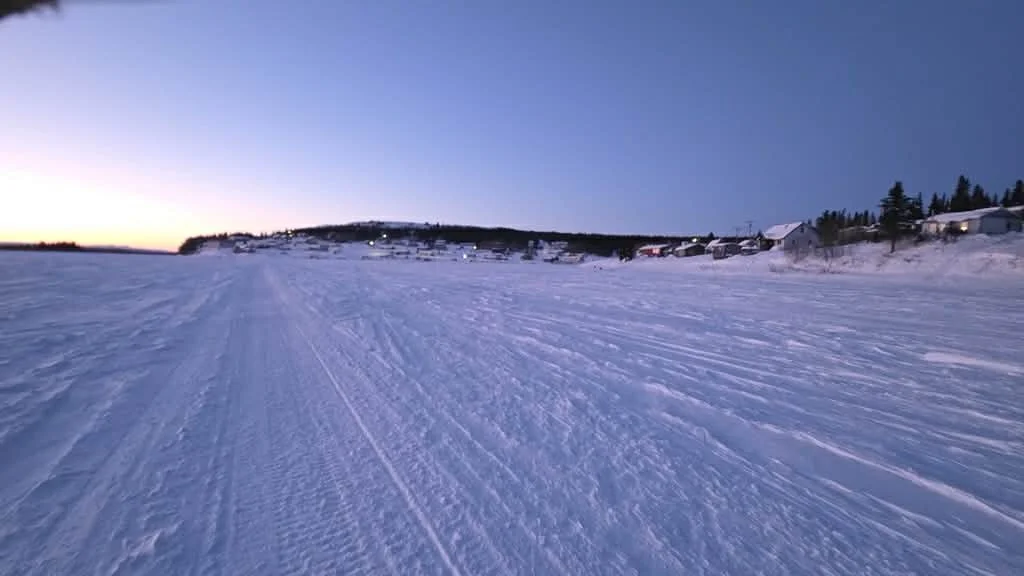
Day 7: Deep Freeze

Sunlight through the trees (photo: Zach Pavlik)

It’s been cold, especially overnight, and there has been a full house at Bear Creek Cabin and Rohn. This morning at Rohn, the wind chill was recorded at -70°F, with an air temperature of -35°F and a wind speed of 23 mph. Given these intense conditions (even for ITI standards), athletes need extra rest and may be reluctant to head out and into the elements. At this point, it’s a mind game as well as a physical one that racers must battle. The body and its central governor want to protect us from danger and injury, and overriding those strong signals to stop is incredibly difficult. At the same time, cold-related injuries are a real threat on the course this year. Some racers have been affected by cold injuries or other cold-related impacts, while others have scratched to avoid the risk of cold injury. 

Tracie Currie (Fairbanks, Alaska; 350 ski) was one athlete who made the prudent decision to drop today. Tracie is the women’s record holder and defending champion for the 350 ski. She is also an amazing human and an inspiration to us all, and we very much hope to see her back soon.

Jay Petervary has been the only of the 1,000 mi bikers to have left McGrath so far, and he has made it 19 miles to the next village of Takotna. Takotna is the last inhabited village before the 170-mile stretch to Ruby. Because this 170-mile stretch between villages is uninhabited and runs through ghost towns and historic mining districts, the trail does not have regular snowmachine traffic. At this time it is unclear (to the WWW authors anyway) if there has been any snowmachine traffic there since the Iron Dog race passed through the trail there a couple of weeks ago. In the past week, the area received a foot of snow, and the sense among the racers is that there may be feet of unpacked snow. Any travel through this area is expected to be exceptionally slow and challenging, and it remains to be seen whether the route is passable by the racers.

Meanwhile, the women’s 350-mile foot leader, Ellen Humberston, is within two miles of Nikolai (mi 259) and has been moving steadily all day through exceptionally tough conditions. She has a huge lead on the rest of the women’s field. Ellen, an ITI rookie, but no stranger to winter ultra-endurance races, stated in her pre-race survey, “I crave the all encompassing nature of an adventure like this (and other winter ultras) - where life gets pretty damn simple and you only focus on staying warm, eating/drinking, maybe moving forward, and appreciating the incredible beauty of the world around us. As a human, I can get caught up in a lot of dumb drama, and winter adventures give me a new perspective.” We imagine that she is getting exactly the experience she hoped for on the Iditarod trail. As for the rest of the women’s field, Sunny Stroeer is the second female at mile 217, Gillian Smith is in third at mile 210, and Carol Seppilu is at mile 198.

Scott Hoberg (Duluth, Minnesota) is leading the men’s 350-mile foot race and is just four miles away from the finish line in McGrath; three miles behind him is Gavan Hennigan (Ireland), who continues to lead the men’s 1,000-mile foot race.

Kendall Park and Mayella Krause (1,000 bike) are still resting in Rohn. Word is that they are considering a midnight departure. It can be difficult to find the trail out of Rohn, so most racers try to leave in daylight. An athlete must constantly weigh the pros and cons of getting adequate rest versus departing at an optimal time of day at these checkpoints, especially when they may not reach another warm place to rest for several days.

Congrats to race finishers since yesterday’s update -

  • 350 ski - Tucker Costain (Fairbanks, Alaska), who arrived last night for the WIN on skis!

  • 350 bike - Pavel Machacek (Czech Republic)

Now that the 150-mile race has concluded, we’d like to share sponsors, brands, or people that the racers in that distance want to thank for getting them out there:

  • Dave Walker: My wife, Gussie, has been so supportive. I can't thank her enough. Thanks also to my friend, Brian, for traveling to Alaska with me and accompanying me on my reconnaissance of a good route to the first checkpoint.

  • Jen Novobilski: My run group for being patient while I practiced lighting my stove on every weekend long run!

  • Jim Ryan: I owe my slippery slope into winter ultras to my friend Chris Ragsdale. Thanks Chris…I think.

For some racers, this is a vacation (or to be fair, at least it is how they choose to spend their vacation time from work), but for others, they have made this race about something much bigger than themselves. Given that Ryan Haug (Fargo, North Dakota, bike, 350, finished on Thursday evening) is in Alaska and on a part of the Iditarod trail, he thought it would be a good time to do a fundraiser for Homeward Animal Shelter in the spirit of the famous sled dog race! The staff and volunteers there work tirelessly to ensure the animals are cared for and find their forever homes. Please consider donating at https://www.homewardonline.org/welcome.html.

Stay tuned for more updates and stories from the trail!

Written by Madeline Harms, 7:25 PM AKST

Thanks to Wild Winter Women - Allison Carolan, Amanda Harvey, Faye Norby, Jan Redmond Walker, Jessica Roschlan, Kari Anne Gibbons, Laura Wiesmann Hrubes, Leah Gruhn, Lynn Hall, Rashelle Hintz, Rebecca McVay-Brodersen, and Sarah Bergstrom.

Wild Winter WomenComment
Day 6: The Good, the Bad, and the Gnarly

Ginny Robbins, ITI 350 Women’s Bike Champion

Day 6, 2/27/2026

Oh, what a difference a day makes.

At this time yesterday, the first men’s 350 bike champion had just rolled into McGrath. Fast forward 24 hours and the finish line has been busy: 13 racers have now crossed in the 350, with several more closing in. As of 4 PM AKST, however, the scratch count has climbed to 34. The day has delivered both celebration and hard decisions.

Let’s start with the good.

Newly crowned 350 bike women’s champion Ginny Robbins of Victor, Idaho, may be an ITI rookie, but she’s no stranger to tough events. She’s finished the Drift five times (across multiple disciplines) and completed a Fat Pursuit. Ginny signed up for ITI chasing northern lights, big views, camaraderie, and the chance to experience Alaska’s lodges and communities. By all accounts, she found all of it. A self-proclaimed “puffy coat” and “pogie snack” enthusiast, this year’s deep cold likely made her gear preferences look like smart decisions. What an incredible ride.

Right behind her was women’s 350 bike second-place finisher Petra Davis of Anchorage. Another rookie who rode like a veteran, Petra has built an impressive Alaska resume from the Susitna to the White Mountains to the Kenai. She shared that she’s dreamed of ITI for years, inspired by the stories—both the triumphs and the struggles—of past racers. Now, she’s added her own chapter to that history. Her best advice to others considering a dream is to “Always go for it.” 

The 350 bike finish line also welcomed: Tomas Vajdiak (Czech Republic), Ryan Haug (Fargo, North Dakota), Elias Miner (Anchorage, Alaska), Ignacio Pellejero (Girona, Spain), Cameron Ramey (Boulder, Colorado), Cayden Boll (Rio Rancho, New Mexico)
Eric Thomason, Kenneth Jørgensen (Denmark) and Zachary Anderson (Apple Valley, Minnesota).

In the 150-foot division, the finishers included James Ryan (Snohomish, Washington), Joilson Ferreira (Brazil), and Thomas Keene (Clawson, Michigan). Earlier this morning, Jen Novobilski (Anchorage, Alaska), claimed the women’s title around 9:00 AM, with Sarah Kingstrom of Nome, AK and Else Rabou of Courtenay, France, finishing next. Strong efforts across the board. We heard that Sarah powered her race efforts on my Little Pony inspired High Chews candy for inspiration and good vibes, and that she loved them… until she didn’t.

Meanwhile, women’s 350 foot leader Ellen Humberston is just south of Bear Creek Cabin and moving steadily through exceptionally tough conditions toward Nikolai.

Finally, an honorable mention for the 1,000 mile racers who reached McGrath, which is only another checkpoint in the race of that distance - Jay Cable (Fairbanks, Alaska, bike) and Jay Petervary (Victor, Idaho, bike), Brian Stone (Anchorage, Alaska) with Tiziano Mulonia (Italy) expected soon.


And then there’s the gnarly…

Beyond Puntilla, Rainy Pass lived up to its reputation. Late last evening, a veteran racer described conditions as “insane,” noting that “so many people are leaving and then coming back,” and chose to wait before attempting the crossing. He wasn’t alone. A party began forming at Puntilla, and that cautious approach defined much of the day.

Overnight ground blizzards slowed progress to a crawl, with some foot racers logging speeds of just 0.3–0.5 mph. A post from Jay Petervary showed his thermometer needle buried below -40F air temp.

Some racers pushed on regardless. A group left Puntilla late afternoon and moved into the night, with 350-foot athlete Laura Trentini bringing up the rear. As conditions intensified, the gap between Laura and the next racer grew steadily. Several athletes attempted the pass only to turn back—sometimes to wait out weather, sometimes to adjust layers and try again, and in some cases, to end their races.

Five racers—Eric Johnson, Dean Engelhaupt, Jason McDaniel, Kendall Park, and Mayella Kraus—left Puntilla yesterday morning and ended up spending 15 hours overnight bivied in a somewhat protected stand of alders and willows just before the high point of Rainy Pass.   Bivying in “cold cold,” especially when bodies are depleted and stressed, takes a toll. They were not comfortable overnight, but they made it through. Eric, Dean, and Jason caught a ride back to Puntilla in the morning, and we heard reports of one flying back to Anchorage. Today what we saw was racers looking out for each other and helping other racers to stay safe. The conditions have been exceptionally challenging for this year’s edition of the race, and we have seen racers setting their race aside to take care of each other.

Laura Trentini also bivied for several hours a few miles up trail, then got moving again around 10:00 AM, heading toward Rohn just ahead of Mayella Krause and Kendall Park

Back at Puntilla, 350 skier Laura Rushfeldt made the difficult decision to withdraw. After brutal winds over the pass soaked her gear and drained her energy, and with dangerously cold temperatures forecast, she assessed the risks as outweighing the reward. In true ultra fashion, today marked a DNF—“did nothing fatal.” A strong, thoughtful call.

Mid-morning, the final pack of 350-foot racers departed Puntilla with the five-day cutoff looming. Gillian Smith, Sunny Stroeer, Carol Seppilu, and Hillary Kunz are all progressing steadily. Hillary briefly paused and appeared to backtrack, likely seeking shelter from wind and making layer adjustments.

In classic ITI fashion, Bryce Williams in the men’s 350 briefly took a wrong turn toward Hells Gate but corrected it early. The Hells Gate route—better known to Iron Dog racers—loops around Rainy Pass, adds 20-plus miles, and follows the Kuskokwim River with multiple crossings. It’s not a casual detour.

Beyond the pass, reports say the South Fork of the Kuskokwim River is plugged with snow—fresh and old—making for slow going. The swamps and river corridors of the upper Kuskokwim Valley are notoriously cold. With the Nikolai airstrip weather station sitting at least 15 vertical feet above the river, actual temperatures down in the valley could run 10 degrees colder, dipping into the -40s tonight.

At Rohn, there’s at least a touch of comfort: a new tent with space for two-plus additional sleepers and a bit more “luxury.” We’ve also heard a report that “Fireball angels” who went through on a snowmachine were offering Fireball shots between Rohn and Rainy Pass late yesterday, though at Rainy Pass it was reportedly “not worth exposing face even for Fireball.”

From Nikolai to McGrath, racers face a choice: the shorter overland route with more elevation, or the longer, flatter river route—which isn’t always in. This year so far, all racers have chosen the hilly overland route.

It’s been a day of podiums, perseverance, patience, smart calls, and a few hard stops (this time). The good, the bad, and the gnarly—all in 24 hours on the Iditarod Trail.

Stay tuned for more updates and stories from the trail!

Written by Allison Carolan 

5:00 PM AKST

Thanks to Wild Winter Women - Amanda Harvey, Faye Norby, Jan Redmond Walker, Jessica Roschlan, Kari Anne Gibbons, Laura Wiesmann Hrubes, Leah Gruhn, Lynn Hall, Madeline Harms, Rashelle Hintz, Rebecca McVay-Brodersen, and Sarah Bergstrom, Allison Carolan.

Wild Winter WomenComment
Day 5: The trail doesn't care

Racers sharing a meal at Rainy Pass Lodge at the Puntilla checkpoint (photo: Kendall Park)

Today racers continued to battle frigid headwinds and tough trail conditions throughout last night and today (windchill was reported as -50 deg F at Puntilla last night). As always, the wilderness does what it does regardless of the ambitions of humans traversing through it. After a long night resting at Finger Lake Checkpoint (mile 124), perhaps hoping for conditions to improve, Annie Connelly (Palmer, Alaska, 150, foot), traveling with her younger brother Michael Connelly, left this morning. However, both turned around after a few miles and scratched from the race. 

A finish is never guaranteed at the Iditarod. DNFs (Did Not Finish/Did Nothing Fatal) are commonplace here, especially with the brutally cold and windy conditions racers are facing this year. Other drops today included Meg Inokuma (Palmer, Alaska, 350, foot), who was reported to be at Rohn (mile 188) last night and was on track for the 350 women’s foot course record, Natalie Taylor (UK) who was leading the field at times during the race but struggled with breathing issues Wednesday evening, and Frances Deblare (Palmer, Alaska, 350, bike). Meg, Natalie, and Frances are all rookies at the ITI.

Meanwhile, other racers continue onward. Ellen Humberston (Wausau, Wisconsin) now leads the 350 foot race, and is nearly to Rohn (mile 188) after crossing over Rainy Pass in exceptionally tough conditions today. In second, Laura Trentani (Italy) is headed over the pass this evening in the midst of many other racers. Finally, the rest of the women’s 350 foot field are all within five miles of each other and are approaching Puntilla (mi 153); that group consists of Gillian Smith (Whitehorse, Canada), Hilary Kunz (Golden, Colorado), Carol Seppilu (Nome, Alaska), and Sunny Stroeer (Kanab, Utah).

Earlier today Elsa Rabou (France) had been leading the women’s 150 foot race just a mile ahead of Jen Novobilski (Anchorage, Alaska), with 15 miles left in that race to Puntilla (mi 153). However, Elsa took a detour off of the Iditarod trail on a spur trail, allowing Jen to take the lead. At this point, given that Elsa is roughly four miles off route, it seems unlikely that Elsa will be able to make up the time to catch Jen. Sarah Kingstrom (Nome, Alaska) was resting the past few hours at the Finger Lake (mi 124), which is now closed. She will now make the 29 mile to Puntilla (mi 153) and needs to arrive by 2 pm tomorrow in order to meet the time cutoff.

Leading the 350-mile race on bike, Ginny Robbins (Victor, Idaho) is in 9th place overall, and has been resting in Nikolai today and tinkering with her bike after the long push from Rohn without a break. Petra Davis (Anchorage, AK) is arriving at Nikolai after a push from Bear Creek cabin (mi 228) today. Bear Creek cabin is not a true checkpoint; it’s a cabin about a mile off the trail, but is the only potential warm place to rest on the long stretch between Rohn (mile 188) and Nikolai (mile 259). Some years there is no trail to the cabin, but this year trail breakers from ITI rode through with the snow machines and created a path that some cyclists have already taken advantage of. Athletes will do a cost benefit analysis to either take the trail and maybe get a warm shelter if there is wood and a trail; or keep pushing through to bivy on the trail. For foot it is a two day crossing from the pass to Nikolai, and water is available to pull from Sullivan Creek, which is just seven miles beyond the cabin. 

In the 1,000-mile bike race, Maya Krause (Brazil) and Kendall Park (St. Louis, Missouri) are racing together and going over Rainy Pass currently, bound for Rohn (mi 188). They have both completed the 350-mile race twice before but are rookies in the 1,000-mile bike. Earlier today, Maya was feeling a sense of confidence that she has gained since first embarking over Rainy Pass for the first time just two years ago, when she made the trek alone in exceptionally challenging conditions, really similar to what they are experiencing now. She knows that she can get through it. She drew an analogy to the experience of playing video games that are tricky and challenging, but this time through Rainy Pass she has the cheat codes and knows what she needs to do.

Tracie Curry (Fairbanks, Alaska) leads the 350 ski race and is closing in on Rohn (mi 188). Behind her is Laura Rushfeldt (Boston, Massachusetts), arriving at Puntilla (153), and can now enjoy the warmth and hospitality.

This race can be a wild experience in extremes, where racers go from dinner at Rainy Pass Lodge, with can be a fun party with friends, good food, wine, warmth, in a cozy atmosphere to the most brutal and exhausting conditions imaginable, going up to the mountain pass in -50s deg wind chills. Generally speaking, this trail can provide the highest highs and lowest lows. These contrasts between the challenges and joy make the moments of joy that much more special. These intense experiences, which are hard to find in regular life, can foster deep friendships and can keep many ITI athletes returning year after year. 

Congrats to race finishers since yesterday’s update -

350 bike - Seth Harney (Buena Vista, Colorado), Curtis Henry (Fairbanks, Alaska), Chris Olsen (Big Lake, Alaska), John Phelps (Montrose, Colorado), and Tom Kavanaugh (Ridgway, Colorado).

… as well as the first 1,000 mile racer who has reached McGrath, which is only another checkpoint in the race of that distance - Tyson Flaharty (Fairbanks, Alaska, bike).

In a challenging race such as this, not everyone who starts the race finishes it. However, getting to the start line and giving it your all is a tremendous feat, worthy of celebration. For those of you who did not finish your race for whatever reasons, you should know that we’ve been rooting for you and we’ve loved cheering you on as much as every finisher and you are an important part of the ITI family. Most of the folks in the WWW group have been there before, and we wish you the very best in your recovery and in all of your future endeavors!

Stay tuned for more updates and stories from the trail, the next of which is coming tomorrow night. Until then, you can follow the tracker.

Written by Madeline Harms

Thanks to Wild Winter Women - Allison Carolan, Amanda Harvey, Faye Norby, Jan Redmond Walker, Jessica Roschlan, Kari Anne Gibbons, Laura Wiesmann Hrubes, Leah Gruhn, Lynn Hall, Rashelle Hintz, Rebecca McVay-Brodersen, and Sarah Bergstrom.
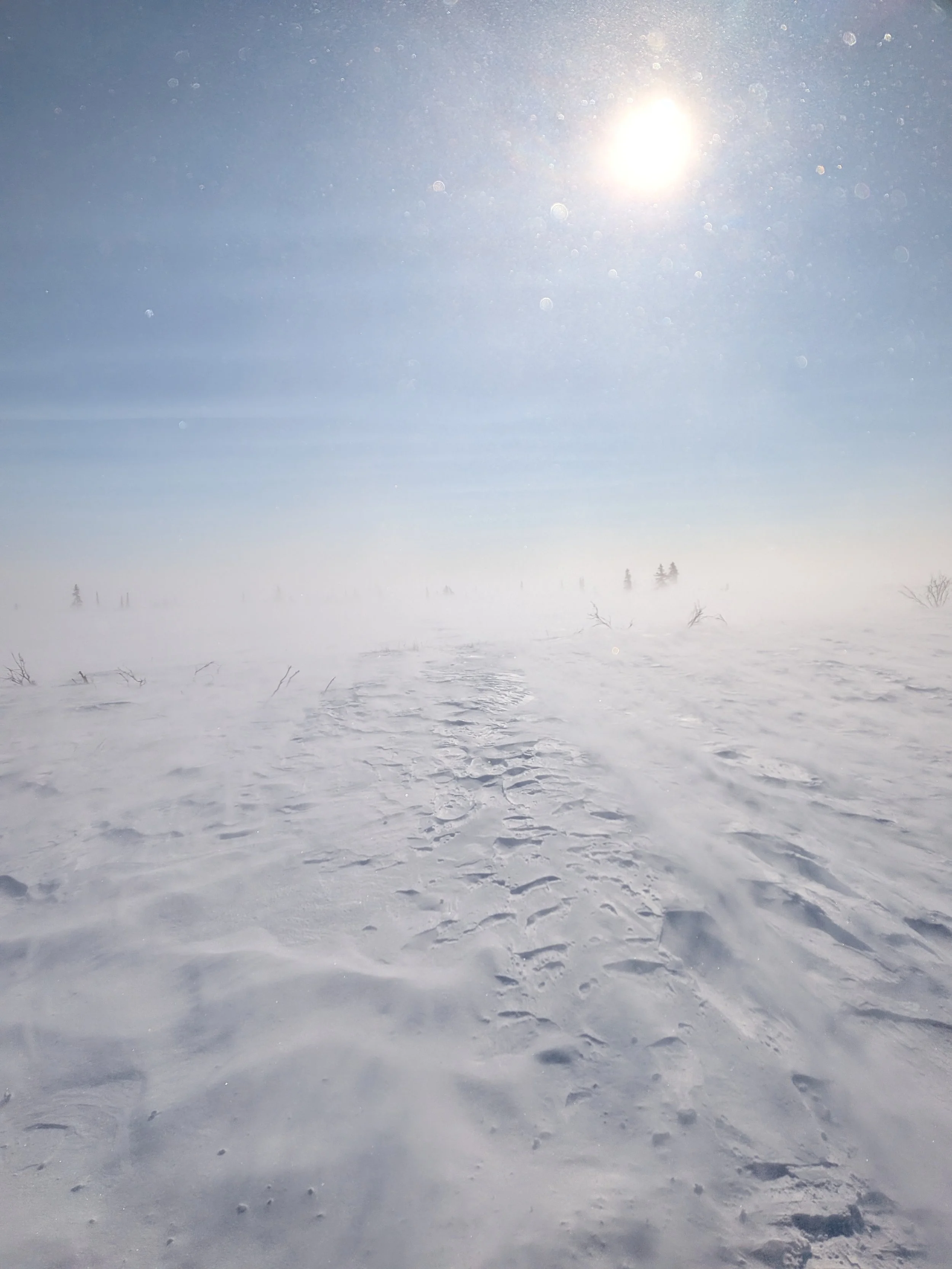
Wild Winter WomenComment
Day 4: Wind chill, winners, wayward travelers, and a potential women’s record

852 miles to Nome, at Finger Lake checkpoint (photo: Maya Krause)

Today has been windy and cold. Really cold, and tonight the forecast is for temps as low as -42 deg F at Nikolai (mi 259) and windchills as low as -55 deg F at Puntilla (mi 153); at Puntilla, the wind is blowing right at the faces of racers going up to Rainy Pass. As per Maya Krause (Brazil, 1,000, bike) regarding conditions earlier today between Finger Lake (mi 124) and Puntilla, “Wind wasn’t bad in the trees, but in the open areas, the wind was really, really ripping and intense. Super cold.” From another racer on foot near Finger Lake, “Trail is good!!! Windy as heck.” as well as other words that are not fit to print here. The wind and cold were so intense today that multiple racers set out from Puntilla, only to decide to turn around to go back to the cabins at Puntilla to rest and wait for better conditions.

Cold conditions have also led to cramped and sardine-like conditions overnight at some checkpoints, with some checkpoints (e.g. Puntilla) housing more than 20 racers at times. Rohn (mi 188), on the other hand, has a strict first in, first out policy, which means that for racers arriving at the tent, there is a guaranteed bed on pine boughs in the heated tent, but it also means that when someone comes in off the trail, that it is time for the person to leave who has been there the longest. When that happens and it is your time to leave, you can either hit the trail or go and sleep outside in the -30 deg F cold dark night. Most racers will choose to get moving on the trail, even if it’s 2 am (which is what happened to Tiziano Mulonia (Italy, 1,000, bike) and others this morning).

Back on Sunday and Monday, the portion of the trail located in the interior, north of the Alaska Range, got about a foot of snow Sunday and Monday, from the pass to McGrath (mi 306). On Tuesday the ITI Logistics Lead Adrian and a friend drove their snowmachines from Rohn to McGrath and back for supplies. Their snowmachine tracks have been the only traffic to pack the trail from Rohn to McGrath, making travel exceptionally slow for the lead racers in that portion of the course.

The trail was so slow that bikers looked to be going at walking speeds going down from Rainy Pass, whereas they would be averaging 10 mph or more under better conditions.

Despite the exceptionally challenging conditions, we have a men’s winner in the 350-mile race on bike! This evening Justinas Leveika (Lithuania) won the bike race in a time of 3 days, 4 hours, and 48 minutes. Although a rookie at the ITI, Justinas is quite possibly the global king of ultra-distance bikepacking races and has had many victories and course records in recent years (including the Tour Divide course record previously held by the late Mike Hall, considered unbeatable by many). Justinas rode a borrowed Trek Farley, provided by the Trek Bicycle Store of Anchorage, and local Billy Flamingo's tires. He was very excited by the time that he got to Nikolai last night, since he had a ~ 28-hour push from Rohn. When he got to Nikolai, he was content to rest overnight so that he could see the last 50 miles of the trail in the daylight. He said that this race had given him a variety of conditions - good trail, then warm and soft, then snowy with a bit of freezing rain on top and then very cold. He said that he would be excited to see McGrath and stay there to welcome in some friends. Justinas, welcome to the ITI Family, congrats on your race, and thanks for the inspiration!

We also have our men’s winner of the men’s 150-mile race on bike! Yesterday Shane Cramer (Anchorage, AK) won the bike race in a time of 1 day, 21 hours, and 40 minutes. Kudos to you!

Tonight the tracker of Meg Inokuma, an ITI rookie from Palmer, Alaska, puts her at mi 139.5 but she has been reported to be going over Rainy Pass (~mi 172). If it’s correct that she is going over Rainy Pass now, Meg may be on track to break the women’s 350 foot record, held by Anne Ver Hoef of Alaska, who in 2013 recorded a time of 6 days, 12 hours and 20 minutes! Meg loves to meet new people and see scenery that she has never seen before, and she is thriving. Let’s go Meg!!

An additional challenge that has affected many racers has been route-finding. Most racers will stick to the Iditarod Trail most of the time, but there are lots of other trails in the area. There have been numerous times in the past few days when racers have deviated from the Iditarod Trail, and it’s hard to know if the decision to deviate from the Iditarod Trail is inadvertent, or if the intention is the hope of a shortcut or easier trail. In some cases, folks who follow a spur trail decide to turn around and backtrack to rejoin the Iditarod Trail, but in other cases, they have kept going forward on the alternate trail until it rejoins the Iditarod Trail. These detours and bonus miles can be irritating at the time but hopefully make for good stories later.

What are the women (as per the trackers)?

1,000 bike - (1) Maya Krause (Brazil) and (1) Kendall Park (St. Louis, Missouri) are together and resting at Puntilla (mi 153), ready to make a push for the pass.

350 bike - (1) Ginny Robbins (Victor, Idaho) is in 8th place overall, has had a heckova push from Rohn (mi 188) to Nikolai (mi 259) and will be at Nikolai soon; (2) Petra Davis (Anchorage, Alaska) is resting at Bear Creek Cabin (mi 228); (3) Frances DeBlare (Palmer, Alaska) is resting at Shell Lake Lodge (mi 103).

350 foot - (1) Meg Inokuma (Palmer, Alaska)’s tracker puts her at mi 139.5 but she has been reported to be going over Rainy Pass (~mi 172) - see above comment about the women’s 350 foot record; (2) Natalie Taylor (UK) and (2) Emily Humberston (Wausau, Wisconsin) are resting at Puntilla (mi 153), ready to make a push for the pass; (4) Laura Trentani (Italy) is on her way to Puntilla (mi 153) after a detour earlier today; (5) Hilary Kunz, (5) Carol Seppilu, and (5) Gillian Smith and are all resting at Finger Lake (mi 124); and (8) Sunny Stroeer is on her way to Finger Lake (mi 124).

350 ski - (1) Tracie Curry (Fairbanks, Alaska) is resting at Puntilla (mi 153) with Maya and Kendall; and (2) Laura Rushfeldt (Boston, Massachusetts) is resting at Finger Lake (mi 124), a place that she knows well from volunteering that checkpoint in last year’s ITI.

150 foot - (1) Annie Connelly (Palmer, Alaska) is resting at Finger Lake (mi 124); (2) Elsa Rabou (France) and (3) Jen Novobilskis (Anchorage, Alaska) are on their way to Finger Lake (mi 124), and (4) Sarah Kingstrom (Nome, Alaska) is resting at Shell Lake Lodge (mi 103).

Stay tuned for more updates and stories from the trail, the next of which is coming tomorrow night. Until then, you can follow the racers on the tracker.

Written by Leah Gruhn.

Thanks to Wild Winter Women - Allison Carolan, Amanda Harvey, Faye Norby, Jan Redmond Walker, Jessica Roschlan, Kari Anne Gibbons, Laura Wiesmann Hrubes, Lynn Hall, Madeline Harms, Rashelle Hintz, Rebecca McVay-Brodersen, and Sarah Bergstrom.
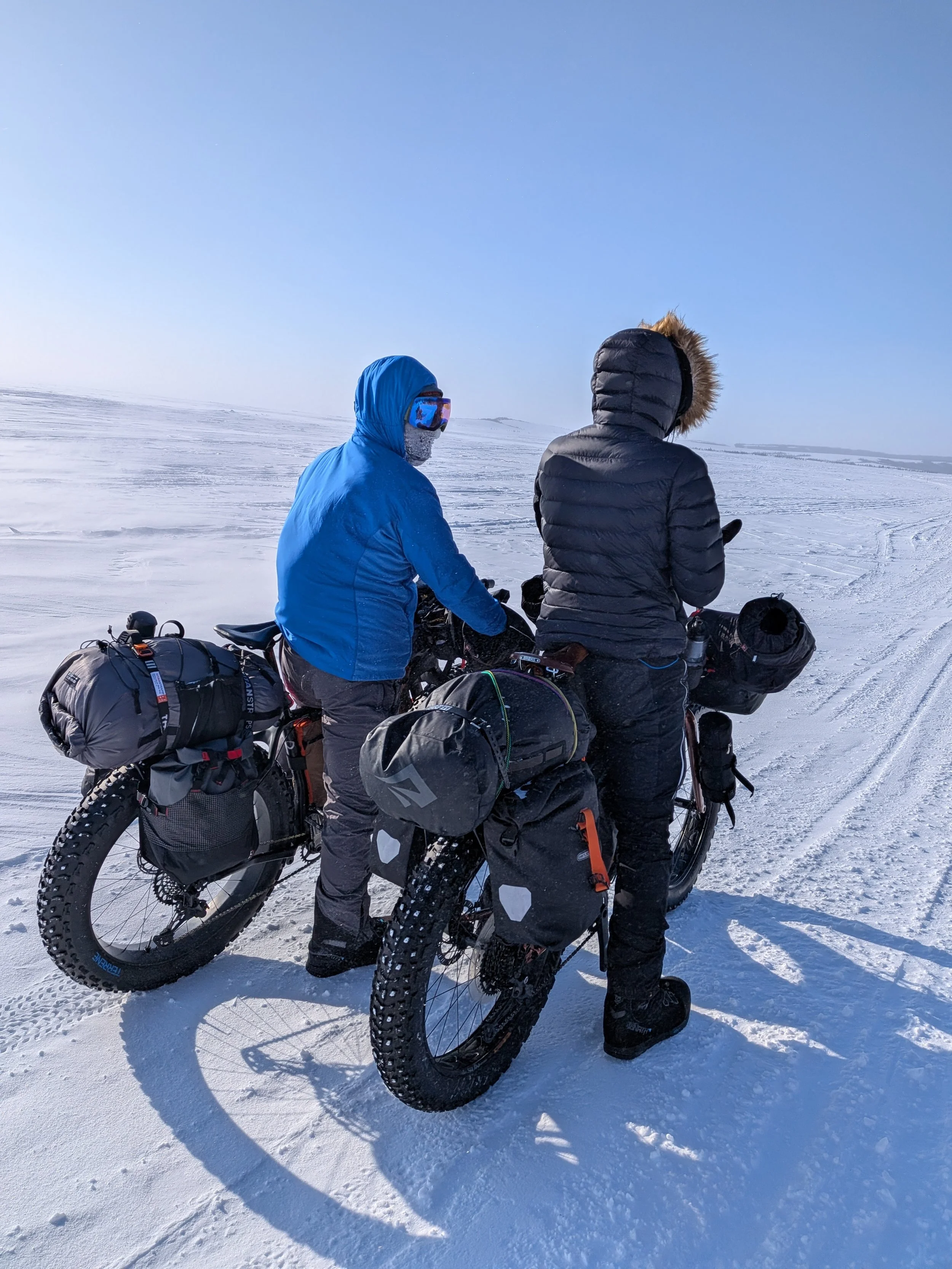
Wild Winter WomenComment
And In Came The Cold

We are on day three of the Iditarod Trail Invitational!  There is now over 160 miles between the first athlete and last, if you want to think about how much of a logistical nightmare hosting a 1,000 mile race with three modes in Alaska is.  We don’t though, we are busy cheering on these dots and what a day!  We finished last night with some excitement as Justinas Leveika and Curtis Henry were the first to successfully cross Rainy Pass and safely get to Rohn, the trail was tricky for them but not too much time was wasted, in no short order they were headed for Nikolai with (maybe) bellies filled with Adrian's famous brats.  


Further back down the trail athletes were getting into their groove and taking rest when and where they could.  At midnight some were on the trail taking advantage of the firm snow and some found reprieve at various checkpoints.  At that time over 12 people were resting at Hooligans Retreat, which is an official checkpoint of the ITI.  Here they can order food off of a menu including a hot breakfast, and climb into one of the many cozy bunk beds in the cabins.  Carol Seppilu took 5 hours here to sleep and rest, after getting some unfortunate food poisoning.  This is something that can and does happen during the race, most likely due to tight quarters where germs spread quickly, sometimes it is a game ender and sometimes not.  Well done Carol for muscling through.  350 Skier Laura Rushfeldt also took several hours here before continuing on for a (most likely) lunch at Skwentna Lodge.  Fellow and lead skier, Tracie Curry made it to Shell Lake for a couple hours after some bonus miles, a few people have unfortunately continued to take this wrong path, it’s safe to say she will not be the last!  


Our cyclists had an exciting day as Ginny’s solid riding has now put her in first place, she had some longer rests yesterday and Petra had spent more time on the trail, but it looks like the rest and consistent speed paid off for Ginny.  They are not too far apart and worked together to head over Rainy Pass, which is always a good idea not to go alone.


Further back down the trail, for our two Nome Bound cyclists Kendall Park and Mayella Krause, today was all about strategy.  After getting to Shell Lake around 1am they had a purposefully slow morning, leaving later to give the trail time to set up and the weather time to wind down.  Oftentimes athletes will plan to have a layover at Rainy Pass lodge to wait for a weather window, that is a good idea but it can get crowded quickly.  Remember that sickness mentioned earlier?  It sounds like these two are playing smart and giving the field an opportunity to move on.  For the 1,000 mile athletes, they are playing a game of strategy, and longevity on the trail is the goal.  


Rounding out the bike division is 350 cyclist Frances Deblare who is still pushing on, she had an illness earlier as well and is all Grit and Go, stopping to rest at a trail angles cabin on the Yentna River as well as Hooligans Retreat.  Hopefully she is remembering her own words of wisdom: Dream big and put in the work to get there. You got this Frances! 


Moving onto the train of foot division folks, many of the 350 women's foot division has moved off of the Yentna and Skwentna Rivers and are making their way on land.  


This can be a welcome treat from the miles of flat river trail, and they will be consistently climbing until they crest Rainy Pass.  Sunny Stroeer has made incredible progress after a nice break at Hooligans, happy that the temperature is starting to drop.  Our lead for the women's 350 is Natalie Taylor, who is still going strong even though she also got sucked into the shell lake detour and had to back track.  She is tough and strong, and says thanks to her “training buddies for getting me out in the wet uk weather this winter”  What Natalie is looking forward to the most is the views, and they are certainly coming.  Tonight she will climb down the infamous Happy River Steps and then it is on to Puntill Lake, the views are coming, as well as the cold.  She is also accompanied by the lead foot division, and world famous in Minnesota, Scott Hoberg who quite recently finished another Arrowhead 135!  Meg Inokuma is behind them after a solid day as well, and Laura Trentani follows after, hopefully she got to see the sunrise after her rest at Skwentna and is eating plenty of ciocholats.


The 150 division started out together early this morning and still are not too far apart, with the exception of the speedy Annie Connelly. Jen Novobilski, Elsa Rabou, and Sarah Kingstrom, Sarah being the last of the foot women to leave the resting place off the Yentna River around 7am this morning, should all be off the Yentna River tonight. 


The rest of the field is a large train of cyclists, making their move to Puntilla Lake and over Rainy Pass, 12 currently including multiple 1,000 mile finish cyclist Ryan Wanless, those in their rookie year would do well to stick with him.  He has stories.  The climb up over the pass can be a dream and there is not too much steep trail, that is if the weather is good.  Today many dealt with a strong headwind, brutal cold, and a punchy trail.  It was not too much better on the other side, the Dalzell Gorge saw 1.5 inches of snow over a blown out trail, many of our riders resorted to pushing their bikes back down the pass.  Our two lead cyclists pushed their bikes out of Rohn, the official checkpoint and a humble tent that sleeps six, and from there have worked towards the biggest push yet, 70 miles to Nikolai.  Justinas Leveika continued his steady push, bypassing Bear Creek Cabin, and much of it was most likely bike pushing, trailing behind now Curtis Henry seems to have taken two bivy stops, one close to the Post River and now again.  The beginning of the Burn is quite hilly and very exposed.  Those traveling up Rainy Pass today have some cold to look forward to, the rest of the field will see a significant drop in the coming days.  The cold brings a firmer trail, the punchy snow on the river will be a memory.  It is a good thing these temperatures are coming a few days into the race, the athletes have had an opportunity to adjust to trail life, and be more responsive to needed adjustments, they will certainly need it going forward. 
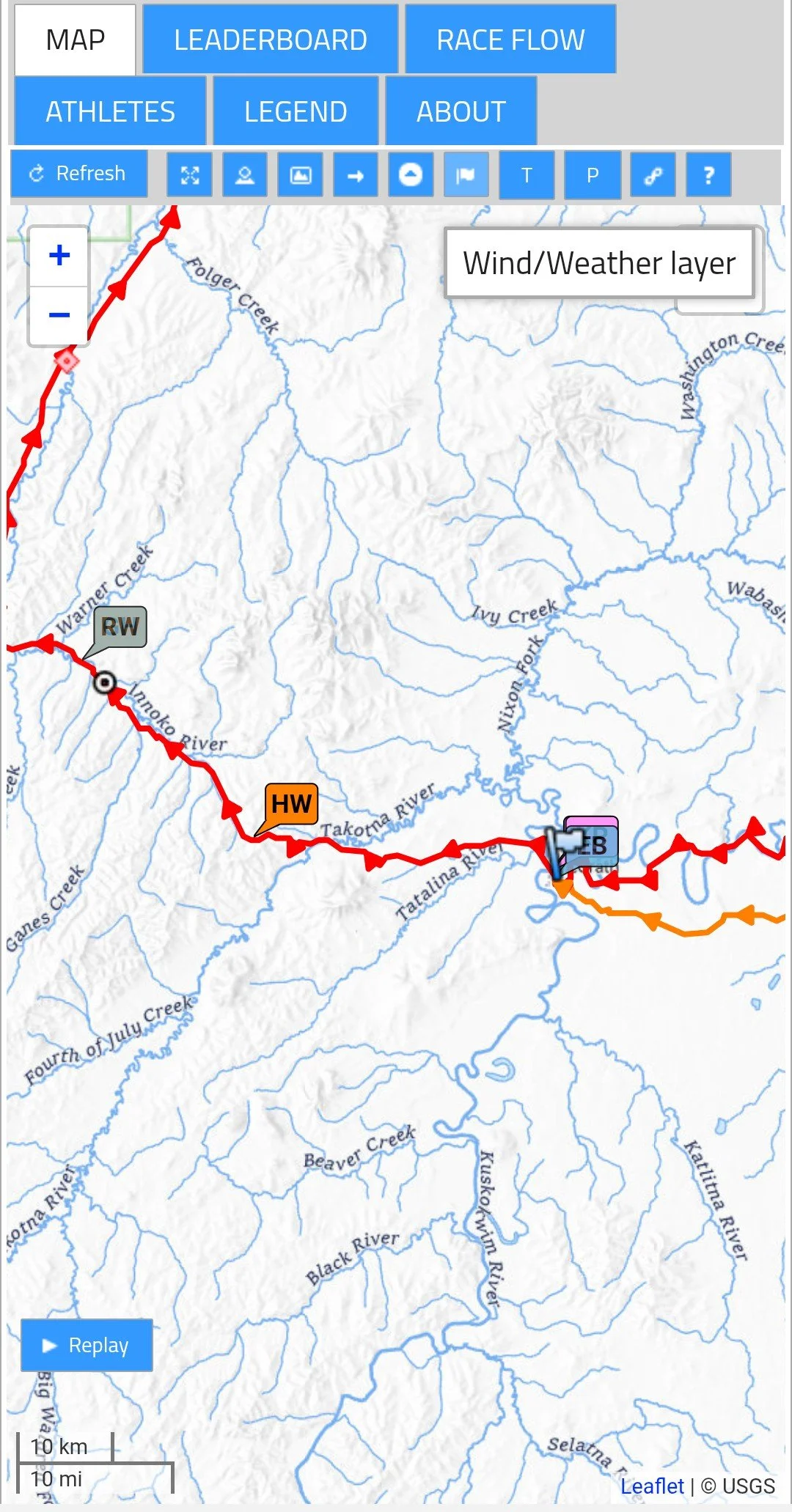
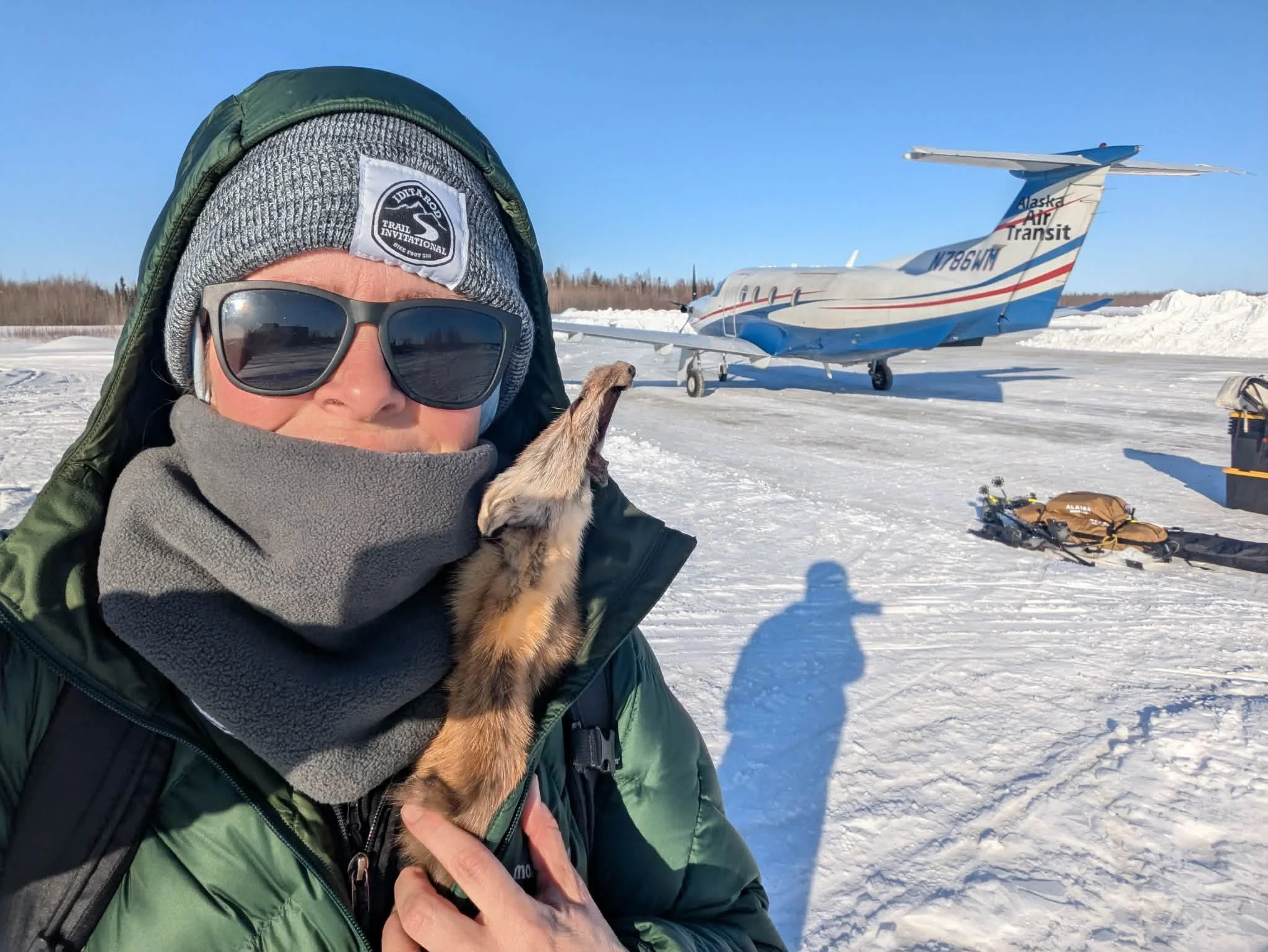

Written by Kari Gibbons

Thanks to Wild Winter Women -Allison Carolan,Amanda Harvey,Faye Norby,Jan Redmond Walker,Jessica Roschlan,Leah Gruhn,Laura Wiesmann Hrubes,Lynn K Hall,Madeline Harms,Rashelle Hintz,Rebecca McVay-Brodersen, andSarah Bergstrom,

Photo credit Mark Smith

Wild Winter WomenComment
The Adventure is Just Beginning..

It’s day 2 of the Iditarod Trail Invitational, and it has been a blast to watch. Our athletes are going through the motions, and everyone seems to know where they are going for the most part! The start of the race to the Susitna River came with little to no navigational errors, and if you are familiar with the race, you know the first few miles have a spiderweb of snowmobile trails to tempt a wayward athlete. By late afternoon the long line of dots had moved out of the low areas and onto the river, and now there are well over 135 miles between our last foot athlete and first cyclist. 

After a short 12 hours into the race our lead biker and Norwegian Justinas Leveika was over 100 miles in and Fairbanks' own Curtis Henry was right behind. Currently they are making their way up the infamous Rainy Pass, but with some wind and weather coming, hopefully they will miss it and maybe take a break in Rohn. They are both skilled athletes but rookies to the ITI, so will this affect them? Time will tell! 

There is a respectable line of cyclists still making their way to Puntilla Lake, including our lead female cyclist (also from Fairbanks) Petra Davis who had a very solid day. After a short break at Hooligan's retreat earlier, she told us that she “spent the last 5 years working my way towards this event.” It shows!  Right behind her has been rookie Ginny Robbins, snacking on Chex mix, cheese, and ginger cookies hopefully. Ginny has done very well with resting at the checkpoints and then hitting the trail, getting a lot of purposeful miles in. Today the river has been slow but manageable at almost 30-degree day. Getting to Puntilla Lake is hilly, scenic, and filled with “woopdy-doo’s” – relentless little moguls that make getting into a grove difficult.  

Further back down the trail, 350 skier and Tucker Costain and last years 350 men’s ski winner, is absolutely cruising out of Shell Lake after a very solid day with just a two hour nap on the Yentna River. But getting to Shell Lake and a potential stop at the roadhouse was easier-said-than-done for some.  Leaving Skwentna, athletes have a long, low swamp to go through and then it’s on to the Shell Hills. There are a lot of small climbs in this section which will wake up the legs after so many miles on the flat rivers. A lot of energy can go into those climbs and not enough energy towards looking for the trail. We watched several athletes take a different route and then turn around, creating a seemingly busy track for others to mistakenly follow. Never fear fellow dot watchers and family members: this is all part of the adventure! Our veteran skier Tracie Curry did not get bonus miles to Shell Lake and has had a solid day as well.  This is her second ITI and this trail belongs to her. Our other skier, the always smiling Laura Rushfeldt is a few miles back and took a nice sleep last night before getting on the river.  This is her second attempt and she is really looking forward to seeing the trail after Rohn where she dropped last time, and she’ll have her boyfriend to keep her warm… relax, that’s the name of her big puffy coat! 

It has been a treat watching some fast and fiery women on foot lay out some miles today. After leap frogging for much of the day, Natalie Taylor is currently in the lead and Alaska’s own Meg Inokuma is a few miles back at a purposeful 4 MPH.

The men's foot division is being led by Jason Mancini competing in his rookie year. Jason has experience doing the Arrowhead 135 unsupported (twice) and that must help with his trail efficiency but the speed must come from his (exquisite) taste in food, the favorite of course is the Little Debbie Unicorn Cakes. Hot on his heels is 1,000 mile foot athlete and honorary Wild Winter Woman, Gavin Hennigan. Gavin is also raising funds to support communities affected by the big storm this summer, information here: https://www.givengain.com/campaign/iditarod-trail-invitational

Annie Connoly has been leading the 150 race for the women, and Sarah Kingstrom and Jen Novobilski have had great days as well. Elsa Rabou is right behind them. We are watching Carol Seppilu from Nome tackle her first 350. She was solid all day and is in familiar territory after completing the 150 last year. Every year, Carol is out welcoming athletes to Nome as they finish their 1,000-mile race, and now it is our turn to cheer for Carol so she can live her dream of walking home. 

Another household name is Sunny Stroer, on foot this time after completing the 350 on bike and skis, and the 1,000 mile on skis as well. Sunny’s super power is getting rest with big sleeps when she needs it, and she is showing her strength in the multi sport for sure.  

They say if you want to go fast, go alone, and if you want to go far, go together. That certainly is the current theme for our intrepid 1000-mile women's bike division, Mayella Krause and Kendall Park. They have teamed up and cruised through this day like pro’s, including navigating some squirrely river trail to enjoying breakfast at the Yentna Roadhouse. I think this team will be fun to follow! 

We are at the beginning of our second night on the trail, and cold will be coming.  We started our day with over 12 people sleeping on the last hill before the Susitna River, 10 bikers at Hooligans Retreat, and Justinas leaving Finger Lake before the sunrise.  Before the race started, we sent a survey out and so many athletes talked about seeing the northern lights, experiencing what the trail has to offer, sunrises and sunsets. There is an easiness that comes from multiple days on the trail, the hardiness and instinct kicks in.  They have already had northern lights last night, but the adventure is just beginning.  

Written by Kari Gibbons

Thanks to Wild Winter Women -Allison Carolan,Amanda Harvey,Faye Norby,Jan Redmond Walker,Jessica Roschlan,Leah Gruhn,Laura Wiesmann Hrubes,Lynn K Hall,Madeline Harms,Rashelle Hintz,Rebecca McVay-Brodersen, andSarah Bergstrom,

Coach Janice Tower with Frances and Petra!

Coach Janice Tower with Frances and Petra!

Wild Winter WomenComment