
Day 16: Celebrating the Legacy of the Iditarod Trail
As of 2 pm Alaska time, our racers are now over the halfway point in the 30-day cutoff for an official finish time to Nome.
A big discussion the last few days has been when the Iditarod dog sled race trail breakers will create a trail past McGrath? These trail breakers are a group of snowmobilers who drag heavy sledges behind them, stopping to saw and remove impeding brush or logs on the path as needed. We got word that the trailbreakers reached McGrath yesterday, and Ryan told us they passed him just before 4 pm on the trail! With all this excitement over the arrival of the trailbreakers, there has been a flurry of activity in our previously lifeless dots. Of note, sunrise in Ruby is 8:55 am, and sunset is 8:05 pm; previous racers have shared that it stays light far past sunset. Because of this, our racers may choose to have a later-than-conventional start to their day and keep moving on the trail well into the late hours of the night.
After a relatively mild day yesterday, with temperatures in the single digits Fahrenheit, our racers had another chilly night of temperatures below -20F. Gavan chose to snowshoe all night, reaching the Carlson Crossing (CC) cabin (mislabeled Collins on trackleaders.com) just after 4 am, clocking in at a speedy 1.2 to 2 mph throughout the night. Last year, Gavan was in Ruby by day 13 of the ITI, which is 122 miles from his current location. CC cabin, about 68 miles past McGrath, is one of ten safety cabins on the historic Iditarod trail maintained by the Bureau of Land Management. These cabins are simple structures with a bunk, a wood stove, and an outhouse. Many are only accessible in winter and are first-come, first-served. Racers will need to do chores such as chopping wood and building a fire when they arrive. Gavan might also consider chopping extra wood as a courtesy to those who come after him.
Ryan spent the night sleeping between Ophir and the CC cabin. This morning, he started post-holing in thigh-deep snow and made it about 2 miles in 3 hours before stopping again. Troy stopped for the night between Takotna and Ophir and started making progress down the trail around 9:30 am. He travelled a little over 9 miles in about 5 hours to reach Ophir, where he is taking a break. Erick, Maya, and Kendall spent last night in Takotna. Their dots started moving towards Ophir in the early afternoon. A little after 2 pm, their speed picked up, suggesting they had a set trail to follow. Dot watchers around the world have been waiting excitedly in anticipation for this. This afternoon, they passed the Takotna River, where they enjoyed their final views of the Alaska Mountain range.
On his race survey, Erick shared that he does not have snow where he lives in France and has been practicing by biking on the beach. With little winter biking experience, his perseverance in this year’s deep snow and extreme weather shows his ability to adapt to new challenges and changing conditions. Maya shared that she was not able to train as hard for this race as she would have liked to due to life events. She prides herself on being the first Brazilian to finish the ITI 350, which is fueling her desire to reach Nome. Rumor has it these athletes are planning to put in some big mileage days now that the trailbreakers have passed them.
As our racers have experienced, one of the unique aspects of the Iditarod trail is that it only exists for a few weeks a year, needing trail groomers and frozen water for passage. So how did this incredible 1,000-mile winter trail across Alaska come to be? It is perhaps best known for the 1925 life-saving serum run, when 20 mushers and about 150 sled dogs carried the diphtheria antitoxin from Nenana to Nome in five and a half days. This incredible feat, accomplished during an intense Alaskan blizzard with hurricane force winds that grounded all flights, and saved the Village of Nome from a deadly diphtheria outbreak.
It took until 1978 for Congress to establish the Iditarod as a National Historic Trail, 5 years after the first Iditarod Dog Sled race. A Senate report noted that the trails comprising the Iditarod National Historic Trail “…offer a rich diversity of climate, terrain, scenery, wildlife, recreation, and resources in an environment largely unchanged since the days of the stampeders. It is the isolated, primitive quality of this historical environment that makes the National Historic Iditarod Trail proposal unique. Nowhere in the National Trail System is there such an extensive landscape, so demanding of durability and skill during its winter travel season. On the Iditarod, today’s adventurer can duplicate the experience and challenge of yesteryear.” (US Department of the Interior, Bureau of Land Management). In this remote area of the world, where Mother Nature dictates much of life, the Iditarod Trail gives us a glimpse back in time to a world less gripped by technology and materialistic gain, to a way of life rooted in survival, creative adaptation, and looking out for one another.
In Honor of International Women’s Day, we would like to honor some of the women of the Iditarod Dog Sled Race. The first Iditarod Dog Sled Race was held in 1973 as a way to commemorate the history of the Iditarod Trail. No women mushers finished that first year. However, in 1974, Mary Shields became the first woman finisher, and Lolly Medley finished shortly after her, showing the world that women can indeed do hard things. The bravery of these two pioneers came only two years after women were officially allowed to run the Boston Marathon (1972). Mary Shields died last summer at the age of 80 years old. Originally from Wisconsin, she moved to Alaska after college and worked as a waitress to feed her dogs. During the 1974 Iditarod dog sled race, men at checkpoints made bets on when she would drop out, and women made bets on when she would finish, which she says only fueled her will to make it to Nome. Shields was a true inspiration to many women who wanted to take on winter adventures and dog-sled racing. History was made again in 1985 when Libby Riddles, who spent her youth in Wisconsin and Minnesota, became the first woman to win the Iditarod dog sled race. Since then, Susan Butcher became the second woman to win the race, and she won it a total of 4 times, the last in 1990.
This year’s Iditarod Dog Sled race started at 2 pm Sunday, March 8th, in Willow, Alaska. Twelve women are taking part in this year's race, and we would like to take a moment to list their names. Those with a previous top-ten finish are Paige Dorbny, Jessie Royer, and Millie Porsild. The women veteran mushers are Gabe Dunham, Hanna Lyrek, Josie Shelley, and Michelle Phillips. Women rookies this year are: Sydnie Bahl, Jaye Fouche, Sadie Lindquist, Jody Potts-Joseph, and Brenda Mackey.
With both the ITI and the Iditarod Dog Sled Race currently underway, Alaska has become the largest playing field in a game of human grit, determination, and survival. Whether on foot, by bike, or on a dog sled, these racers have watchers around the world on the edges of their seats, eagerly awaiting updates. In a world with predictable routines and man-made comforts, perhaps we all yearn a little for the chaos, hardships, and unpredictability that an adventure through Alaska is sure to bring.
Written by Jessica Roschlan
Thanks to Wild Winter Women - Allison Carolan, Amanda Harvey, Faye Norby, Jan Redmond Walker, Kari Gibbons, Leah Gruhn, Laura Wiesmann Hrubes, Lynn Hall, Madeline Harms, Rashelle Hintz, Rebecca McVay-Brodersen, and Sarah Bergstrom.
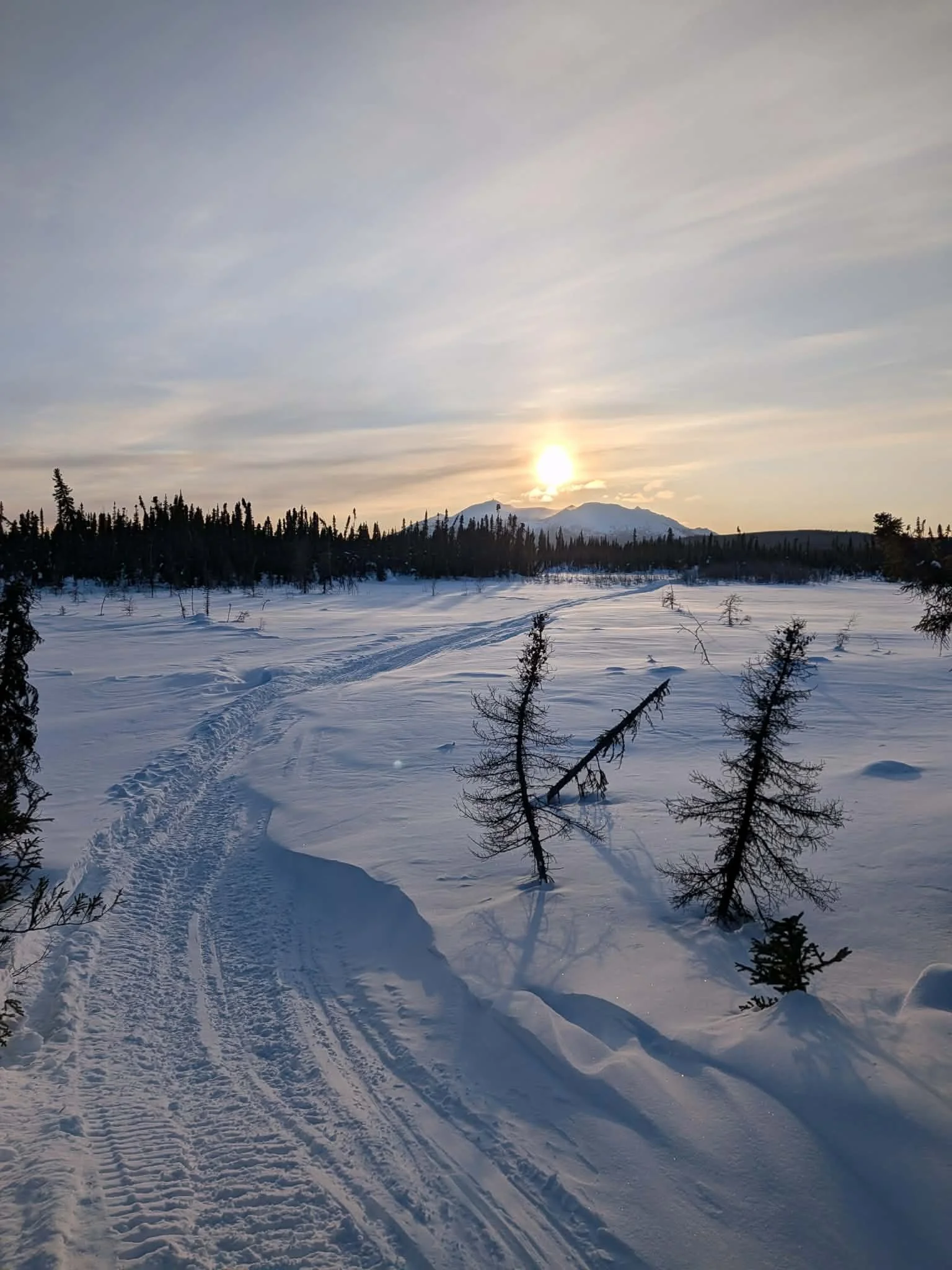
Photo Credit: Kendall Park
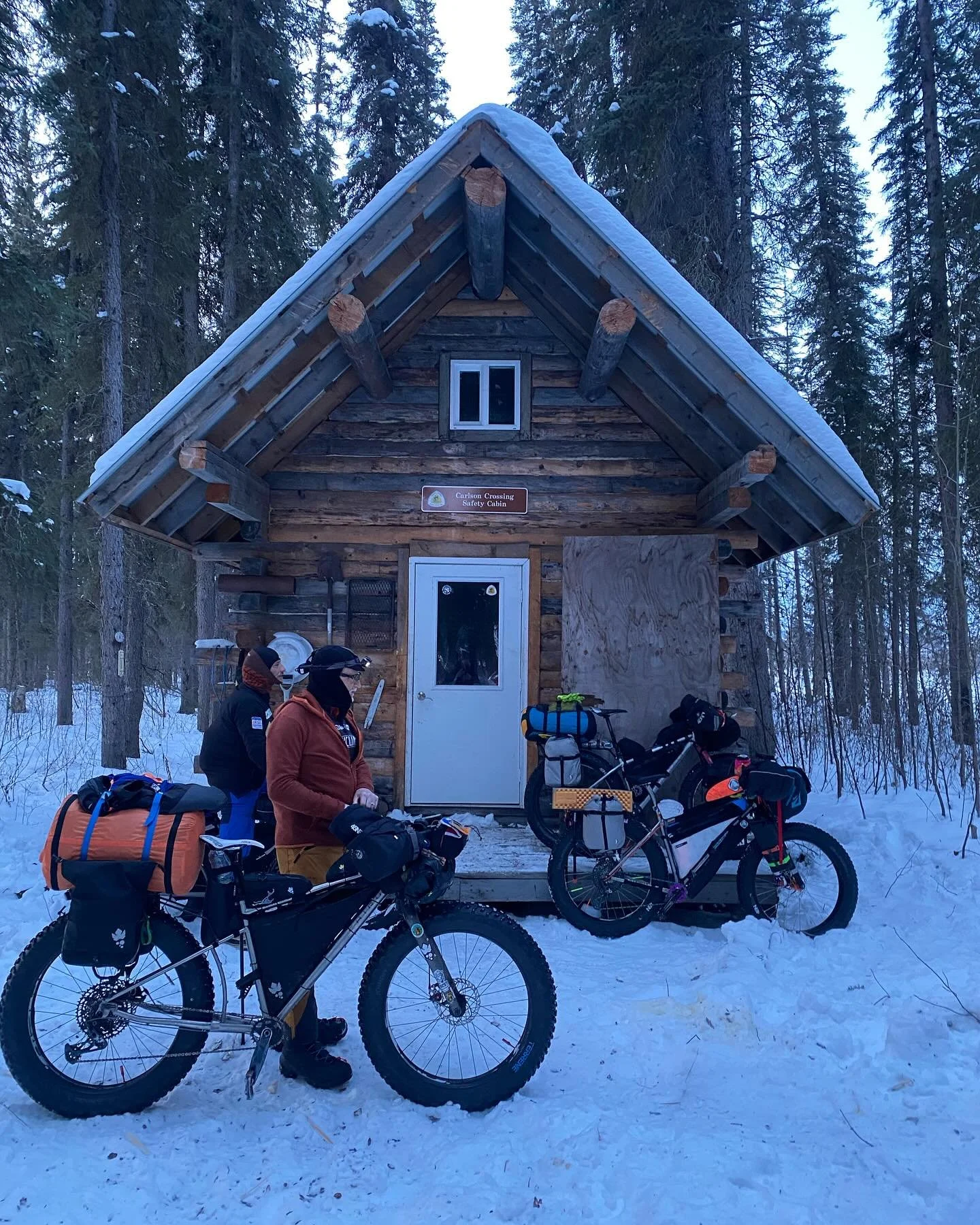
Carlson Crossing Cabin on a previous year’s ITI. Photo Credit: Roberto Gazzoli
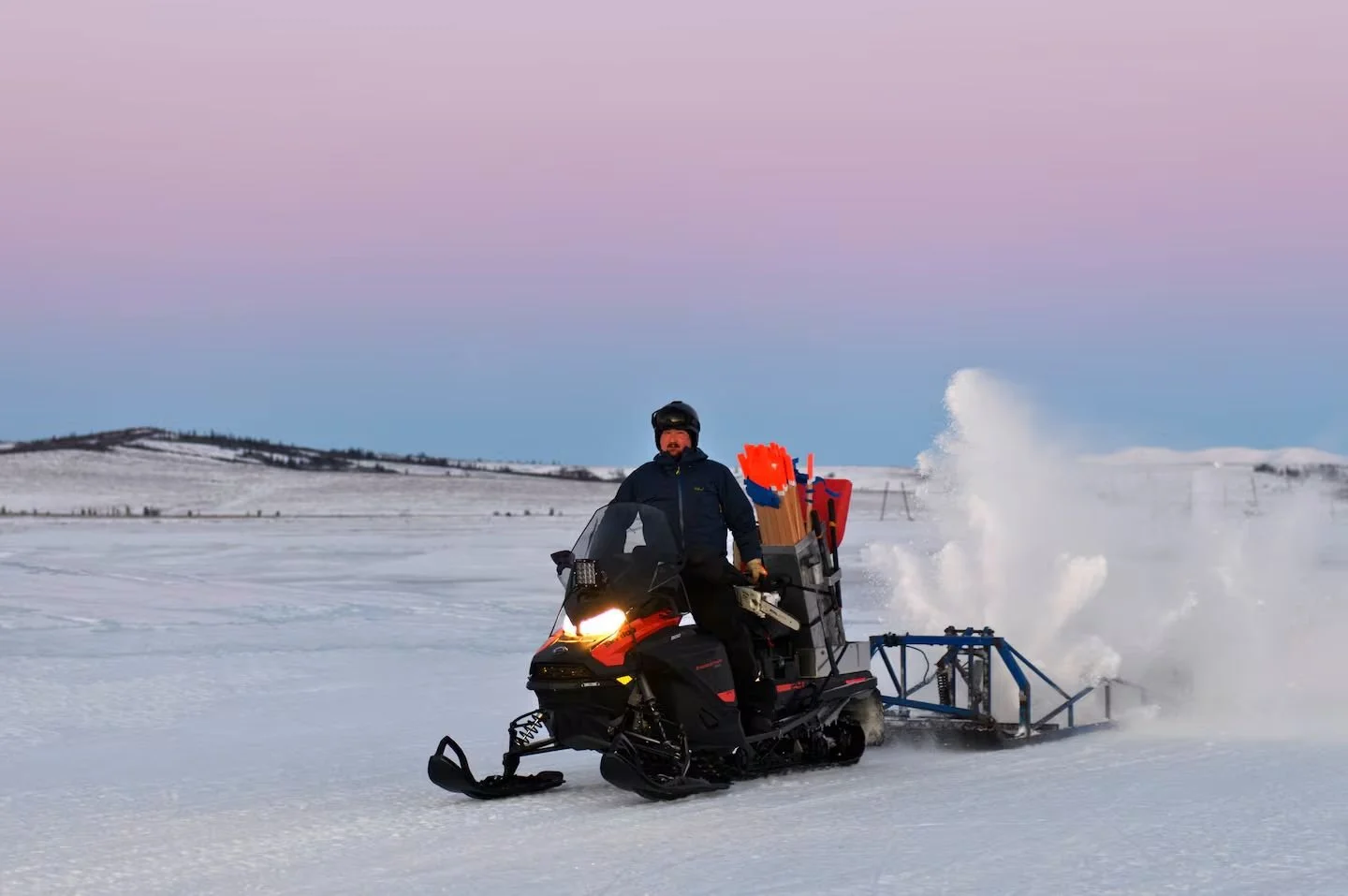
An Iditarod Dog Sled Race trailbreaker in 2022. Photo Credit: Anchorage Daily News