
Day 28: Timing the Trail
As our 5 remaining racers inch closer to Nome, patience for ideal weather continues to be the theme. This morning, both our 4 bikers and lone foot racer were looking at stretches of the trail notorious for treacherous weather and strong winds.
Gavan reached Shakoolik around 4pm yesterday. He is taking a long rest there, timing his departure for the most ideal time to cross the Norton Bay, a 44 mile exposed stretch to Koyuk, where the only reprieve from the elements is the drafty Little Mountain cabin just before the ice of Norton Bay. As our bikers experienced a few days ago, conditions on the ice can change quickly. During high winds, Norton Bay can reach whiteout conditions with nowhere to shelter from the biting gusts for even a moment. A veteran in this race, Gavan no doubt knows what he is in for and is waiting for the perfect time to leave, posting this morning that he anticipated spending 24-hours there. The weather today in Shaktoolik is described as “sunny with gusty winds,” but winds are expected to die down this evening.
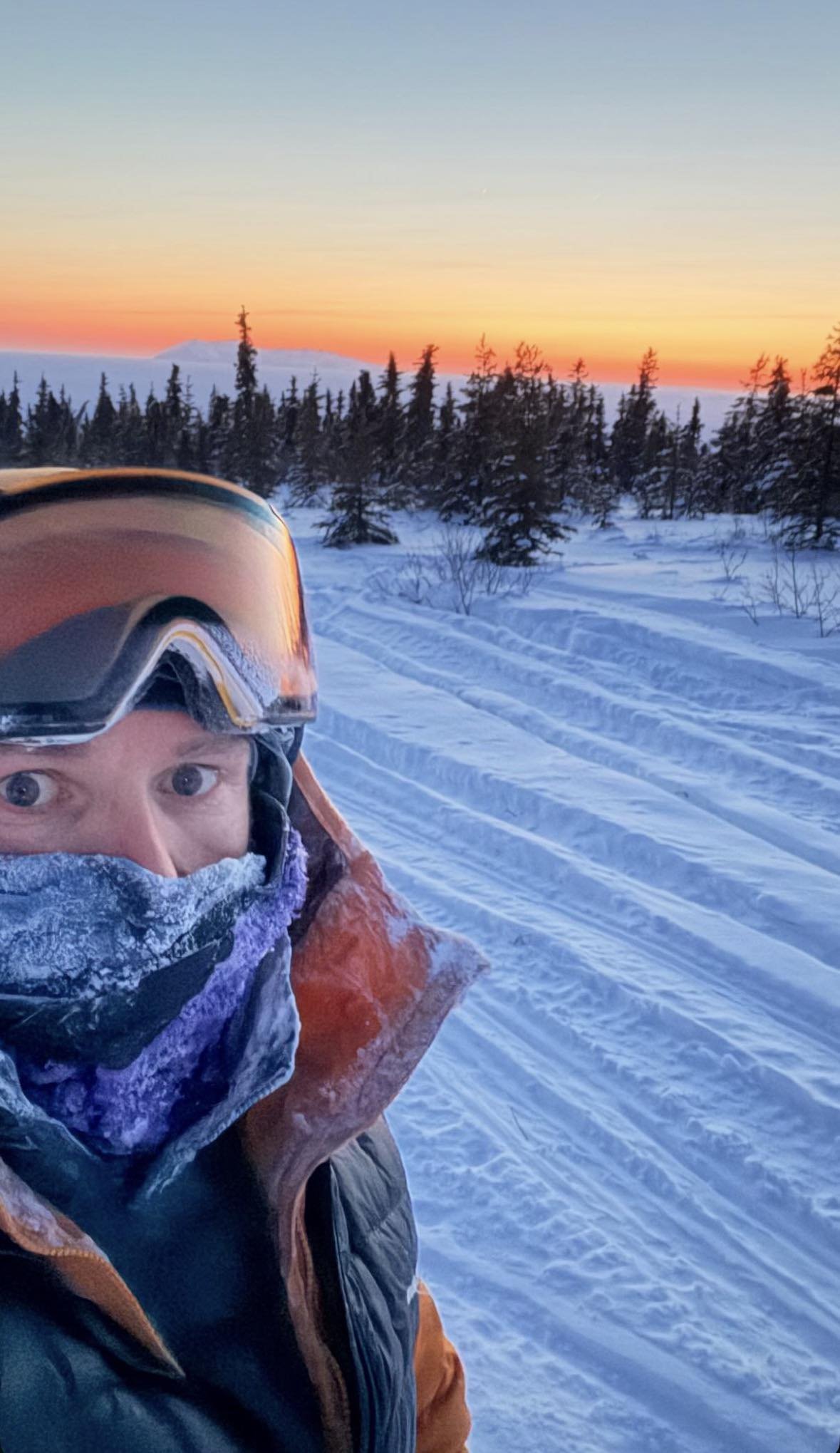
Gavan taking a selfie at “Besboro Island, a 2 mile long land mass in the Norton Sea between Unalakleet and Shaktoolik
As for our bikers, after their short rest in Golovin, Mayella, Kendall, Erick, and Ryan continued on to White Mountain last evening. White Mountain, named after a prominent lookout hill close by, is notable as the only populated town on the Seward Peninsula not on the coastline. With a population of 185 in 2020, it started as a native fish camp, and later boomed in population during the gold rush. This checkpoint is hosted in the home of local Alaskans Joanna and Jack, who treat racers to home-cooked dinners, often including moose, and hearty breakfasts. Our bikers reached this little slice of heaven just before 9pm last night.
In addition to resting and drying gear, the racers packed up calories from their last drop boxes as they prepared for another dangerous stretch of the Iditarod Trail ahead. From White Mountain, it is a 48-mile stretch of exposed hills and coastline to the race's last official checkpoint, Safety. Leaving White Mountain, the trail follows Fish River for 3 miles before traversing miles of rolling tundra. It then enters the drainage system of the Topkok River. This section is a series of descents down to creek beds followed by sharp climbs back to the ridgeline. As a previous ITI 1,000 mile biker described: “walk up the hill and fly down it! Repeat ad nauseum!” This was proven true when we saw Ryan’s dot clock in a speedy 9.6 mph at one point today! In this area, winds can change by the minute and by the mile, with the potential to go from calm skies to hurricane-force in an hour. If needed, racers can get a slight reprieve from strong gusts at the bottom of creek beds, but might also encounter overflow there. Finally, the trail offers one final 500 foot climb to Topcock summit before descending to the beach and the Topcock safety cabin around 25 miles past White Mountain.
Topcock cabin is maintained by Nome Kennel Club, and has had many upgrades over the years, now even boasting solar panels that provide light and electricity to charge devices. This little oasis in an otherwise desolate stretch of the race can be a literal lifesaver, as weather along the coast can change in an instant. Hurricane-force winds are not uncommon, and if winds are from the north, they can bring air rushing between narrow passages in the mountains, causing wind tunnels, called blowholes. The marked trail can get swallowed in ground blizzard conditions, reducing visibility and making navigation difficult. In 2022, one Iditarod dog sled musher described such strong winds through this stretch that she could only see the two dogs closest to her sled; the rest of the team had disappeared ahead of her into the snow. The Iditarod Dog Sled website notes that in good conditions, this section can be a pleasant daytrip to the next checkpoint, but in the worst conditions, it can be literally impassable. Needless to say, it benefits our racers to time their departures to take advantage of good weather conditions. The worst conditions and the greatest chance for dangerous blowholes are in the areas around Topcock cabin. In this remote area of Alaska, the weather can vary between the weather stations located at White Mountain, Johnsons Camp station (located near the Solomon River), and the Nome airport, so racers often also rely on their own visual assessment of the winds and weather to time their push. Nome must be starting to feel close for these weary bikers. Yet, they need to remain patient and disciplined in what must feel like their last big test after nearly 30 days of seemingly insurmountable challenges.
The four bikers timed their departure and left White Mountain around 9am, with temperatures hovering just below zero Fahrenheit, sunny skies, and 14-16 mph winds out of the north. Winds in White Mountain calmed throughout the day, and they arrived at Topcock cabin around 4pm, making the 25 mile voyage in about 7 hours. Of note, Kendall’s tracker died this morning, but is working again after she reached the cabin this evening. Right now, conditions at the weather station just 8 miles from them look fairly calm with a temperature of 12 degrees F and winds around 12 mph, and no rising winds for the next 24 hours.
As our bikers face potentially their last night on the trail together, they will be able to share each other’s company at the Topcock cabin. By now, these overnight trail stops are probably starting to feel routine, but tonight’s stop will hold extra weight as each racer reflects on the journey that got them there. When asked what she was looking forward to most on the trail, Maya wrote: “I’m looking forward to being among my people, friends I’ve come to know and cherish over half a decade of sharing trails. There aren’t many of us who choose this kind of thing, and fewer who understand why we do.” Us dot watchers can only look on and live their adventure vicariously. The true story of this year’s Iditarod Trail will remain sacred to the minds of those who experienced it. Suffering together through something this monumental will certainly bind these four humans together in ways no other experience could.
Tonight, a waxing crescent moon will rise above Alaska. According to folklore, the waxing crescent moon is a time for increased energy and optimism, as well as taking action on goals. With less than 50 miles to Nome, and the most dangerous parts of the trail hopefully behind them, one can’t help but feel optimistic that, despite a historic year of challenges, 4 resilient humans will achieve their goal of reaching Nome in under 30 days.
Written by Jessica Roschlan
Thanks to Wild Winter Women - Kari Gibbons, Amanda Harvey, Faye Norby, Jan Redmond Walker, Jessica Roschlan, Laura Wiesmann Hrubes, Allison Carolan, Leah Gruhn, Lynn K Hall, Madeline Harms, Rashelle Hintz, Rebecca McVay-Brodersen, and Sarah Bergstrom.
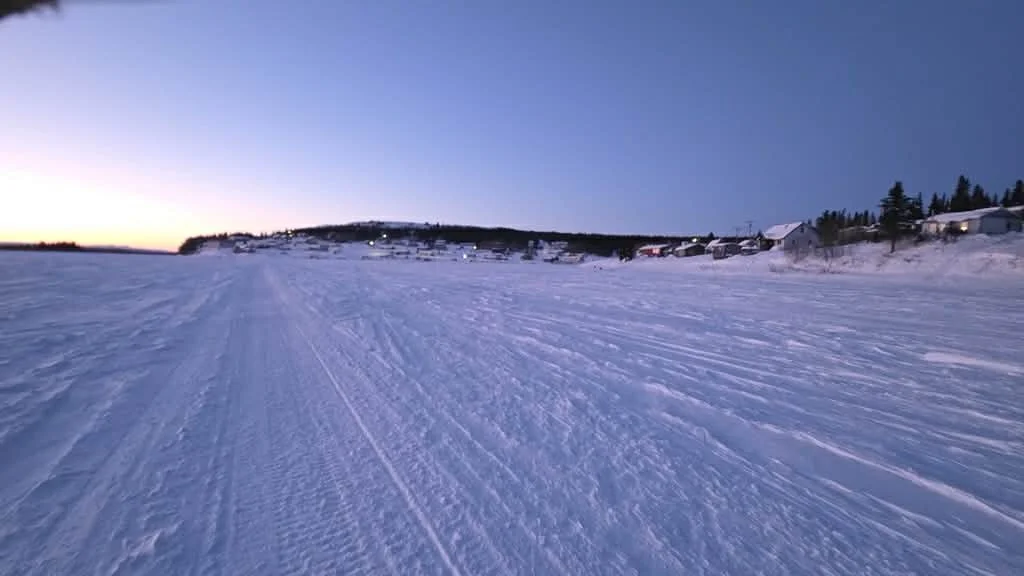
White Mountain, photo credit Kendall Park

A meal at Jack and Joanna’s house, photo credit Kendall Park