
Day 12: Reflect, Refuel, Regroup
With the completion of the 350-mile distance race yesterday, many of our finished athletes are likely taking today to regroup and reflect on their experience while refueling their beaten and battered bodies. Those athletes are traveling home where “real” life awaits them, and the longing for the solitude and simple routines of the trail might start calling to their soul once again. This year 92 athletes started the 350 and 150 distances, 52 finished, yielding a 56% finish rate. Of the 17 women who started the 350 and 150 events, 8 finished.
While reflecting on this year’s races, a dominant theme has been the cold, wind, and snow. So how cold was this year compared to previous ones? Looking at weather data from Nikolai from previous years during the first 10 days of the ITI, I would like to share some information I compiled. The 2020 event started on March 1st, the average low in Nikolai from the 2nd to the 11th was -18.4 F, with the average high being 11.4 F. The course in 2021 was modified to an out and back due to Covid restrictions. In 2022 the race started on Feb 27th, the average low was 10.8 F with an average high of 32.9 F. I was unable to find data for 2023. The race started in 2024 on Feb 25th with an average low of -12.7 F and high of 14.8 F. Last year, 2025, the race started on Feb 23rd and had an average low in Nikolai of 12.4 F and high of 30.7 F. So how does 2026 compare?.... The average low in Nikolai for the ten days was -30 F with an average high of 2.8 F. I think it’s safe to say that our 115 athletes who started in Anchorage got the angry side of mother nature for this year’s race. While the 108 athletes who are no longer on the course are reflecting on the brutality of this year's ITI, I’m sure the question of “why do I do these races” is swirling in some minds, and certainly the minds of their loved ones. I want to leave them with a quote by fellow racer Mayella Krause “The winter ultra world is small yet full of people who understand the hunger to move through a world where a single mistake can kill. We don’t just endure the wilderness; we seek it out craving the silence where we meet the hardest parts of ourselves.”
Meanwhile, 7 athletes remain on the trail, hopeful to still be able to make a push to Nome. Twenty-three “Nomers” started in Anchorage, but historically tough weather conditions and a currently impassable trail past Ophir has whittled that number down to just 7 intrepid souls.
Gavan is a 2024 1,000 ITI finisher. When asked what he is looking forward to the most while being on the trail he responded “being alone.” Gavan is certainly getting his alone time over the last few days, as he set out solo towards Ruby from McGrath on March 1st. Making it 16 miles past Ophir on snowshoes, he ultimately needed to back track to Ophir and wait out the conditions. Ophir itself will give Gavan plenty of solitude. Once an active gold mining town, it is now only a few abandoned buildings. It is one of the many ghost towns left from the mining boom and bust in the Alaskan interior.
Herman (USA), Ryan (USA) and Erick (France) spent the night in Takotna, a small town of about 50 people. This morning Herman and Ryan both started towards Ophir around 6 am. Ryan has 4 finishes in Nome and this is Herman’s second attempt at the 1,000, DNF’ing in 2024. Herman met up with Gavan around 4pm today, and Ryan joined them an hour later. Erick Basset is no stranger to the ITI, having finished the full distance on both ski and foot. This year he is attempting on bike. Around 10 am Erick’s dot headed back to McGrath from Takotna, and he arrived in McGrath by 3:00 pm.
Back in McGrath we have Troy (Australia), Kendall (USA) and Mayella “Maya” (Brazil). Troy has 6 Nome finishes under his belt, while Kendall and Maya “MK” are both Nome bound for the first time. Although new to this race distance, MK have proven to be well prepared for the elements, and both have plenty of winter knowledge under their belts. Maya has finished multiple winter races, the 350-mile ITI twice, and has backpacked from Fairbanks to Anchorage. Kendall is also an experienced winter bikepacker and has two 350-mile ITI finishes. Despite the seemingly daunting task of traveling 700+ miles on fewer and fewer days, we know the hearts of these athletes are still yearning for Nome. Certainly all the sacrifices that they and their loved ones have made throughout the last year in preparation to spend 30 days in Alaska is looming in their minds. In her pre-race survey, Maya points out that this race takes months of dialing in gear and going over scenario after scenario in your head to feel prepared.
As mentioned yesterday, in McGrath racers are enjoying the famous “Mancakes” provided by local supporters of the ITI. These plate sized, thick and dense blueberry filled pancakes are surely a welcome sight after long days of trail food. Gear repair/swap and sleep are also priorities as athletes set their sites on 200 miles of untravelled deep snow until the next inhabited town of Ruby. It is yet to be seen if our Nome travelers will wait until the Iditarod Sled Dog Race trailbreakers come through (a still yet unclear timeline, but hopefully sometime early next week), or if another push is made past Ophir by some adventurous soul willing to see if they can conquer the untamed expanse of Alaskan wilderness.
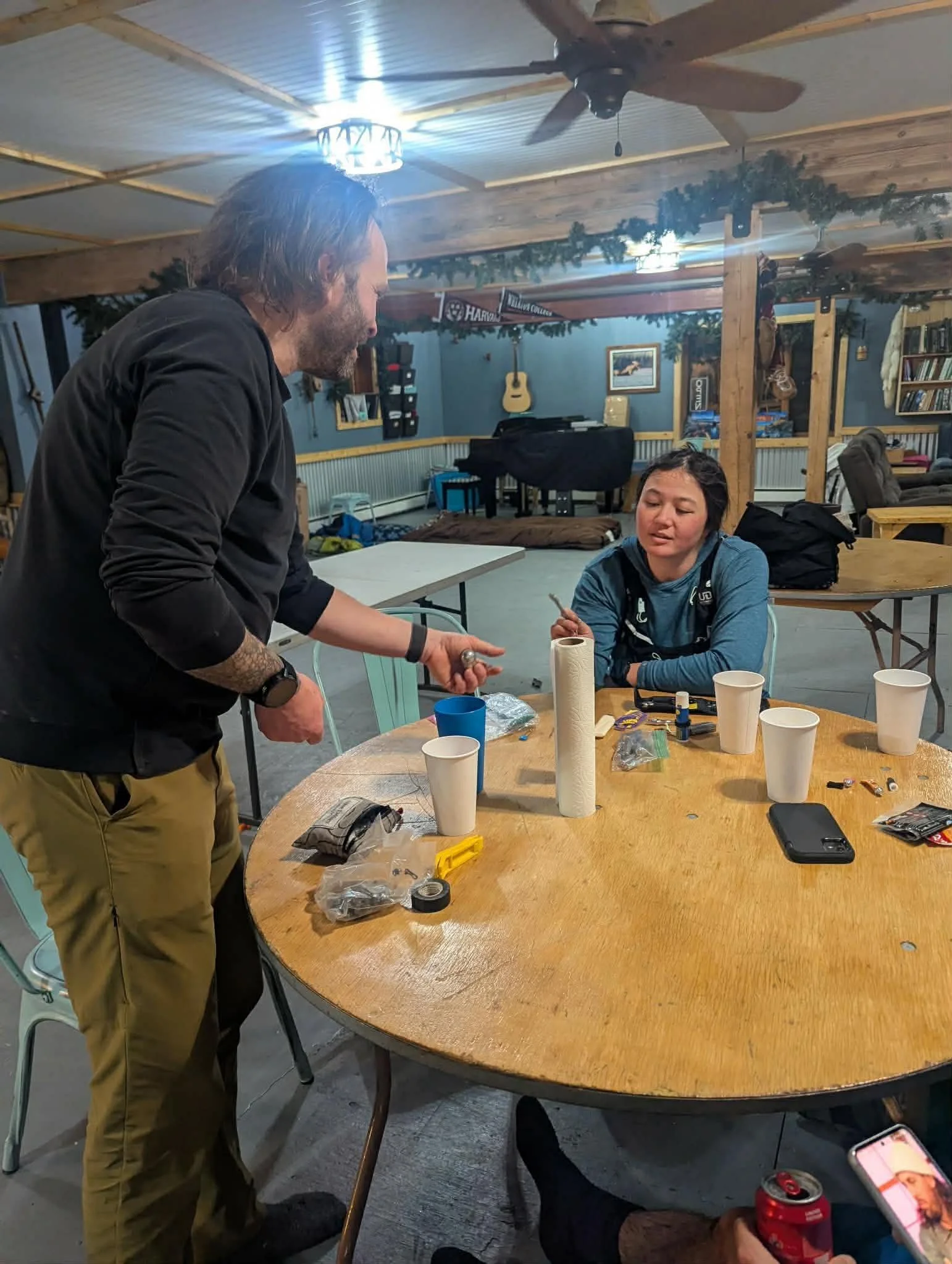
Photo Credit Faye Norby
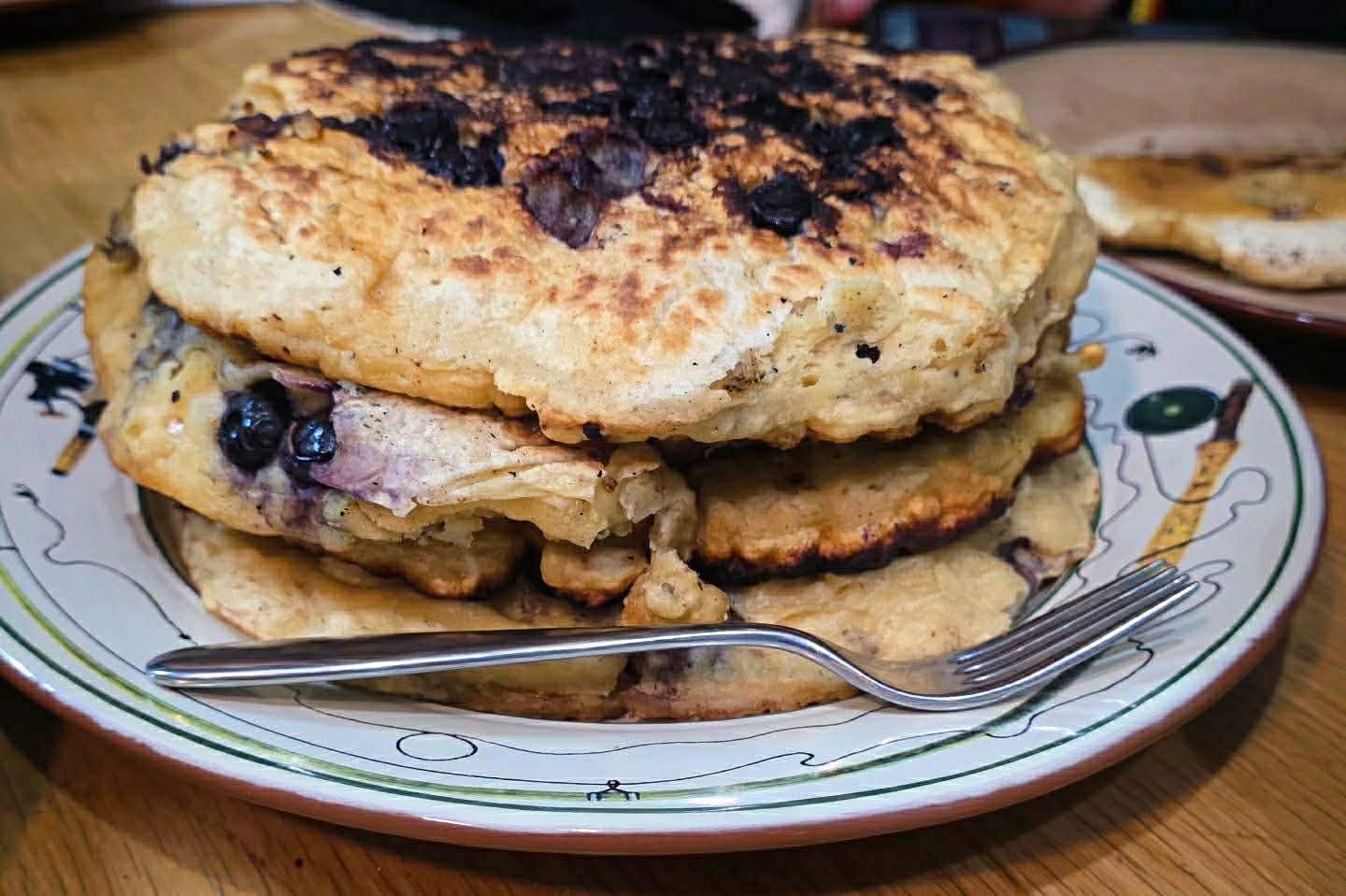
Photo Credit Mayella Krause
Written by Jessica Roschlan
Thanks to Wild Winter Women - Allison Carolan, Amanda Harvey, Faye Norby, Jan Redmond Walker, Kari Gibbons, Leah Gruhn, Laura Wiesmann Hrubes, Lynn K Hall, Madeline Harms, Rashelle Hintz, Rebecca McVay-Brodersen, and Sarah Bergstrom.